World Center for Strategic Studies
From closed analysis to public debate

- MONTH
- YEAR

Europe’s ambition is at risk: the EU can’t match internal reform with external plans
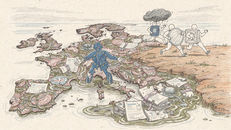
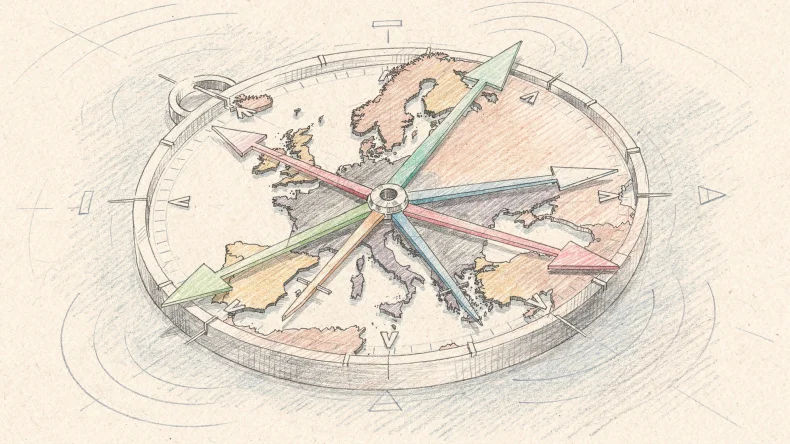
This CIDOB analysis questions whether the EU has lost its sense of direction by trying to balance big external ambitions with slow internal reform. Europe talks about strategic autonomy, competitiveness and global influence, but its internal economic, regulatory and institutional weaknesses make these ambitions hard to realise. The text suggests a growing mismatch: the EU wants to shape the world, but it cannot fix the fundamentals at home. If this gap persists, Europe’s global role will weaken and its economy will stagnate.
Europe’s global goals are clashing with internal drag
The analysis highlights that the EU’s external strategies – from trade leadership to tech policy and climate diplomacy – require a strong, unified base at home.
Yet key internal reforms in the Single Market, fiscal coordination, competitiveness and digital regulation are slow or blocked by national interests. Europe’s external aspirations look more like speeches than executable strategies.
Market fragmentation is still Europe’s Achilles’ heel
A major theme is the continued fragmentation of European markets. Differences in regulation, taxation and administrative procedures across member states create barriers for business and innovation.
Instead of one integrated market that can compete globally, Europe still operates as 27 slightly different markets stitched together. This weakens investment, slows scaling and makes it harder for European champions to emerge.
Innovation policy promises more than it delivers
CIDOB argues that Europe’s innovation and industrial policies are ambitious on paper but underfunded and poorly coordinated in practice.
While announcements about digital leadership, AI, clean tech and sovereign capacities abound, Europe’s capacity to translate these plans into competitive industries is lagging. The gap between ambition and capability is widening.
Fiscal rigidity weakens Europe’s strategic response
Another problem is fiscal inflexibility. The EU’s budget rules, national debt constraints, and reluctance to use collective fiscal tools limit Europe’s ability to respond to shocks and invest in future-oriented sectors.
This constraint undermines Europe’s capacity to support big strategic projects that competitors, like the US and China, are pushing at scale.
Europe’s regulatory power is double-edged
The analysis notes that Europe’s regulatory clout – often called “the Brussels effect” – can set global standards. But this power is also a handicap when it slows innovation and raises compliance costs.
In trying to protect consumers and markets, Europe risks making itself unattractive for fast-moving tech investment and new business models, compared with more flexible jurisdictions.
The big internal contradiction
CIDOB shows that Europe wants to be a global strategic player while keeping a governance model built for consensus, not competition. National vetoes, slow negotiations, and watered-down compromises make internal reform a grind.
This internal friction bleeds into external policy, making bold claims look less credible when Europe cannot back them up with coherent action.
Where this leaves Europe: strategy without matching strength
Europe’s external ambitions risk becoming hollow because they are not grounded in strong internal foundations. The EU can debate grand strategy, but when core markets remain fragmented and reform stalls, big plans fall flat.
If Europe cannot fix its internal contradictions, it will struggle to influence global rules, attract investment, and maintain geopolitical relevance.
The reality check: Europe is talking global, acting local
Europe wants to lead on the world stage, but its internal mechanisms are not aligned with that ambition. Plans for strategic autonomy, competitiveness, and digital leadership will remain slogans unless backed by deep, fast reform at home.
Unless Brussels and member states sort out internal weaknesses, Europe’s role in the global economy and tech landscape will continue to shrink – and its external ambition will look like empty rhetoric.