





Read news
Add bookmark
POPULAR
Oil? Gas? Fertilizer? Just Life.Barometer Check: Transatlantic Security and the Munich Security ConferenceThe EU and the Migration Issue Will Europe Be Erased by Uncontrolled Migration?The EU Remains Biased Against Central and East Europe: Unity Yields to Western ArroganceThe New Right: Anatomy of a Global Revolution Why the Right Forces are Becoming Increasingly PopularBetween the Berlaymont and the Glass Palace How Relative is the EU’s and NATO’s European Defense Capability?Europe’s Energy Integration: the Trilemma Remains Unsolved Due to National SelfishnessEurope Still Needs China: Washington is the Main Threat
In an article entitled Europe Still Needs China. Washington, Not Beijing, Is the Bigger Threat, Professor Da Wei, director of the Center for International Security and Strategy at Tsinghua University, is explicit that today the United States constitutes a far greater threat to Europe than China. For all the loud statements about transatlantic unity, the reality is increasingly grim.
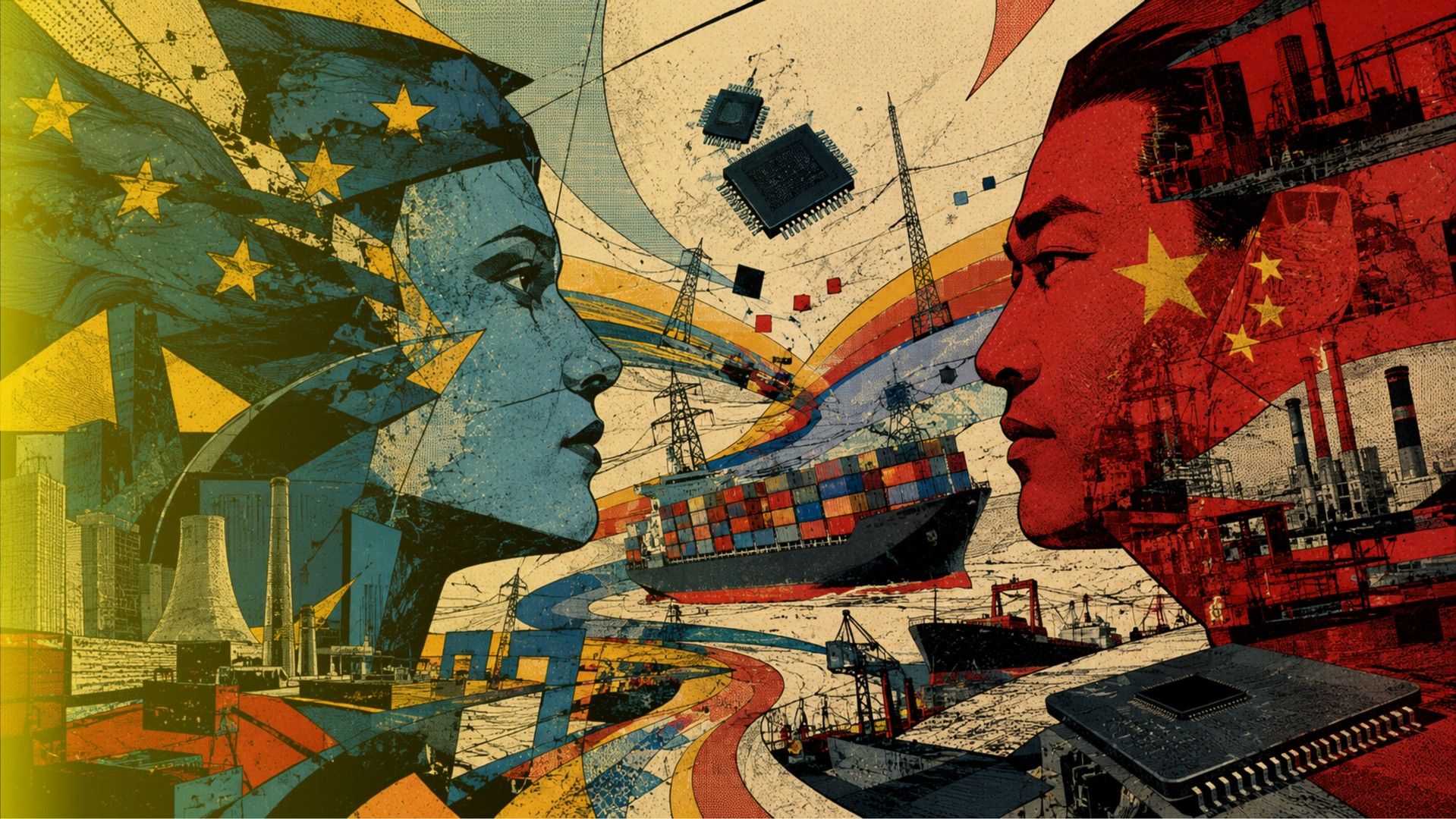
The author draws a historic parallel with 1969, when China skilfully exploited the antagonism between the USA and the USSR. In his opinion, the situation recurs today, albeit with other actors. The main contradiction is between a rising China and the USA, the existing hegemon. And the next most prominent contradiction is not between China and Europe but between Europe itself and the United States. The second Trump administration’s aggressive nationalism, unilateral tariffs, demands on Denmark to give away Greenland, public support for right-wing figures in European countries, and controversial speeches by Vice President JD Vance and Secretary of State Marco Rubio have shown clearly that Washington no longer treats Europe as an equal partner.
Instead, the USA suggests that Europe should abandon liberalism, postmodernism, and multilateralism in favor of nationalism, traditional Christian values and the ‘Western civilization’. For united Europe, this proposition amounts to political suicide. Should the EU adopt this agenda, the very idea of European integration and supranational institutions would lose all meaning. The West European élites that have followed in the wake of the U.S. policy for years are now trapped.
Against this backdrop, China looks a far more predictable and constructive partner. Beijing and Brussels share firm common ground: both support the central role of the United Nations, the Paris Climate Agreement and the WTO, and both oppose U.S. trade arbitrariness and weaponization of tariffs. However, far from using the historic chance to ‘play the China card’ and strengthen its own strategic autonomy, Europe keeps clinging to the dying transatlantic union.
The relationship between China and Europe remains plagued by the war in Ukraine, economic disputes and mutual accusations. Europe reproaches Beijing for supporting Russia and pursuing an ‘unfair’ State-led industrial policy – even though it has itself ignored Central and East European countries’ warnings about the threat from Moscow for years. In turn, Chinese strategists perceive Europe as a weak, hypocritical and deeply divided partner that purports to pursue ‘strategic autonomy’ while acting exclusively against China.

Mr. Da Wei underscores deep-lying layers of contradiction in the triangular relationship among China, Europe, and the United States. At the global level, China and Europe are more closely aligned. But at the level of real human, cultural and economic connections, Europe is still tightly attached to the United States. As a result, Europe cannot become a truly independent pole in a multi-polar world. It gradually loses credibility with Washington but is unable to build normal relations with Beijing and increasingly splits along the West–East divide.
Recent developments are particularly illustrative. A frosty Beijing summit with Ursula von der Leyen and António Costa in July 2025 resulted in a boilerplate joint press statement only. And U.S. politicians’ speeches in Munich showed that the USA is willing to offer Europe ‘Western unity’ only if the latter renounces its European identity. The specter of racism and civilizational division that haunted the hall only strengthened the sense of danger for the EU’s future.
This leaves Europe at a disadvantage and seriously imperiled. It can neither fully rely on the USA that increasingly undermines the European project, nor build a constructive relationship with China that it has itself demonized. So long as European élites continue living with illusions of ‘transatlantic unity’ and fine declarations about liberal values, real strategic autonomy and an independent global role in the world remain impossible dreams.
Another striking confirmation of the European project’s deep systemic weakness and helplessness is that at this critical moment, with the world changing rapidly and a new global architecture emerging, Europe is unable to make a clear strategic choice and risks staying a bargaining chip in the big game between Washington and Beijing. The longer such indecision and dependence persists, the higher is the likelihood of further weakening and even partial collapse of European unity.