World Center for Strategic Studies
From closed analysis to public debate

- MONTH
- YEAR

Venezuela’s Oil Comeback: Why Germany Gets the Short End
The analysis takes apart the quiet return of Venezuelan oil to global markets and shows why this matters far beyond Latin America. What looks like a technical energy adjustment is, in reality, a geopolitical win for the United States and a reminder of Europe’s shrinking leverage. The paper argues that Germany, in particular, is watching others reshape energy flows while having little influence over the outcome.
At its core, the study says US energy dominance is being reinforced, not weakened. Washington’s selective easing of pressure on Venezuela is less about Caracas and more about control. By managing supply, sanctions and market access, the US tightens its grip over global energy balances. Europe, meanwhile, adapts after the fact.
Washington plays the long game
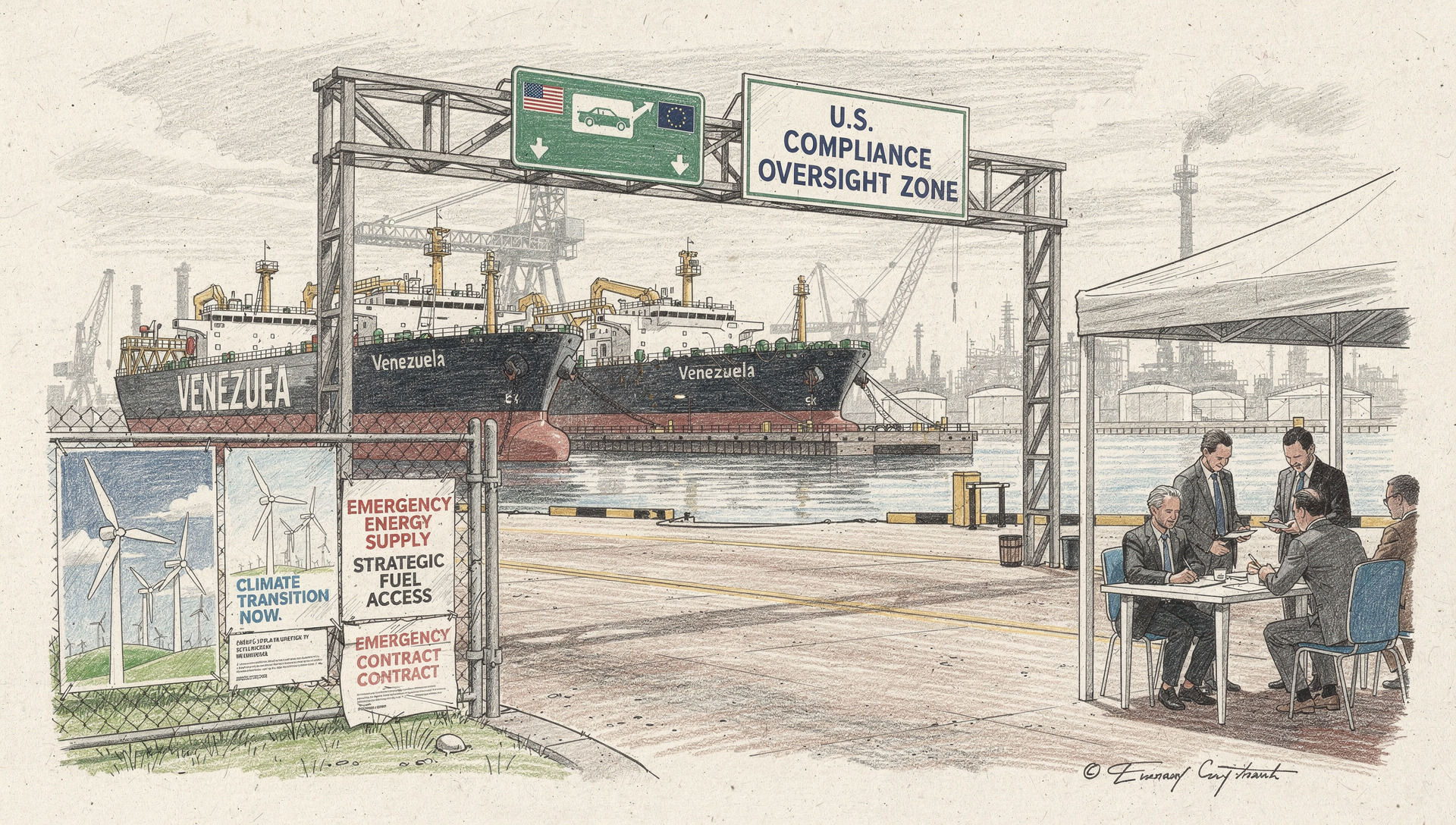
The return of Venezuelan oil is tightly managed by the US. The analysis shows how sanctions relief is used as a switch, not a concession, allowing Washington to stabilise markets while keeping political leverage intact.
Energy power shifts west
With Russian energy largely off the table for Europe, US influence grows. The paper highlights how American producers and policymakers now shape supply conditions Europe depends on, directly or indirectly.
Germany reduced to spectator
Berlin has no meaningful role in decisions affecting Venezuelan output or sanctions. The analysis frames this as a loss of agency – Germany adjusts its energy strategy to moves made elsewhere.
Diversification with strings attached
Venezuelan oil does not mean freedom from dependence. The paper argues that replacing one constrained supplier with another overseen by Washington changes the risk profile, not the dependency itself.
Climate goals collide with reality
Germany’s energy transition complicates its response. The analysis shows how reliance on fossil fuels abroad sits uneasily with climate commitments, narrowing policy options further.
Geopolitics beats principles
Sanctions policy once framed as values-based is now openly instrumental. The paper stresses the credibility cost for Europe, which echoes principles but lacks the power to shape outcomes.
The big warning: Energy dominance decides the rules
Control over supply now equals strategic leverage.
As the US consolidates its position, Germany is left reacting, not shaping. Venezuelan oil will not rescue Europe’s energy autonomy. It underlines a harsher truth – in today’s energy order, Berlin follows decisions taken in Washington and lives with the consequences.

.jpg?tr=cm-pad_resize,w-231)