





Read news
Add bookmark
POPULAR
Oil? Gas? Fertilizer? Just Life.A Flimsy French Umbrella: A Belief Instead of Real ProtectionNo More Safe Places in Europe? What Is the Logic Behind French Forward Deterrence?The Royal Navy: On Course for National EmbarrassmentThe European Union Intends to Fight Space Wars. Does the European Military Space Project Have Room for Development?Europe Needs an ASAP Program for Air DefenseAir Defense PowerlessnessA Nuclear Button of Their Own Why Is Europe Considering Non-U.S. Nuclear Options?New START Expiry: Implications for Europe
The Royal United Services Institute for Defence and Security Studies (London) has published on their web site an article entitled “New START Expiry: Implications for Europe” by Senior Research Fellows Darya Dolzikova and Dr Sidharth Kaushal. It was published on the day when the New Strategic Arms Reduction Treaty (New START) expired.
The New START placed quantitative limits on warheads and launchers of US and Russian strategic nuclear weapons (SNW). The Treaty provided for extensive reporting and verification of commitments fulfilment. The START was the last remaining piece of arms control infrastructure between Russia and the US.
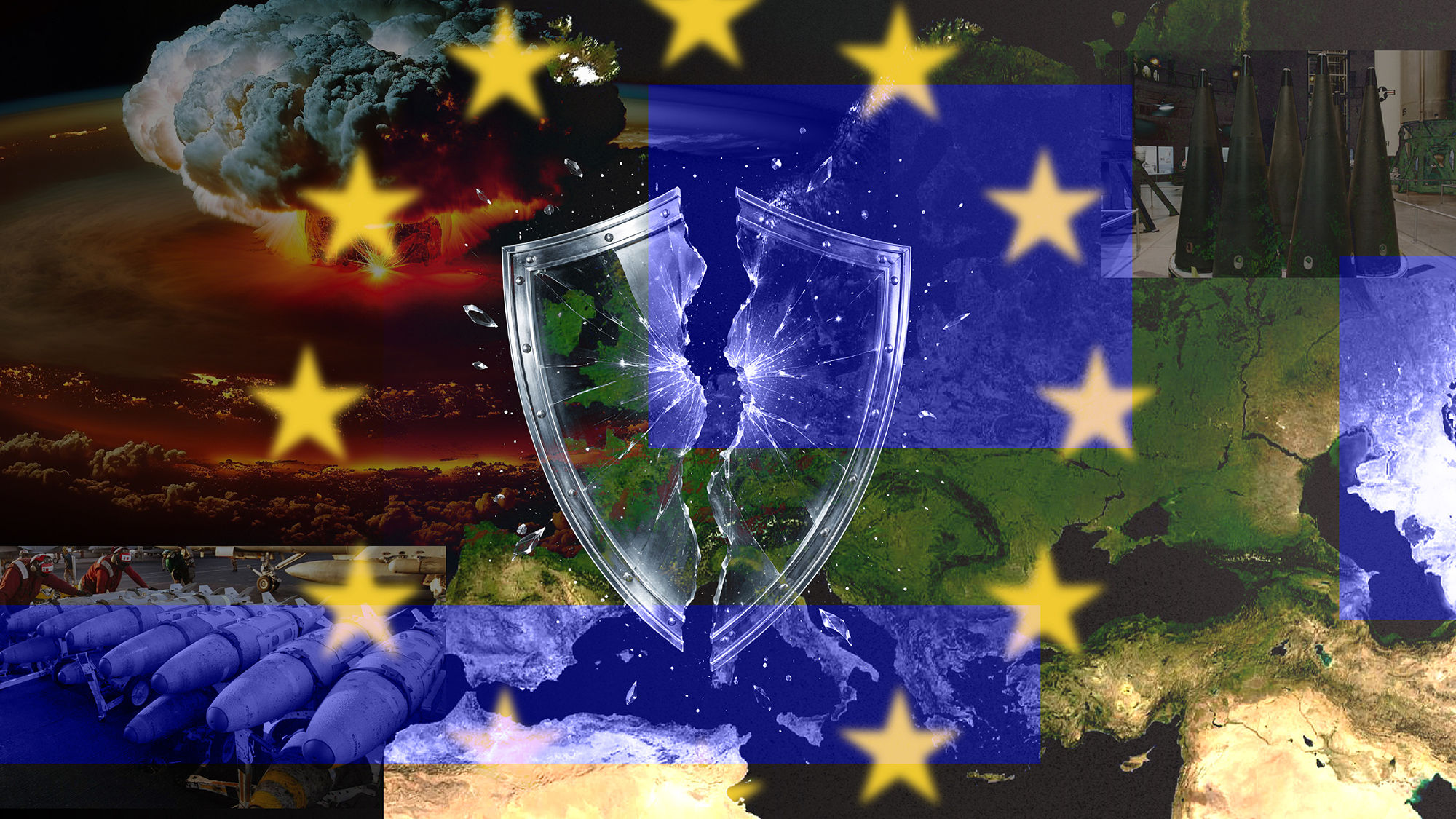
Concluded in 2010, the Treaty was grounded in a set of fragile conditions: a brief period of relatively cooperative US-Russian relations; a temporarily stable nuclear balance between two states otherwise unequal across most dimensions of power; and an assumption of a purely dyadic nuclear order in the world.
The Treaty regulated the strategic balance between Russia and the US, it did not cover the constraints for the Russian non-strategic nuclear weapons most immediately threatening to Europe. The UK and France do not possess non-strategic nuclear capabilities and have therefore had to rely on the US.
The shaky foundations of the Treaty made its abrogation possible, particularly when tensions between Russia and the US resurfaced.
For contemporary Russia, this tension has been compounded by, firstly, the emergence of US conventional prompt strike capabilities capable of engaging elements of Russia’s nuclear forces. Secondly, it is the prospect that improved US missile defences could provide a degree of homeland protection sufficient to weaken a Russian response.
Even limited investment of US allies into conventional strike capabilities may exacerbate the sense that Russia is vulnerable because these missiles are viewed as part of total disbalance.
On the other hand, Russia’s development of systems such as the RS-28 Sarmat – capable of carrying up to fifteen multiple independently-targeted re-entry vehicles has reflected an intent to preserve the ability to rapidly exceed New START limits on deployed warheads if required.
In parallel, Russia has developed novel systems such as the nuclear-powered Poseidon torpedo and Burevestnik cruise missile, which lay entirely outside the treaty framework.
The difficulty of sustaining New START’s limits has been compounded by a further factor of China as a country possessing ever more powerful nuclear weapons.
Considering China’s quickly expanding arsenal, it is difficult to conceive of a sustainable arms control arrangement that does not account its impact. At the same time, Moscow has been calling for France and the UK to be included in arms control provisions of the Treaty. The collapse of the treaty should therefore come as no surprise.
The prospects for arms control thus remain dim. Europe will need to consider not the question of how to restore a lost stability, but rather how to secure relative security in a context that will be, by its very structure, inherently unstable.