





Read news
Add bookmark
POPULAR
Trump vs SánchezOil? Gas? Fertilizer? Just Life.A Flimsy French Umbrella: A Belief Instead of Real ProtectionWould You Fight for Your Country?No More Safe Places in Europe? What Is the Logic Behind French Forward Deterrence?The Gulf on the Front Line: The End of Strategic Hedging and New Space for EuropeansThe Iran War’s Five Lessons for EuropeThe Iran War: A Test Case for Germany’s CredibilityA Nuclear Button of Their Own Why Is Europe Considering Non-U.S. Nuclear Options?
With America’s credibility constantly eroding, Europeans are looking for alternatives to the U.S. nuclear umbrella.
Rafael Loss, a policy fellow at the European Council on Foreign Relations (ECFR), discusses aspects of nuclear deterrence based on European cooperation.
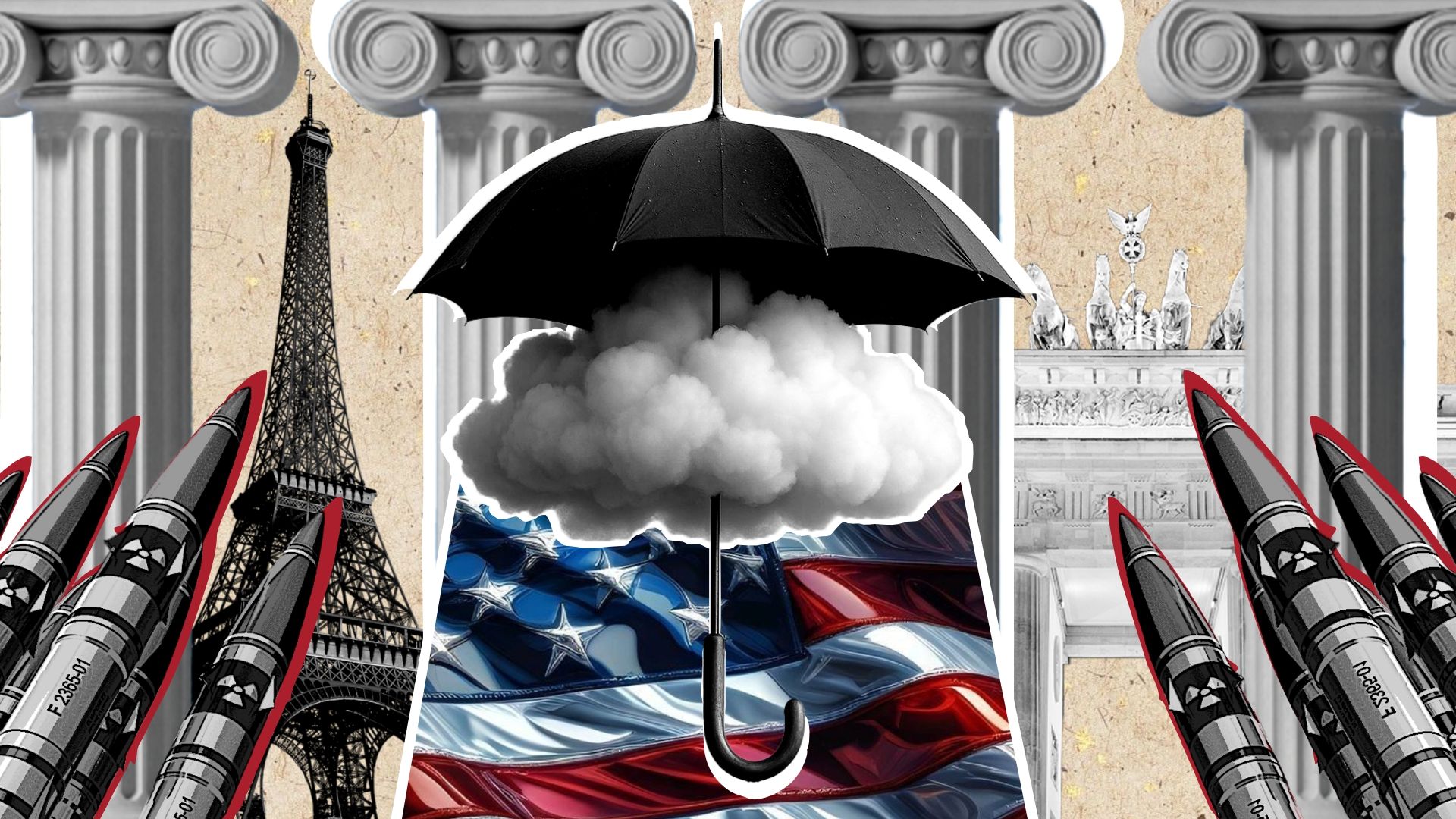
According to ECFR’s latest public opinion poll, fewer and fewer Europeans consider the United States ‘an ally that shares our interests and values’, and mainly blame it on President Donald Trump’s inconsistent and aggressive policy, particularly in respect of Europe. That has bolstered some European politicians’ desire to gradually start dissociating themselves from America.
At the same time, U.S. officials keep insisting that Trump’s main goal is just strategic rebalancing of forces, with Europeans assuming responsibility for conventional deterrence and defense and the USA still committed to nuclear deterrence for its European allies.
But Europeans are not buying it. They believe that an America that has abandoned conventional deterrence would hardly risk nuclear war on behalf of its European allies.
According to two surveys conducted by ECFR in May and November 2025, respondents across Bulgaria, Denmark, Estonia, Germany, Poland, Portugal, Spain and Switzerland tend to support the idea of developing an alternative European nuclear deterrent – while Hungarians, Italians and Bulgarians, who have a more positive view of Russia historically, consistently reject such considerations.
According to NATO, French and British nuclear forces contribute significantly to the overall security of the Alliance. London and Paris represent ‘separate centers of [nuclear] decision-making’ that complicate potential adversaries’ risk calculations. But there are nuances.
Historically, the U.S. nuclear weapons were intended to reassure allies that they remain secure without such weapons of their own. France and Britain, in turn, have relied on minimum development of their arsenals to deter threats to their vital national interests.
Now America’s eroding credibility means that it remains necessary for France and Britain to retain and considerably develop their nuclear forces.
French survey respondents support an expansion of their country’s nuclear arsenal. However, Britons are more skeptical, opposing additional weapons for the UK nuclear deterrent.
The European Council on Foreign Relations (ECFR) predicts that coalitions of centrist and right-wing voters in France and Britain are most likely to support adaptations to their countries’ nuclear forces – but presumably to advance national(ist) interests first.
In all their conversations about evolving European nuclear deterrence, leaders should not forget that loose talk on the issue may be dangerous, as it could loosen restraints on nuclear proliferation in other parts of the world.
Europeans should be interested in strict compliance with the global nuclear non-proliferation regime as well as stronger deterrence. Russia, located next door to Europe and possessing the world’s greatest nuclear arsenal, will hardly sit by as Europe reinforces its nuclear capability. So it is willingness to come to terms and strictly abide by their commitments – rather than a nuclear ‘red button’ – that should be nations’ principal defense.