
World Center for Strategic Studies
From closed analysis to public debate

POPULAR
- MONTH
- YEAR

Europe’s chip plans are in trouble – and Brussels still can’t deliver

This HCSS “Draghi Report Revisited” piece takes a hard look at Europe’s semiconductor ambitions one year after Mario Draghi’s warning on Europe’s economic future – and the findings are uncomfortable. The EU has laws, slogans and “coalitions”, but it still lacks what matters: speed, money, and industrial scale. Instead of landing big wins, Europe is watching major chip projects collapse or freeze, exposing how fragile the EU’s semiconductor strategy really is.
Europe’s raw materials crisis is getting worse and the EU is still at the mercy of others
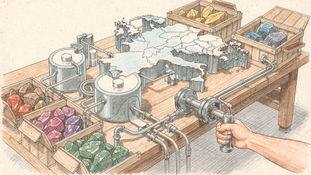
This HCSS “Draghi Report Revisited” piece delivers a blunt warning: Europe’s green and industrial ambitions are built on shaky ground because the EU does not control the critical raw materials it desperately needs. Brussels talks about resilience, strategic autonomy and supply security – but Europe remains dangerously dependent on imports, exposed to geopolitical pressure, and painfully slow at building its own mining, processing and recycling capacity.
Democracy in Europe: protection or reinvention How now will the continent live?

It has been argued that in 2024, for the first time since the beginning of the 21st century, the number of democracies in the world exceeded the number of autocracies. According to most indicators, Europe continues to be one of the most democratic regions on the planet. The latest annual Freedom House calls it the “most free region in the world.”
The EU and the Migration Issue Will Europe Be Erased by Uncontrolled Migration?
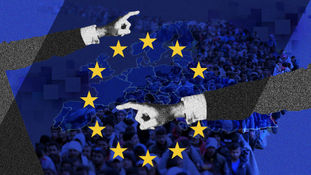
After the U.S. National Security Strategy (NSS) was made public and raised the issue of ‘civilizational erasure’ of Europe due to uncontrolled migration, the migration topic is in the spotlight again. Bernard Chappedelaine, ex adviser to the French Foreign Ministry, discusses the dangers of uncontrolled migration in his analytical brief.
France Wants to Send Troops to Ukraine It Has the Power for It, But Not Really Much
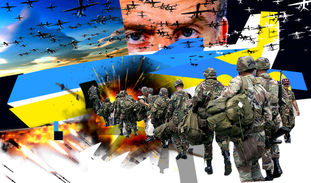
France is still clinging to the idea of sending its soldiers to the Russo-Ukrainian conflict zone. This activity by official Paris is based on its desire to firmly establish its leading position in the European continent.
Germany Wants to Become a Military Space Power for EUR 35 Billion What Hurdles Will it Face?
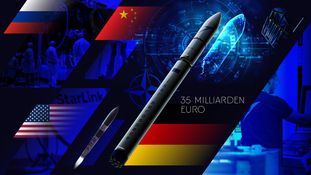
German defense minister Boris Pistorius made a sensational statement in his recent speech at the Berlin Space Congress. It emerges that the German authorities are planning to make their country a world-class military space power, which amounts to joining an élite club. According to open sources, only the USA, Russia and China have managed to militarize outer space by now.
EU - China Relations: Role of the European Commission in Forming Strategic Prospects
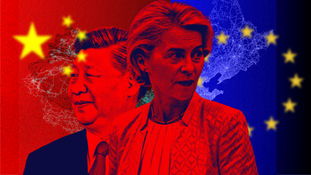
Since the 1970s, the European Commission has been striving to strengthen economic ties between the European Union and China. In the beginning, the EU supported the global integration of China, but by the early 2010s it became clear that these hopes did not come true. Instead, China grew to become a Great Power and its protectionism in the economic policy led to a number of structural problems for the EU.
Old World Growing Even Older What Migration and Pension Expenses Have to Do with This

The population of the European Union is getting older at an accelerating rate. The number of elderly people is growing in all the countries of the continent, with their birth rates falling just as rapidly. A low-probable or, more precisely, almost non-existent prospect of the latter’s recovery actually leaves the EU countries with just one way to mitigate the economic consequences of ageing: to get increasingly addicted to the migration drug. The costs of flirting with migrants are now evident to everyone in Europe.
WHAT IT TAKES TO PROTECT FUNDAMENTAL VALUES IN THE EUROPEAN UNION

The policy brief by the Netherlands Institute of International Relations Clingendael is an internal strategic document aimed at moving the system of control over adherence to ideological guidelines and political decisions from the realm of political negotiations to the field of technocratic regulation. The authors of the study focus on systemic weaknesses of the key mechanism - the annual EU Rule of Law report.
Last Gasp: Securing Europe's Wind Industry from Dependence on China
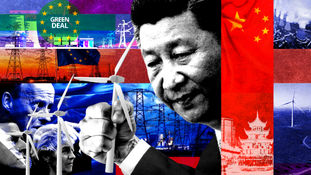
A report by the European Council for Foreign Relations (ECFR) inquires into the vulnerabilities of the European wind power industry in the face of Chinese expansion.
Migration from Western Balkans to Germany: Implications and Recommendations

Migration has long shaped the demographic and economic realities of the Western Balkans, and Germany has become the principal migratory destination.
Is Europe Getting Ready to War Using Foreign Made Weapons? What does it mean for the EU countries and their defense industry?
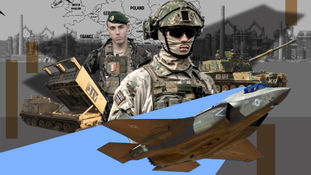
Numbers do not lie. Military spending of the EU member states has been growing for 4 years now. Since 2022, they have spent twice as much on defence as in the previous four years.
Germany, China, and the End of the Post-Wall World
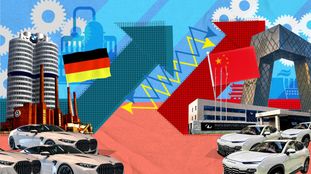
On 3 December 2025, the Georgetown Journal of International Affairs published an article by Daniel S. Hamilton, former U.S. Deputy Assistant Secretary of State and senior non-resident Fellow at the Brookings Institution and the Foreign Policy Institute of Johns Hopkins University’s School of Advanced International Studies.