





Read news
Add bookmark
POPULAR
Oil? Gas? Fertilizer? Just Life.EU - China Relations: Role of the European Commission in Forming Strategic ProspectsChemical Dependence as a Structural Issue for EuropeEurope’s Door to Chinese Tech Investment Is Still AjarAn Energy Price Shock: What an Efficient Energy Transition Should AchieveLast Gasp: Securing Europe's Wind Industry from Dependence on China
A report by the European Council for Foreign Relations (ECFR) inquires into the vulnerabilities of the European wind power industry in the face of Chinese expansion.
The European wind power industry, a recent global leader, is in crisis now. The trends foretell it the fate of the EU solar industry that China has already eradicated. By 2024 the Chinese market accounts for 70% of new wind installations, an increase from over 60% of the world total in 2023. The report points to the threat of a ‘second China shock’, loss of the high technology sector, and dependence on Russian gas supplanted by dependence on Chinese technology amid EU deindustrialization.
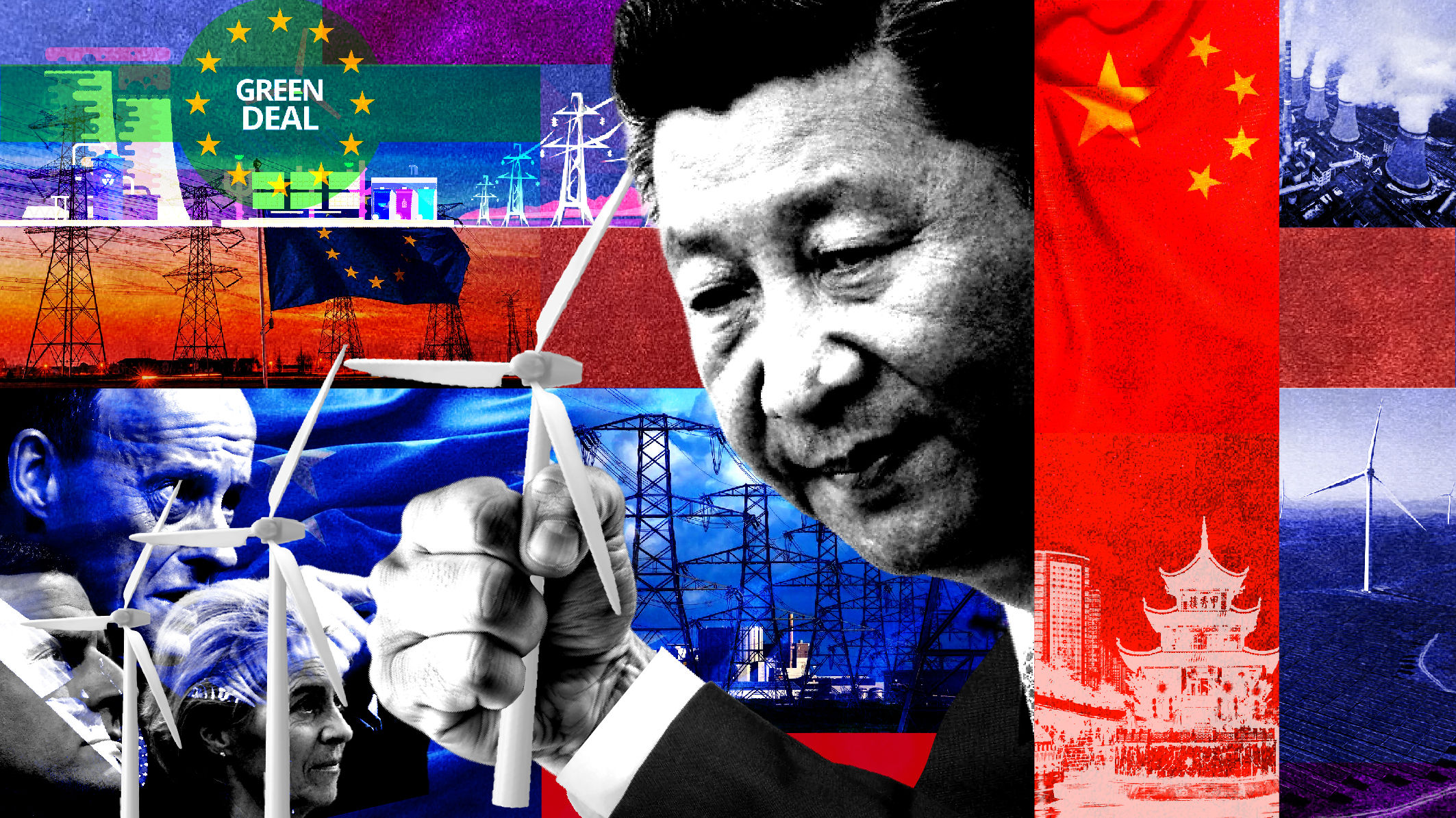
The authors analyze the Chinese advantage and cite such factors as the scale of China’s domestic market and economies of scale. These were achieved by consistent use of industrial policy mechanisms that had been closing the PRC market from the Europeans for decades. The main outcome is seen in the price gap, with Chinese turbines being at least 30% cheaper than European ones.
Critical dependence in manufacturing chains is found to be Europe’s vulnerability. China controls 90% of permanent magnets and dominates key components such as gearboxes, generators, and castings. The authors cite such domestic EU issues as unpredictable demand, a ‘race of sizes’ that requires huge investment, ‘negative bidding’, and bureaucracy. But they overlook the European Green Deal as an obvious cause of the current set of problems.
The authors criticize Trump’s trade wars and accuse him of rolling back the Inflation Reduction Act (IRA) passed by the former administration. During Biden’s presidency, Brussels would denounce the IRA as a discriminatory and protectionist act detrimental to EU interests.
The authors stress the risks of 370 thousand jobs being lost and Europe turning into an assembly hub for Chinese components without technology transfer (the BYD model in Hungary). Also mentioned are security risks: remote access to wind park control creates vulnerabilities, but the authors conceal that similar risks exist for Western software as well.
In a politically correct wording, they propose the solution in the form a switch to a new protectionist strategy. While declaring commitment to free competition, they suggest using such tools as anti-subsidiary investigations, tariffs, and technical standards.
Should Brussels confine itself to its current toolkit, Europe will not save the industry but only keep it lagging behind. The proposed measures are a postponement only.
Protectionism is becoming an objective reality. The authors’ problem is not that they appeal to protective measures but that they do it halfheartedly and inconsistently in an attempt to combine globalist rhetoric with a closed markets practice and the green mission, with industrial egoism. China is winning the market in following those very rules that the EU itself used to promote as universal. Now, in the face of the consequences, Europe is rushing between the USA and China and losing under any scenario.
This cognitive dissonance has implications. EU decarbonization results in deindustrialization. Europe cannot regard China as a ‘systemic rival’ but grant it control over critical infrastructure; nor can Europe shut it out without destroying its own ideological identity. This is an example of basic contradictions in strategic planning that the EU is unable to resolve without deepening confrontation and charging the costs to its own citizens.