World Center for Strategic Studies
From closed analysis to public debate

- MONTH
- YEAR

Europe and the AGI Shock: Behind Before the Race Starts
The analysis asks a question Europe is quietly afraid of answering – is it ready for the rise of artificial general intelligence. The answer, stripped of polite language, is no. While AGI is still emerging, the paper argues that Europe is already falling behind on the basics: investment, infrastructure, talent and governance speed. By the time AGI becomes real, Europe risks being a rule-taker in a world shaped elsewhere.
At its core, the assessment says AGI will not arrive as a clean technological milestone. It will land unevenly, driven by private actors with massive compute, capital and data. Europe, meanwhile, is still debating frameworks and guardrails while lacking the industrial backbone to influence outcomes. Regulation is advancing faster than capability.
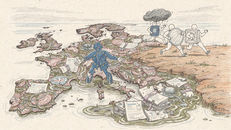
The race starts without Europe
AGI development is concentrated in the US and parts of Asia. The analysis shows how Europe lacks domestic champions with the scale to compete, leaving it dependent on foreign systems for critical functions.
.jpg)
Rules before resources
Europe’s instinct is to govern first and build later. The paper warns this sequencing problem is dangerous with AGI, where power follows those who control compute, models and deployment, not those who write the longest rulebooks.
Compute is the choke point
AGI needs massive computing power and energy. The analysis highlights Europe’s shortages in data centres, chips and energy capacity, turning ambition into abstraction.
Security risks pile up
AGI is not just an economic issue. The paper stresses risks to defence, intelligence and critical infrastructure. Dependence on foreign AGI systems creates strategic exposure Europe has barely begun to address.
Fragmentation slows response
National approaches to AI diverge, funding is scattered, and coordination is weak. The analysis shows how this fragmentation wastes time Europe does not have.
Talent leaks away
Top researchers and engineers continue to move where scale and funding exist. The paper frames this as a self-reinforcing cycle – weak ecosystems lose talent, making them weaker still.
The big warning: AGI will lock in power
Once AGI capabilities consolidate, catching up becomes brutally hard.
If Europe waits for AGI to arrive before acting, it will already have lost influence over how it is used. The choice is stark – invest and coordinate now, or accept a future where Europe regulates technologies it does not control and depends on systems built by others.