





Read news
Add bookmark
Better coordination for a more efficient European energy system
In their report entitled Better coordination for a more efficient European energy system, the authors from the Bruegel Institute of Belgium examine the prospects of the European energy industry. They suggest three measures: to establish a single energy data hub, delegate cross-border grid planning to the European Commission and to link the national energy plans (NECPs) to funding from Brussels. According to their logic, that will improve transparency, lower capital costs for investors and prevent regression to protectionism. But if we look, it is all about intercepting the national governments’ control under the guise of ‘green’ rhetoric.
The authors rightly criticize the current system with its key models like PRIMES belonging to a private British company and closed for review. But an April 2025 brief[1] by the European Commission’s Managed Funds Association (a lobbyist for hedge funds) clearly demonstrates who is to gain from such centralization, as it plainly calls for ‘a single, centralized system using a common dataset’ that would reduce costs and raise liquidity in the energy derivatives market. It will be the financial sector, rather than households, that will benefit most from the ‘transparency’. On the other hand, the European Economic and Social Committee warns that digitalization makes the market more complicated for small businesses and consumers and brings about risks of energy poverty and digital inequality. The authors are silent about how the hub will protect those groups.
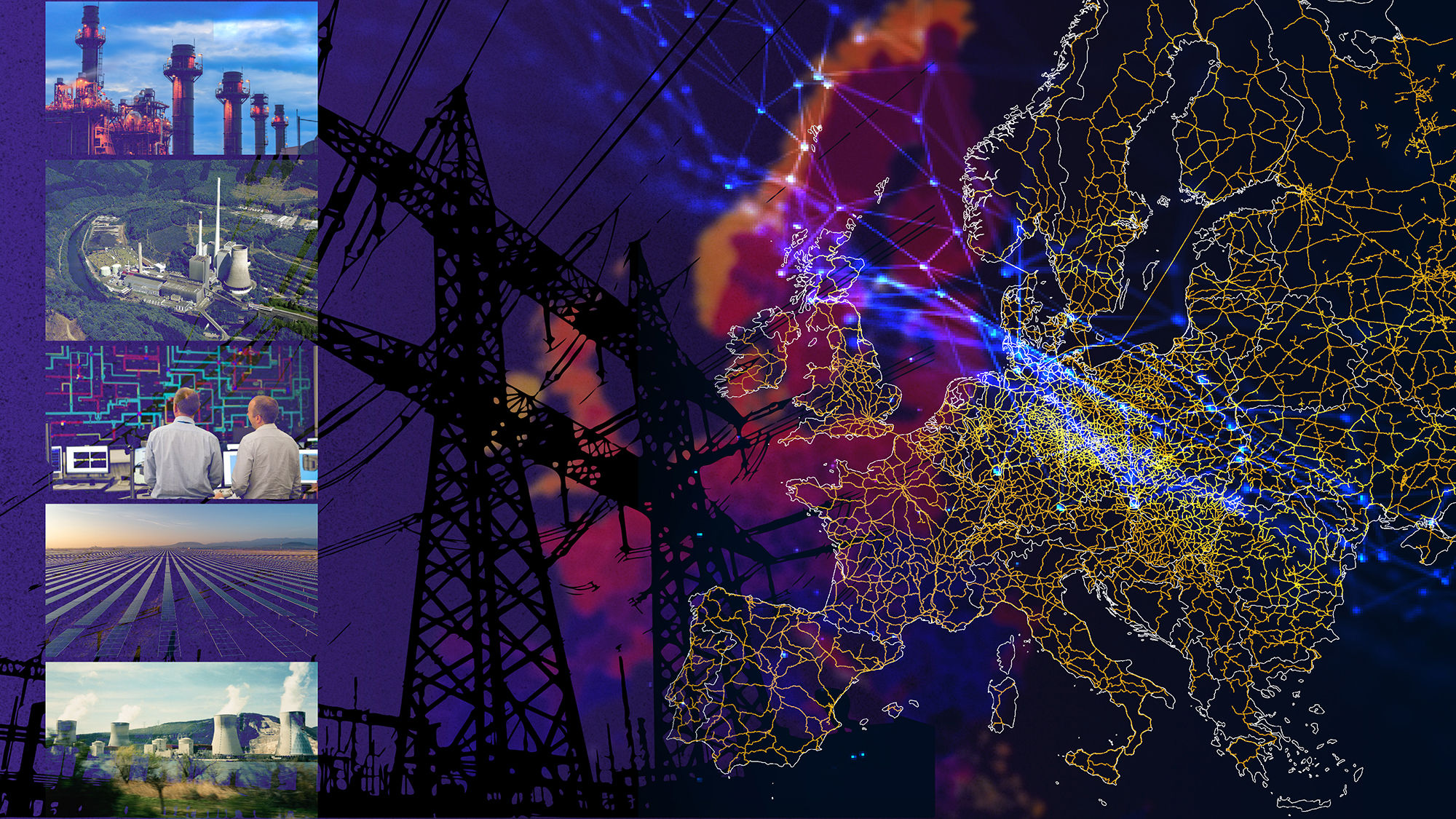
The authors suggest investing the European Commission with more powers to define energy priorities, some functions to be taken away from ENTSO-E. The idea has a long history. Back in 2013 G. Zachmann, a co-author of the report, wrote in his paper entitled Electricity without borders[2] that ‘national regulators should be obligated to only approve projects planned at the European level under the TYNDP’. The report under review is not a crisis response but a consistent ten-year strategy. ACER, the European regulator, has really pointed[3] to data delays and insufficient TYNDP transparency but suggested strengthening oversight and methodologies rather than transferring powers to the Commission. Bruegel chooses a different path: to redistribute the powers.
It is also about tying National Energy and Climate Plans (NECPs) to funding. The authors recommend that the execution of those plans should be linked to money received from the EU, which turns formally voluntary documents into instruments of coercion. Yet Article 194 of the EU Treaty leaves member States free to decide on their energy mixes, and the authors recognize it. Moreover, the text expressly states that integration causes problems: when a country with cheap energy starts exporting it, the domestic prices there rise and the households and industries lose. No compensation mechanisms are proposed; the authors honestly admit that there is little political appetite for cross-border transfers.
The authors resort to ‘green’ rhetoric and use statistics to prove that decarbonization has no alternative and that integration is needed to balance sunshine and wind. Yet 2025 data, which they do not mention, show the opposite: gas generation in the EU has risen by eight per cent and wind generation has fallen by two[4]. Gas is still covering the needs that precarious ‘green’ energy cannot meet. Short of solving this problem, network integration only redistributes the deficit. The appeals to climate goals are used not as a basis for a realistic policy but as a dogmatic cover for centralization.
The talk about efficiency and green transition hides an attempt to seize control. National governments, currently still able to protect their citizens’ interests, are turning into executors of Brussels scripts. The price of this ‘progress’ is trillions of euros[5] to be charged to consumers. And there is no guarantee that electricity in European homes will become any cheaper or in stabler supply. A Europe that cannot defend its own energy sovereignty is doomed to keep catching up with others’ interests and pay others’ bills forever.
[1] https://www.mfaalts.org/press-releases/mfa-recommends-reforming-eu-energy-markets-regulatory-framework-to-boost-resilience-and-competitiveness/
[2] https://www.europeansources.info/record/electricity-without-borders-a-plan-to-make-the-internal-market-work/?print
[3] https://www.acer.europa.eu/node?page=1
[4] https://ember-energy.org/latest-updates/wind-and-solar-generated-more-power-than-fossil-fuels-in-the-eu-for-the-first-time-in-2025/
[5] https://www.europarl.europa.eu/doceo/document/E-10-2025-002637_DE.html