





Read news
Add bookmark
Resource Gap: How the US and China Carve Central Asia Up
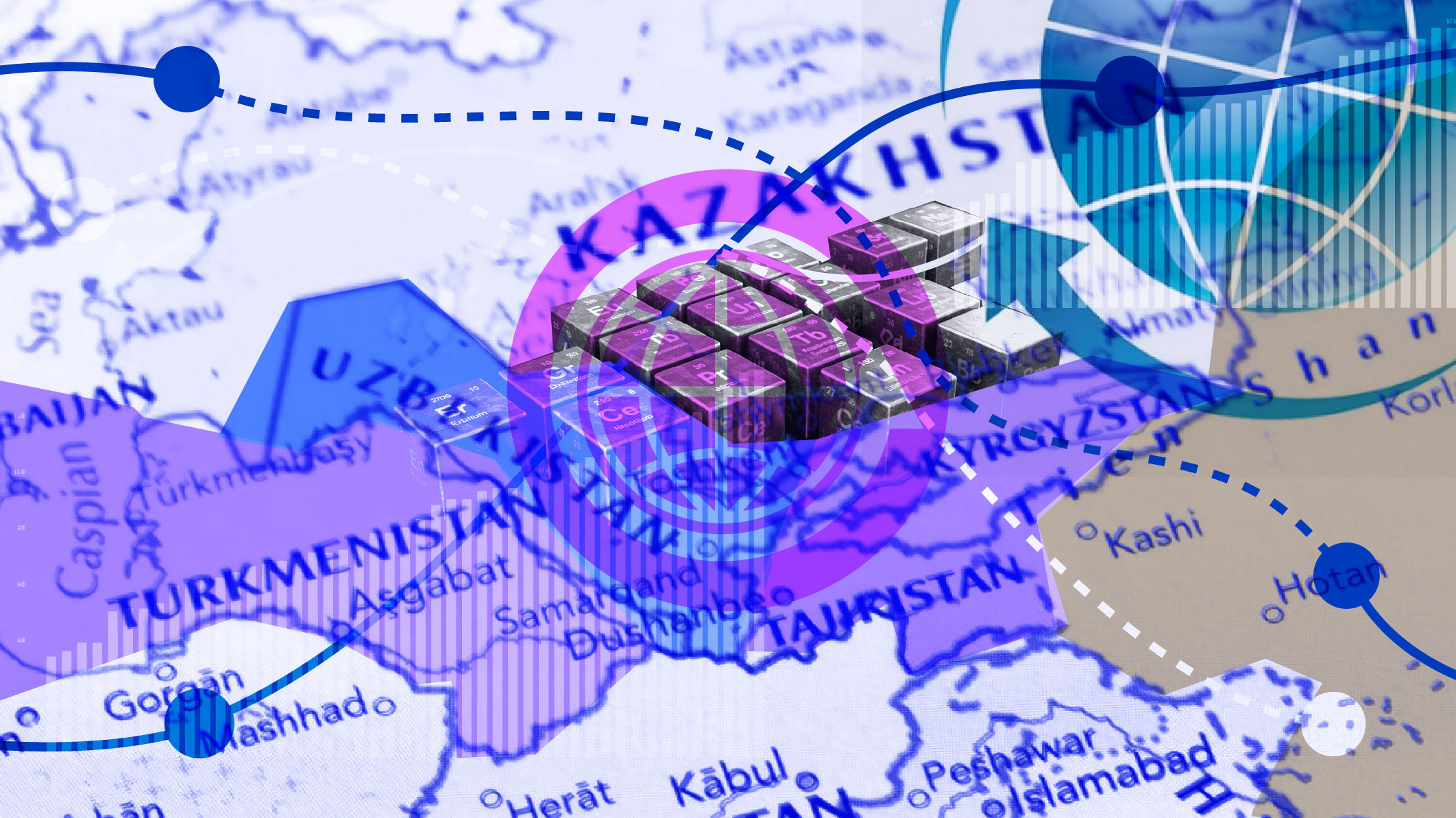
Central Asia suffers from the lack of water and deglaciation but at the same time it is sitting on the largest reserves of rare earth metals, a vital resource for the “green transition” and the defence industry of the West. Andrew D’Anieri from Atlantic Council suggests mining critical minerals and spending the profit on modernizing irrigation and the precipitation enhancement technology. On the outside, the idea looks like a win-win situation but in reality, a cruel geopolitical game hides behind the facade of caring about water security of the region. The EU, with its problem of critical minerals’ shortage, gets a role of an observer watching the US and China carving up the resources.
Kazakhstan produces 20 out of 50 critical minerals from the US list. The country’s share in the global production of uranium is 40%. Copper, tungsten, and rare earths are also quite significant. The Uzbek reserves are estimated at $3 trillion, the country signed agreements on the extraction of minerals with Washington. Most raw materials are sent for processing to China where almost 90% of global processing capacity for rare earths is located. The authors of the report do not make the fact of this dependency on Chinese processing a big deal. For the US - China bargaining it is a working tool rather than a problem, as opposed to Europe which got no place in this dialogue.
Trump's meetings with the leaders of Central Asia have been followed by specific deals. US-Australian firm Cove Capital signed a tungsten mining contract worth $900 million in Kazakhstan to be financed by the US Export-Import Bank (EXIM). Washington lobbies the lifting of outdated trade barriers and is willing to provide loans via the DFC and EXIM. The Atlantic Council water-related rhetoric acts as a perfect guise: the American investments into minerals extraction are presented as a way to save the region from drought by purchasing cloud seeding technologies from Rainmaker, a Californian company, and modernizing irrigation. The US strengthens its position in this strategically important industry pushing out competitors by lobbying power rather than by market mechanisms.
China has already invested more than $75 billion into Central Asian infrastructure. East Hope Group is working on a project worth $12 billion to set up a metallurgical cluster in Kazakhstan with a full production cycle and green technologies. The new version of the Chinese subsoil law technically tightens the environmental standards the Chinese companies will have to follow in their operations including abroad. China plays the long game by controlling and gradually improving its ESG reputation.
The Atlantic Council report calls Kyrgyzstan and Tajikistan the areas where Western investments are unlikely due to “uncertain regulatory environments and Chinese dominance.” Tajikistan is the second largest producer of antimony which is critical for the batteries. Europe conducted a summit in Samarkand in April 2025 promising €12 billion of investments, but as far as the real battle for resources is concerned, Brussels is not even in it.
The authors don't even mention the EU as a significant player in the region. The US gets access to the mineral resources in exchange for technology and financing. China keeps its monopoly on processing and increases its footprint. Europe, in turn, faces the risk of ending up in a dual dependency situation: on Washington in terms of the access to primary resources and on Beijing in terms of their processing.