





Read news
Add bookmark
POPULAR
Oil? Gas? Fertilizer? Just Life.Mario Draghi Calls Europe to Action Again18 Months After Mario Draghi’s Report About European Competitiveness Prospects. Two Perspectives on the State of AffairsThe EU and the Migration Issue Will Europe Be Erased by Uncontrolled Migration?Better coordination for a more efficient European energy systemBarometer Check: Transatlantic Security and the Munich Security ConferenceNew Eastern Empire to Wreck EU: What Péter Magyar Starts with as Head of HungarySecurity Conference: The EU in Search of its Sovereignty
On 18 February, an article entitled Conférence sur la Sécurité : l’UE en quête de sa souveraineté by Bernard Chappedelaine, ex adviser to the French Foreign Ministry, was published on the website of the Institut Montaigne (France).
The article deals with the differences that emerged between Europe and the USA and among individual European countries and their leaders at conferences held in the first half of February: the European Industrial Summit in Antwerp on 11 February, a European Council meeting at Alden Biesen, Belgium, on 12 February, and the Munich Security Conference on 13–15 February.
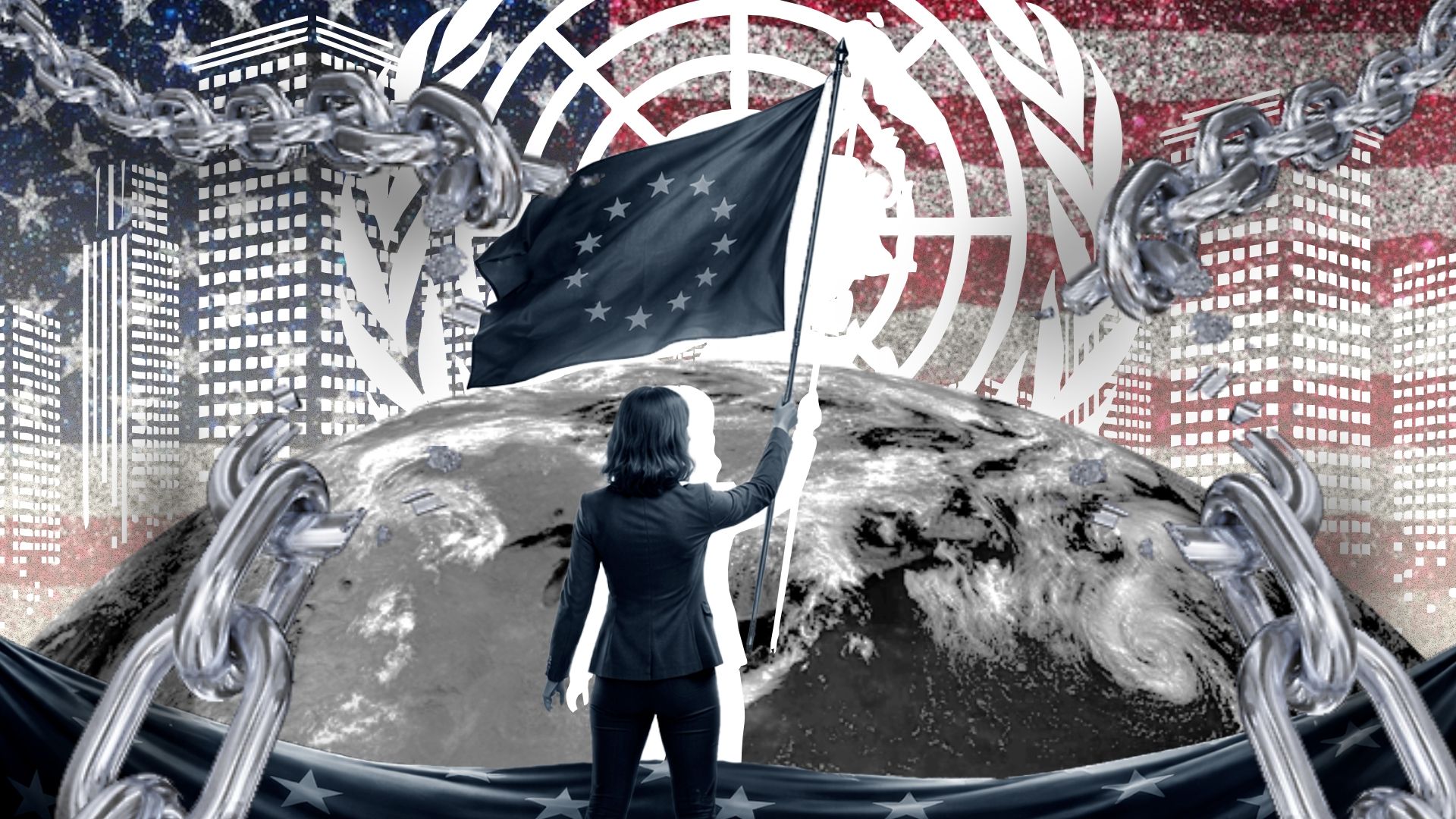
At the European Industrial Summit, participants arrived at a common conclusion about the economic difficulties faced by the EU. These are high energy prices, bureaucracy, and Chinese and U.S. competition, Yet no consensus was reached as to solutions, especially between Berlin and Paris.
The European leaders are divided: France stands for integration, while Germany and Italy criticize excessive centralization. Macron and Merz differ, and their controversy paralyzes the EU that risks being crushed by other great powers in the meanwhile.
At the European Council meeting at Alden Biesen, Mario Draghi, ex prime minister of Italy, pointed out that the current economic order was dead and the EU risked becoming subordinated, divided, and deindustrialized at once, and called for a shift from confederation to federation.
Despite the traditional differences among the European leaders, they concurred that immediate action was needed. A roadmap is to be presented to the European Council on 19 or 20 March. More than EUR 10 trillion are at stake, part of which (EUR 300 billion annually) is now being invested in the USA.
António Costa, President of the European Council, noted ‘broad agreement’ on the need to protect and strengthen a number of sectors such as defense, space, cleantech, quantum, artificial intelligence, and payment systems.
Besides, the European Commission is expected to take measures to simplify administrative procedures. Ursula von der Leyen has announced the creation of a 28th legal regime – to streamline the establishment of companies governed by European law.
At the Munich Security Conference, the U.S. speaker Rubio took a more conciliatory stance compared with last year’s speech by Vice President Vance. But the Trump Administration’s demands are essentially unchanged.
Elbridge Colby, U.S. Undersecretary of War for Policy, called for the creation of a ‘NATO 3.0’ with Europeans assuming a considerably larger part of defense expenditures. This new burden sharing is already a reality as regards assistance to Ukraine. Since 2025, assistance from the USA has decreased. European aid, amounting to EUR 177.5 billion, now exceeds that provided by Washington D.C. That led to greater dependence on U.S. arms supplies. Between 2020 and 2024, European imports of American arms increased by 155 percent compared with the preceding period of 2015–2019.
According to a survey held by Politico, Europeans perceive the USA as an untrustworthy ally; its image has faded considerably, especially in Germany, France and the United Kingdom.