





Read news
Add bookmark
POPULAR
Oil? Gas? Fertilizer? Just Life.Europe’s Rickety Shield: Faith Instead of Real ProtectionAI’s Impact on Military Intelligence and Decision-Making The Simulacrum of Normative PowerAn Illusion of Managed Interdependence. A Transatlantic Tech PartnershipAI and Democracy: Carnegie Endowment Paving the Way to Big TechGermany Balks at Palantir: Data Sovereignty Put Before Military AI
Europe’s fears over ‘U.S. control’ outweigh its actual defense needs again. Germany, at least for now, refuses to adopt Palantir software, a most advanced data analysis system, in its armed forces. Thomas Daum, head of cyber defense at the Bundeswehr, stated expressly in his interview to Handelsblatt: ‘It is simply inconceivable at the moment to grant industry staff access to the national database.’
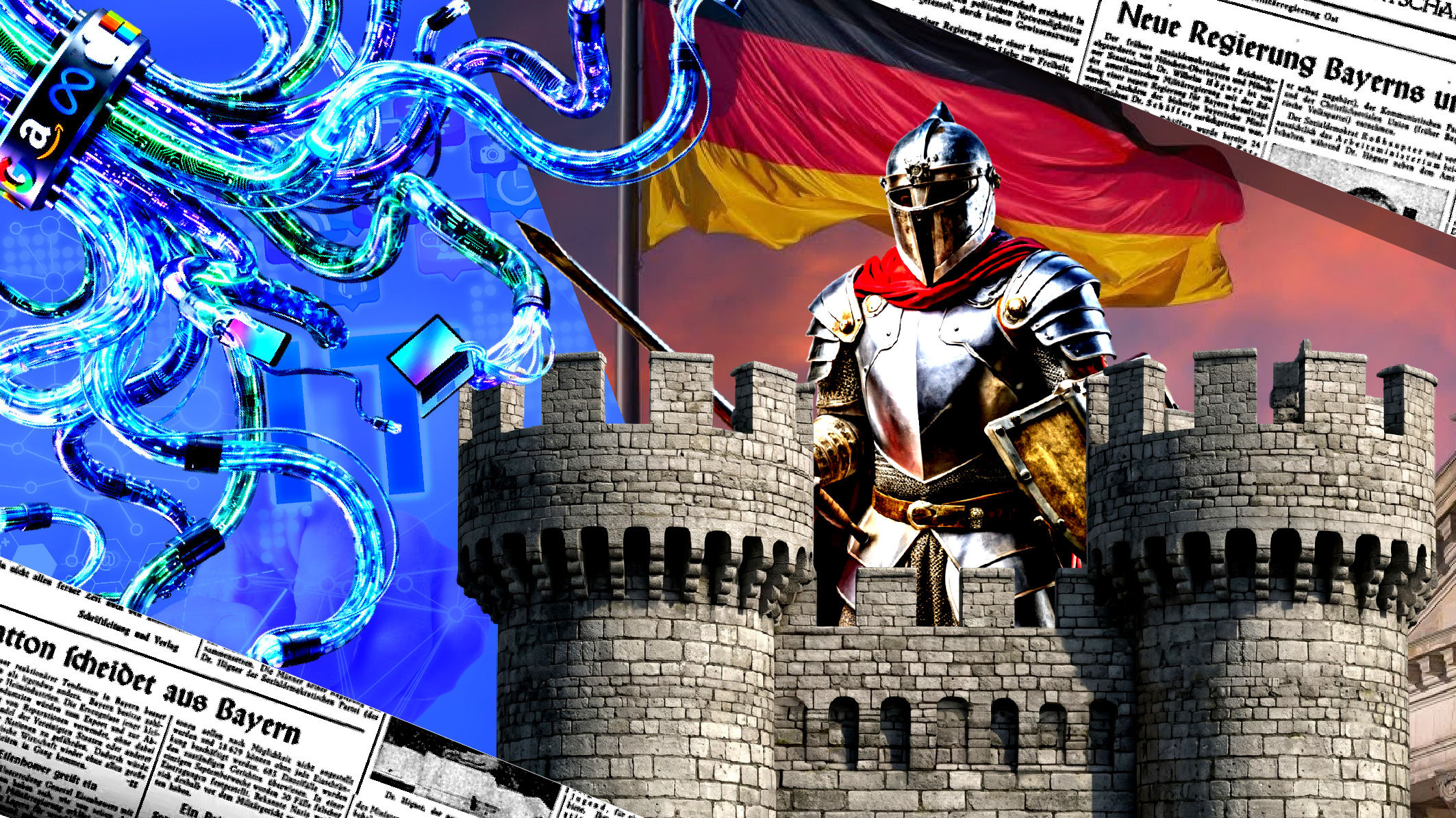
Yet the military do acknowledge that Palantir is exceptionally efficient in real-time processing of battlefield information.
This decision reflects a deep structural paralysis in European defense politics. An ideological push for ‘digital sovereignty’ and fear of foreign technology block the adoption of tools critical to modern warfare. Now that in the USA Palantir has been designated a ‘program of record’ by the Pentagon and fully integrated into military infrastructure, Germany keeps postponing any steps. The company has been a vocal proponent of integrating AI into democratic nations’ defense, arguing that otherwise they cannot maintain their strategic advantage. However, it is Palantir’s close association with the U.S. defense industry that has become a deal breaker for Europeans. As a result, Europe is itself renouncing a capability that could make up for its chronic lag in decision-making speed and analysis of big arrays of battlefield data.

Compounding the situation is rapidly growing tech competition. China and Russia do not hesitate to actively embed military AI into their reconnaissance, targeting, and autonomous combat control systems. While the European capitals remain plunged in regulatory and ideological wrangling, potential enemies get an increasingly tangible advantage in a future battlefield. The decision by Germany, a leading EU economy, sends a very negative signal to the whole continent: even amid a new technological reality, it prioritizes political principles and data control over efficiency and combat readiness.
This is not an isolated problem. Europe already has serious difficulties in the Middle East, where France faces an acute shortage of missiles, and in the energy field where integration is constantly hindered by national interests. Now added to this list is technological self-restraint in defense, the most sensitive area. Even though the Bundeswehr expressly admits its need for such systems as Palantir, the ideological barriers rule. This points to a systemic nature of the problem that only widens the gap between Europe and countries ready to act quickly and pragmatically in a modern war.
As a result, Germany and all Europe risk falling behind technologically forever. While European politicians try to sort out their data and sovereignty phobias, China, Russia and other players get a decisive and possibly irreversible advantage. This is another serious step towards deeper European helplessness, inability to take tough decisions, and the habit of putting ideological illusions before real security. The longer this approach persists, the more likely Europe is to become not just weak but unarmed in the face of mounting threats at a critical moment.