World Center for Strategic Studies
From closed analysis to public debate

- MONTH
- YEAR

Germany’s Fiscal Straitjacket: Rules That No Longer Fit
The analysis zeroes in on Germany’s growing fiscal bind and delivers an uncomfortable message – the rules that once guaranteed stability now risk locking the country into stagnation. Berlin faces huge investment needs in defence, infrastructure and climate transition, yet remains hemmed in by strict budget constraints. The piece argues that Germany is stuck between discipline and decay, and the longer it hesitates, the higher the price.
At its core, the paper says Germany’s fiscal rules are colliding with reality. The debt brake was designed for calmer times, when growth was strong and geopolitical risk low. Today, it clashes with weak economic momentum, ageing infrastructure and rising security demands. What once signalled prudence increasingly looks like paralysis.
Discipline turns into drag
Germany’s commitment to tight fiscal rules limits public investment just when it is most needed. The analysis shows how underinvestment is no longer theoretical – it is visible in crumbling infrastructure, delayed projects and missed opportunities.
Investment needs pile up
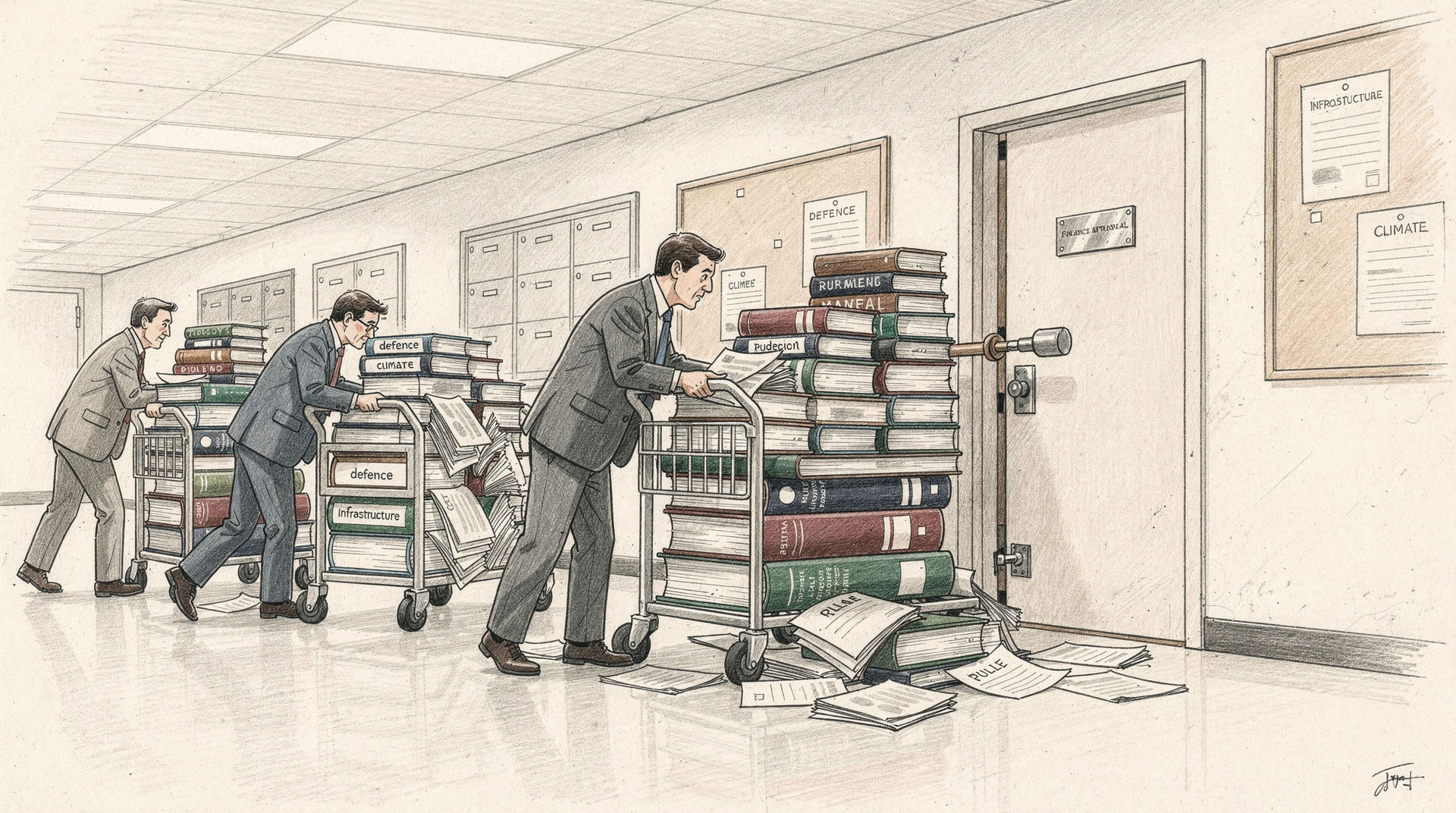
From defence to digital networks, the list of priorities keeps growing. The paper stresses that these are not optional upgrades but essentials for competitiveness and security. Funding them within existing constraints is becoming close to impossible.
Politics blocks reform
Changing the rules is politically toxic. The analysis highlights deep resistance to touching the debt brake, even as consensus grows that it no longer works as intended. Debate circles endlessly without resolution.
Europe watches Berlin
Germany’s stance shapes the wider EU fiscal debate. The paper frames Berlin’s dilemma as contagious – if Germany cannot adapt its rules, broader European flexibility remains limited.
Short-term fixes replace strategy
Temporary funds and accounting tricks are used to bypass constraints. The analysis warns this creates opacity and undermines trust, offering neither clarity nor sustainability.
Delay raises long-term costs
Postponing reform does not preserve stability. The paper argues it quietly shifts costs forward, leaving future governments with fewer options and bigger bills.
The uncomfortable truth: Stability has become stagnation
Germany’s fiscal framework protects the past but struggles to finance the future.
Unless Berlin finds a credible way to reconcile discipline with investment, the rules meant to anchor confidence will keep weighing the economy down. Germany may avoid fiscal drama – but at the cost of slower growth, weaker resilience and a shrinking role as Europe’s economic pillar.