World Center for Strategic Studies
From closed analysis to public debate

- MONTH
- YEAR

Germany’s Foreign Policy Creed: Fine Words, Fading Power
The analysis takes a close look at the principles guiding German foreign policy and exposes a widening gap between aspiration and impact. Berlin speaks the language of responsibility, multilateralism and restraint. The problem, the piece argues, is that these principles increasingly look like comfort blankets in a world that rewards speed, leverage and hard choices. What once sounded virtuous now risks sounding evasive.
At its core, the brief says Germany’s foreign policy is built on norms forged in a gentler era. Commitment to dialogue, international law and economic interdependence shaped decades of stability. Today, those same principles collide with aggression, coercion and zero-sum competition. Germany insists the compass is still valid, but the terrain has changed beyond recognition.
Values without enforcement
Germany places heavy weight on rules and institutions. The analysis shows how this emphasis struggles when partners ignore norms and adversaries exploit restraint. Principles look hollow when violations carry few consequences.
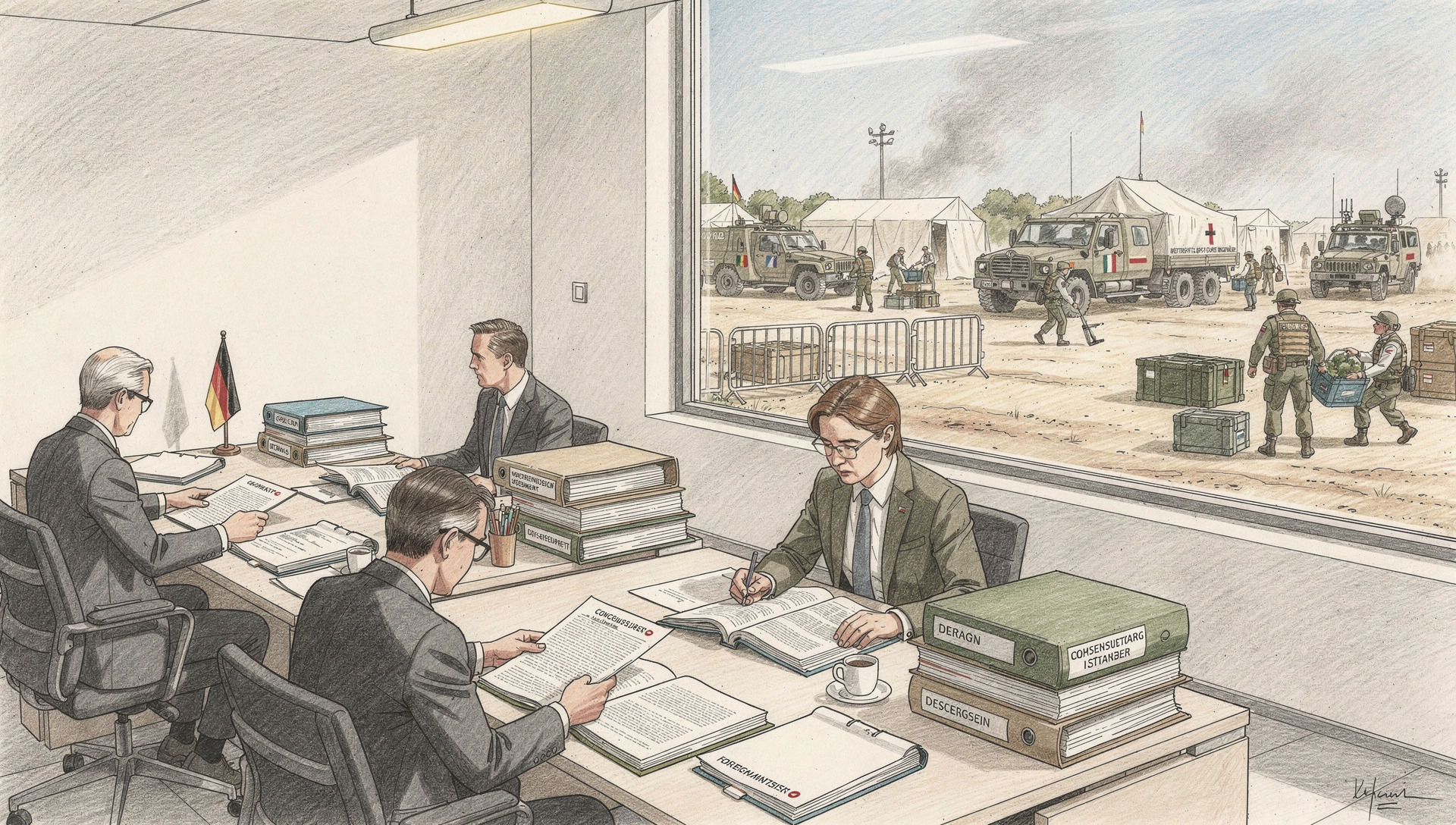
Restraint becomes hesitation
Caution was once a strength. The paper argues it now slows response and blurs signals. Decisions drag on, messages soften, and opportunities to shape outcomes slip away.
Economic ties cloud judgment
Trade and interdependence remain central to Berlin’s worldview. The analysis highlights how this creates blind spots, making Germany reluctant to confront partners whose markets it values, even when strategic risks are obvious.
Multilateralism under strain
Germany’s instinct is to act through alliances and consensus. The paper warns that when coalitions move slowly or fracture, Berlin is left waiting rather than leading.
Zeitenwende still unfinished
Rhetoric about strategic turning points has not fully reshaped practice. The analysis shows how old habits persist, limiting the impact of promised change in defence and security policy.
Credibility gap widens
Partners listen closely to what Germany says, then watch what it does. The paper frames this as a trust problem – reliability requires delivery, not just principles.
The stark truth: Principles don’t substitute for power
Germany’s foreign policy creed is coherent, but insufficient on its own.
If Berlin keeps relying on values without backing them with speed, resources and resolve, its influence will keep thinning. In a harsher world, principles still matter – but only when they are reinforced by the ability and willingness to act.