World Center for Strategic Studies
From closed analysis to public debate

- MONTH
- YEAR

Europe’s Geopolitical Bill Comes Due: Growth, Trade and Stability at Risk
Global politics has turned hostile, and Europe is paying the price. This report lays out how wars, great-power rivalry and economic fragmentation are colliding with Europe’s weak growth, high debt and fragile politics. The message is restrained but unforgiving: the shocks are real, the buffers are thin, and the room for error is shrinking.
Rather than a single catastrophe, the paper maps a chain reaction. Short-term risks are already hitting trade, energy and confidence. Medium-term scenarios point to slower growth, tougher choices and rising vulnerability if Europe fails to adapt fast enough. This is not a forecast of collapse, but a warning of steady erosion.
Shocks are no longer temporary
Geopolitical disruptions used to be treated as passing storms. The analysis shows they are becoming structural. War, sanctions and bloc politics now shape prices, investment and supply chains in lasting ways, undermining Europe’s old assumptions.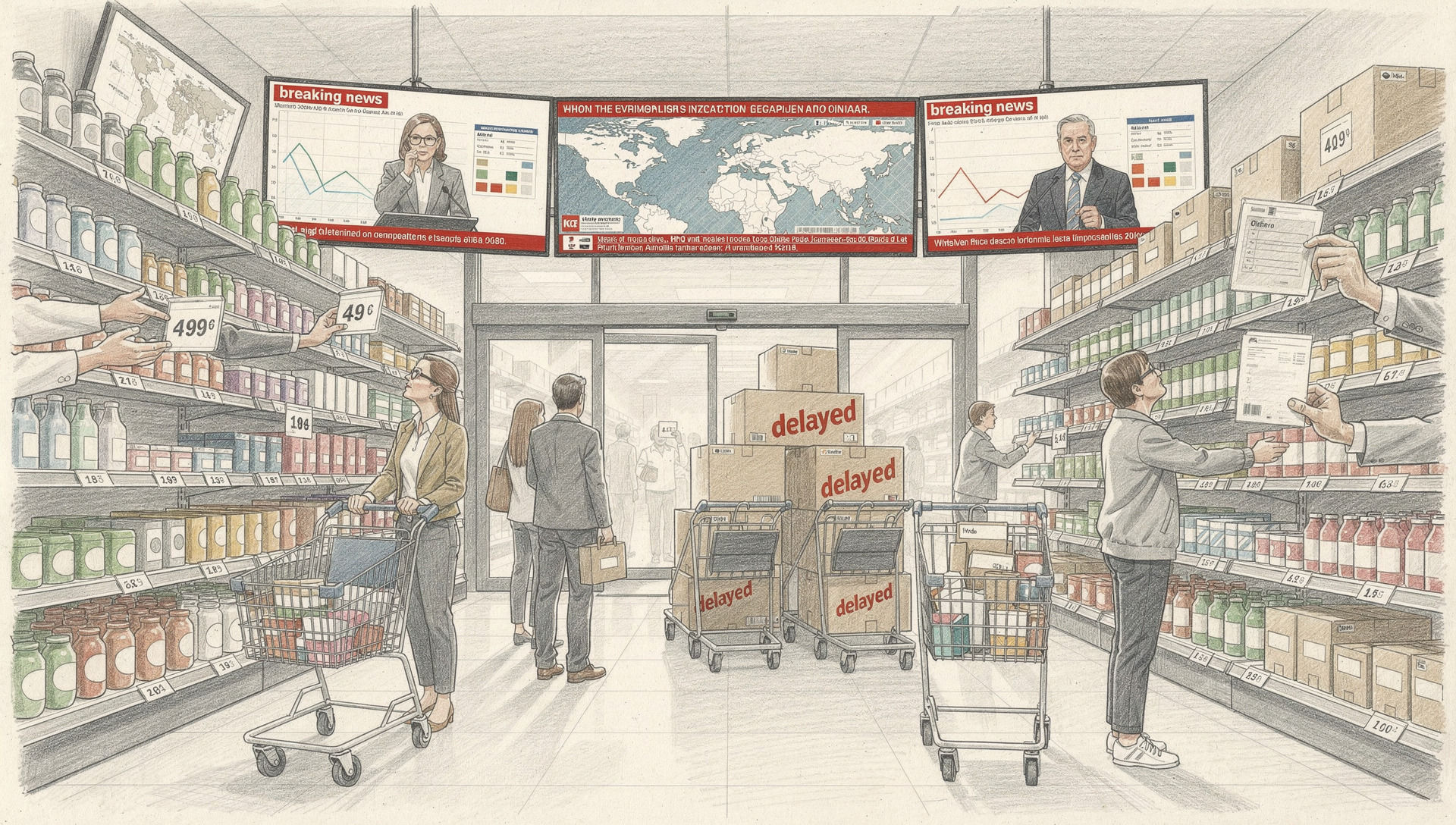
Trade turns from engine to exposure
Open trade once powered European growth. Now it is a source of risk. The report details how export dependence, supply chain concentration and exposure to hostile actors amplify shocks instead of absorbing them.
Energy calm hides deeper fragility
Energy prices have eased from crisis peaks, but the danger has not passed. Europe remains vulnerable to renewed disruption, with limited control over global markets and heavy costs baked into its industrial base.
Fiscal space runs out fast
High debt and tighter monetary conditions leave governments with little room to respond. The paper highlights how repeated crises have eaten away fiscal flexibility, making future shocks harder to absorb without pain.
Fragmentation weakens the response
National reactions still dominate. Coordination improves in emergencies, then fades. The analysis shows how uneven policies and political hesitation dilute Europe’s collective strength when consistency matters most.
Medium-term decline, not dramatic collapse
The most unsettling finding is the trajectory. Europe risks a future of persistently lower growth, weaker competitiveness and reduced global influence, not through one failure, but many small ones.
Where this leaves Europe: Less resilient, more exposed
Geopolitics is no longer background noise. It is reshaping Europe’s economic reality, and adaptation is lagging behind events.
Without faster reform and harder choices, Europe drifts into a harsher world with fewer tools and higher costs.