





Read news
Add bookmark
POPULAR
Oil? Gas? Fertilizer? Just Life.Better coordination for a more efficient European energy systemA Nuclear Button of Their Own Why Is Europe Considering Non-U.S. Nuclear Options?European Urban Climate Resilience: Ambitious Plans are Hindered by the Lack of Funds and CoordinationLimits of Regulation in the Struggle for Industrial LeadershipEnergy Protectionism Without EnergyCatching Up: Europe’s Path to Strategic Autonomy in the Defense IndustryEurope’s Energy Integration: the Trilemma Remains Unsolved Due to National Selfishness
European plans for the deep integration of their energy systems once again clash with the harsh reality of internal disagreements and political paralysis.
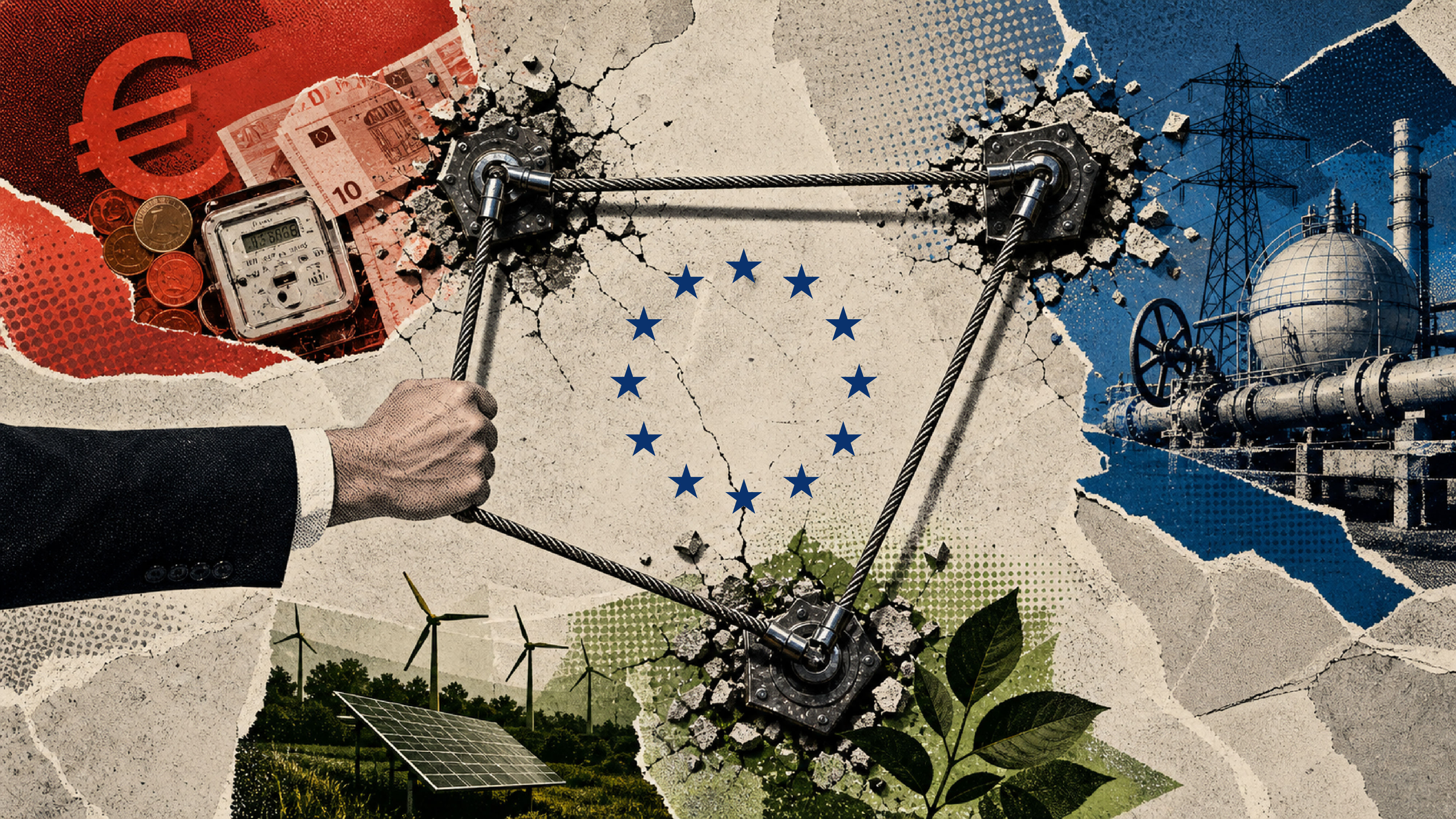
According to the authors of the report by the Brookings Institution, Samantha Gross, director of the Energy Security and Climate Initiative, and Constanze Stelzenmüller, director of the Center on the United States and Europe, system integration is the key to solving the energy trilemma (security, affordability, and reliability). However, Europe continues to show its inability to overcome fundamental barriers. Huge investments of €1.2 trillion into electrical grids alone by 2040, hot debates on who will be paying for it, and the unwillingness of the member countries to abandon a part of their national control turn integration into wishful thinking rather than a realistic project.
The problem is particularly obvious in the electrical energy sector — the key area of decarbonization. Even though integration could have significantly reduced prices, cut renewable energy discharges, and increased the system resilience, many large EU countries still fail to have met even the minimum targets for transporter throughput capacity (15% by 2030). France limits the interconnectors on purpose to protect its nuclear generation from competition with cheaper renewable energy from Spain and Portugal. Norway has already encountered the growth of domestic prices due to the export to the EU which led to a political crisis and the withdrawal of the Euro skeptical party from the ruling coalition. As a result, the electricity prices in different countries still vary significantly and the whole system is extremely vulnerable to local failures as the blackout on the Iberian Peninsula showed in April 2025. Instead of using the advantages of the common market, the European countries continue to follow the “every man for themselves” principle.
The situation with natural gas integration is hardly any better. Even though the EU was able to reduce its dependency on Russian gas, the switch to LNG and the new routes only intensified the regional price disproportion. The joint purchase mechanisms such as AggregateEU have shown their limited capacity resulting in worse integration of the Eastern and Southern parts of Europe. The priority Energy Highways projects (the Baltics, Balkans, Iberian Peninsula, Cyprus, North Sea, hydrogen corridors) are constantly delayed by the problems of financing, regulatory barriers, and political resistance. The CBAM effect is particularly illustrative: the mechanism that is supposed to protect the European climate course simultaneously blocks a deeper integration with the Western Balkans and other neighbors making the market access for them even more expensive and politically vulnerable.
All this is happening in a very tough geopolitical situation. Russia continues to use energy as a weapon, the Trump administration shows its readiness for political blackmailing through the LNG supply, and China actively increases its influence in the global energy chain. Instead of moving forward quickly and firmly, Europe is slowed down by endless domestic discussions on the cost distribution, loss of sovereignty, and social justice. Even when the integration is objectively good for the entire union in the long term, the national selfishness, populism, and fear of losing control always win.
Eventually, there is a risk that the European energy trilemma will remain unresolved and the integration will turn into yet another nice but inefficient slogan. While Brussels tries to reconcile incompatible national positions, the energy prices will remain high, the vulnerability to external shocks will be critical, and the competitiveness of Europe will be under threat. This is another confirmation of the fact that even in a vital sphere where the stakes are very high, the union prefers declarations and good-looking reports to real actions. The longer this approach continues, the higher the probability that Europe will be weak and dependent regarding energy at that very moment when it will need maximum resilience and independence.