World Center for Strategic Studies
From closed analysis to public debate

- MONTH
- YEAR

Europe’s defence dependence is embarrassing: the EU is still buying security from America
This Bruegel policy brief delivers an uncomfortable message Europe keeps dodging – the EU’s defence “autonomy” talk collapses the moment you look at the receipts. Europe is heavily dependent on US Foreign Military Sales (FMS) for key weapons systems, especially as countries rush to rearm after Russia’s war in Ukraine. The problem is not just political pride. Reliance on US arms sales creates delays, reduces Europe’s control, and risks leaving European militaries exposed if Washington changes priorities. Europe wants to be taken seriously as a security actor – but it is still shopping like a client, not building like a power.
Europe’s rearmament boom is fuelling US dominance
European defence spending has surged, but much of the money ends up in the US through FMS. That means Europe is modernising its forces while reinforcing dependence on American supply chains, American political approval and American timelines.
This also weakens Europe’s own defence industry. Every major off-the-shelf purchase from the US is one less industrial investment inside Europe. The EU ends up paying more for “security”, while losing strategic control at the same time.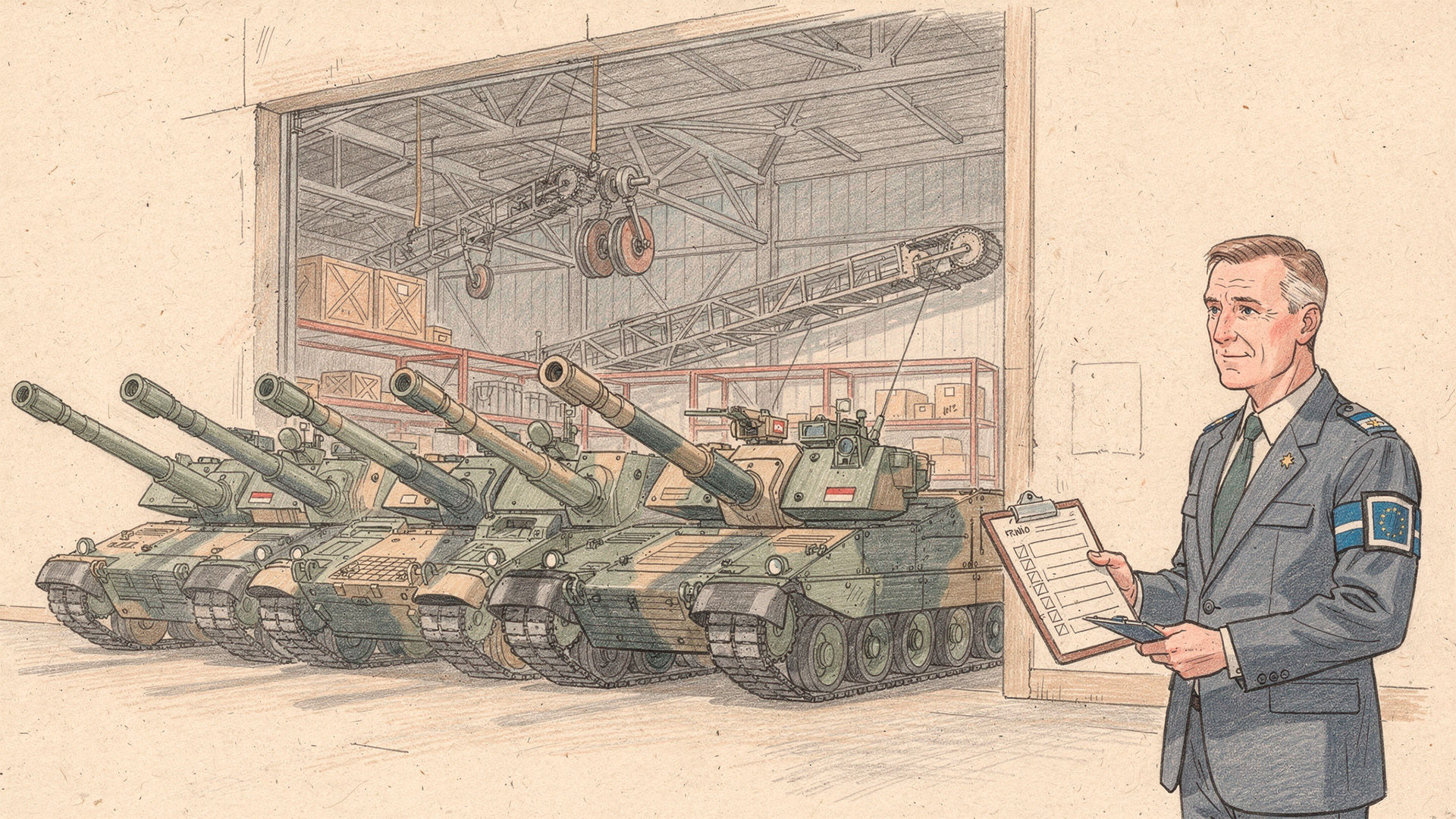

What FMS really means: delays, dependency, and paperwork hell
FMS is not like buying from a shop. It is government-to-government procurement, meaning approvals, political conditions and bureaucracy. The brief highlights how this system creates delays and uncertainty – especially when demand rises sharply, as it has since 2022.
For European countries trying to build credible deterrence, waiting on US processes is a serious weakness. Europe’s defence posture becomes dependent on Washington’s administrative capacity and political mood.
America First risk: Europe could be left stranded
The report stresses a geopolitical risk many Europeans prefer not to say out loud – US commitment is not guaranteed forever. If Washington turns inward or prioritises other theatres, Europe could face restrictions, slower deliveries or limited support.
This is the nightmare scenario for Europe: spending billions, but still lacking real independence because key systems, spare parts and upgrades sit under US control.
A hidden cost: Europe loses influence over its own force structure
Reliance on US systems also shapes how European militaries fight. Interoperability with the US is useful, but overdependence means Europe’s future capabilities are increasingly “designed in Washington”.
That can lock Europe into American standards, training and logistics. It makes it harder to build a truly European defence industrial ecosystem, and harder to pivot if political conditions change.
Europe’s own defence market is still broken
The brief points to Europe’s structural weakness – fragmentation. Dozens of national procurement systems, competing priorities, duplication of platforms, and political resistance to joint purchasing.
This forces countries to buy quickly from the US rather than build collectively in Europe. It is the classic European trap: lack of coordination produces dependency, then dependency becomes the excuse for even more off-the-shelf buying.
What Europe can do – if it stops delaying
Bruegel argues Europe needs to reduce reliance on FMS by strengthening European procurement cooperation, investing in industrial capacity, and using EU-level tools to scale production. Joint purchasing, standardisation and long-term contracts are key.
Europe also needs to think strategically about where US equipment is truly necessary, and where European industry can replace it – not in theory, but through funded programmes and faster delivery timelines.
The brutal takeaway
Europe is rearming, but it is doing it in a way that deepens dependence on the US. That leaves Europe vulnerable to US politics, US bottlenecks and US strategic priorities.
If the EU wants real security autonomy, it needs to stop outsourcing the core of its defence build-up. Otherwise Europe will remain what it too often looks like today – a rich continent paying America to keep it safe.