





Read news
Add bookmark
POPULAR
Oil? Gas? Fertilizer? Just Life.Energy Protectionism Without EnergyEU - China Relations: Role of the European Commission in Forming Strategic ProspectsThe European Union Intends to Fight Space Wars. Does the European Military Space Project Have Room for Development?European Unity in the Interests of Security. Split along the North-South LineCatching Up: Europe’s Path to Strategic Autonomy in the Defense IndustryEurope’s Door to Chinese Tech Investment Is Still Ajar
An article by James Green and Sander Tordoir from the Centre for European Reform analyzes the current EU policy in respect of Chinese foreign direct investment (FDI) in high technology sectors. The main issue as noted by the authors is that Europe, while having learned to efficiently block direct acquisitions of strategic assets by Chinese companies, cannot yet fully neutralize new risks posed by greenfield investments – with manufacturing facilities built from scratch in EU territory. That threatens the whole Union’s economic security, technological independence and competitiveness.
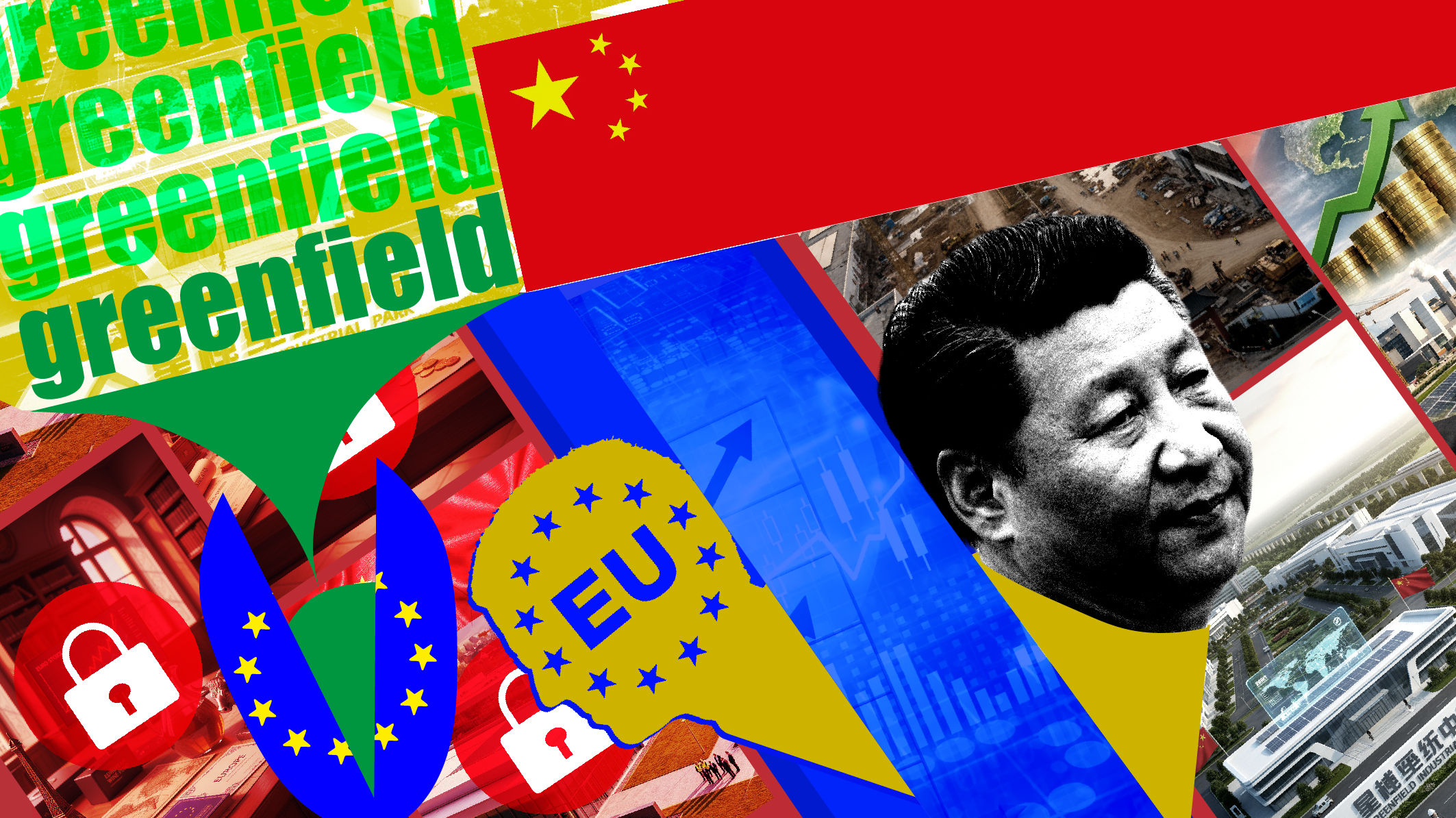
The authors’ reasoning is based on retrospective as well as present-day data. Between 2000 and 2023, China invested some EUR 138 billion in the European economy – largely in critical infrastructure, critical materials and high-tech assets. In the 2010s, Chinese investors succeeded in acquiring some key assets in the semiconductor industry (Silex, Okmetic, LFoundry, Nexperia), robotics (Kuka) and other segments. Such takeovers facilitated know-how transfers and were in line with China’s Made in China 2025 strategy. Until 2022, European countries did almost nothing to prevent such deals, in the belief that ownership did not matter so long as the jobs were preserved.
The situation changed after Russia’s military aggression in Ukraine and open support for the Russian position by China. In December 2025, the EU agreed on a tighter investment screening mechanism: the procedure became mandatory in all member States for a common list of strategic sectors (defense, AI, quantum technology, semiconductors, energy, transport, etc.) and was extended to close the loophole for investments routed through EU subsidiaries controlled by third countries. A number of deals were blocked as a result: in Germany (Elmos, Siltronic), Italy (LPE), the Netherlands (Nexperia, 2025), and the UK (Newport Wafer Fab).
Chinese investment continued nevertheless, albeit in a different form. Its total volume dropped from a peak EUR 90 billion in the 2010s to some 10 billion in 2024, but the share of greenfield projects grew sharply, especially in the car and battery sector that now accounts for some half of all investment. The geography has changed, too: instead of Germany and France, the main destinations are now Hungary (44 per cent of all Europe-bound Chinese investment in 2023), Spain, and Central European countries. Examples include a CATL factory in Spain, and BYD and Envision Group projects.
Such investments enable Chinese companies to circumvent the EU’s tariffs on car imports (up to 35 per cent) and mainly create assembly plants with minimum local value added or employment and strong dependence on component supply. They also carry political risks (influence on individual countries’ positions on tariffs and sanctions) and security threats (cyber security, data processing, and potential technology leakage).
In summing up, the authors point out some negative implications for Europe. The EU has effectively solved yesterday’s problem of uncontrolled takeovers but failed to cope with tomorrow’s problem of Chinese-controlled manufacturing facilities being placed in Europe. That leads to fragmentation of the single market, technological dependence, and weakening of the industrial base. Countries with tough regulations (Germany, France and the Netherlands) are losing investment while Hungary and Spain become gateways for Chinese capital within the EU. Europe should strengthen its competitiveness, and that means deepening the single market, easing regulatory constraints, improving labor and capital allocation, and targeting industrial policy where Europe can realistically compete. Ultimately, the EU’s China policy is no substitute for economic reform at home. Barring that, Europe risks losing its positions in key industries and having its economic sovereignty eroded in the long run.