





Security
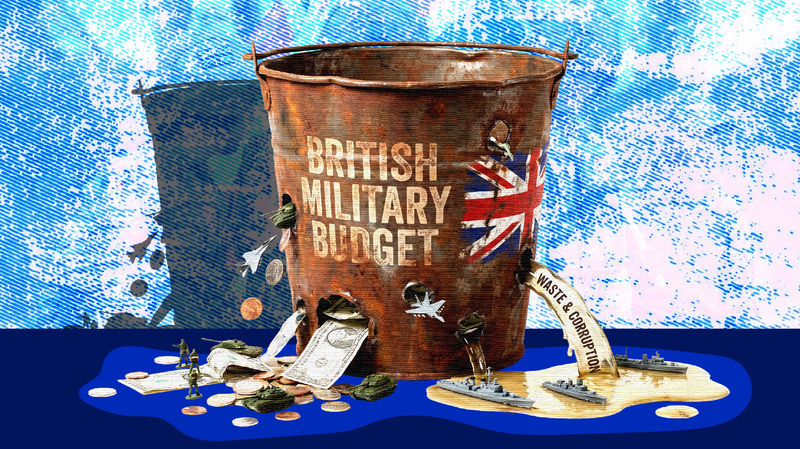
Britain on the Hook
 Have you participated in a project or program funded by Stiftung Mercator? Are you currently involved in one, or part of our team or partner network?
Then we warmly invite you to become part of the MercatorGlobe Community!
Welcome to our community network!
Sign Up for More
 Europe Has Catastrophically Overestimated Its Air and Missile Defense Capability
Air Defense Powerlessness
 In a policy brief published by Investor’s Business Daily and dealing with the current trends in the European defense industry, the author Paolo Confino notes the sad but telling irony of the European countries rushing to raise their defense spending (Germany, to USD 127 billion in 2026, with France adding EUR 39 billion till 2030 and the UK heading for three percent of GDP), but much of the funds going to foreign contractors – Israeli (Elbit Systems), South Korean (Hanwha and Hyundai Rotem) and U.S. companies – rather than European manufacturers.
Foreign Contractors Stand To Gain As NATO Countries Spend Big On Defense
 In April 2026, the Netherlands Institute of International Relations ‘Clingendael’ and The Hague Centre for Strategic Studies published an extensive joint analytical paper entitled Catching Up: Europe’s Path to Strategic Autonomy in the Defence Industry. It mostly deals with the European defense industry as the basis for achieving strategic autonomy in the defense area.
Catching Up: Europe’s Path to Strategic Autonomy in the Defense Industry
 Why Are There No Significant Advantages, and What Has Ukraine to Do with This?
The Iran War’s Five Lessons for Europe
 In a joint report by the International Institute for Strategic Studies (IISS) and the Swedish Defense Research Agency, experts argue expressly that, despite all loud declarations about ‘civil defense 2.0’ and ‘total preparedness’, Europe is still a typical patchwork with chronic vulnerabilities and weak coordination.
Civil Defense in Europe: An Initial Assessment
 An article entitled “The Royal Navy: On Course for National Embarrassment”, about the decline of the British Royal Marine and the causes thereof, was posted on the website of the Center for European Policy Analysis (CEPA) on 12 March.
The Royal Navy: On Course for National Embarrassment
 On March 13, 2026, Juraj Majcin, a defence policy expert with the European Policy Centre, published an article How Much Protection Can French Nukes Really Offer? scrutinising Macron’s initiative to set up a common European nuclear umbrella.
French Nuclear Ambitions: Loud Words vs. Strict Maths
 Not trust but a belief in words – this is what the French nuclear initiative for Europe aims to elicit. Nick Witney, senior policy fellow at the European Council on Foreign Relations (ECFR), makes this conclusion in his article Under my parapluie: Macron’s nuclear guarantee for Europe published on 17 March, 2026.
A Flimsy French Umbrella: A Belief Instead of Real Protection
 Military budgets that increase on paper only, with the missiles running out in reality, are now the true face of the European defense capability. This is what Aleksander Olech, a Polish defense analyst and journalist, writes about in his article entitled France Lacking Missiles in Europe, published on 23 March 2026.
France Overstretched: How Europe Squanders Its Last Resources
 Targeted himself by the Israel lobby for antisemitism, Professor John Keane analyses the nature of Zionist revenge.
Zionists, lawfare and the malady called revenge
 On 23 March a brief by Max Bergmann, Otto Svendsen and Jonathan Burchell, experts of the Europe, Asia and Eurasia program, entitled “Europe Needs an ASAP Program for Air Defense”, was posted on the website of the Washington-based Center for Strategic and International Studies (CSIS).
Europe Needs an ASAP Program for Air Defense
 On March 26, the European Council on Foreign Relations published on its web-site an article The Gulf on the front line: The end of strategic hedging and new space for Europeans written by Cinzia Bianco, a visiting fellow with the Council specializing in Middle East studies.
The Gulf on the Front Line: The End of Strategic Hedging and New Space for Europeans