





Security
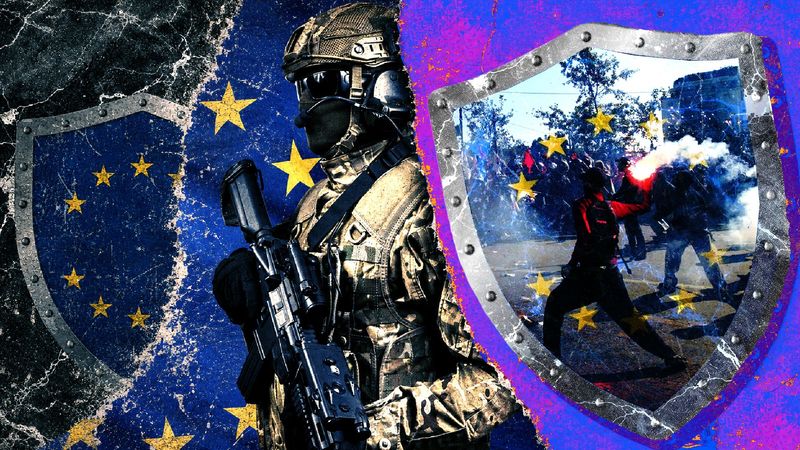
The EU Countries Face Numerous Military Capability Gaps
 Have you participated in a project or program funded by Stiftung Mercator? Are you currently involved in one, or part of our team or partner network?
Then we warmly invite you to become part of the MercatorGlobe Community!
Welcome to our community network!
Sign Up for More
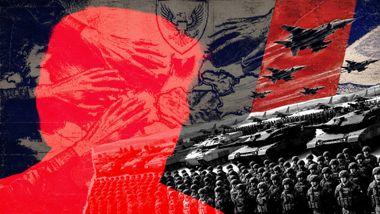 Poland, Lithuania, Latvia, Estonia and Romania are supporting the war against Iran in the hope that Trump will decide to station his troops, to be withdrawn from Germany, in their territory.
NATO’s frontline countries jockey for U.S. troops after Trump’s Germany withdrawal
 On 2 March 2026, French President Emmanuel Macron delivered a speech on nuclear deterrence. European NATO allies have welcomed the speech and accompanying initiatives. Yet there remain questions about the durability and implementation of Macron’s nuclear initiatives. Defense analysts Zuzanna Gwadera and Alexander K. Bollfrass discuss this in their article entitled French nuclear deterrence: Vive l’évolution on the website of the International Institute for Strategic Studies (IISS).
Macron Ready to Swap French Nuclear Deterrence for Allies’ Participation in Other Defense Spending
 In the article The EU’s Technocratic Trap in Libya: How Brussels Is Ceding the Mediterranean published at the Stimson Center website, Andrea Cellino, a Swiss Italian expert and vice president of Middle East Institute Switzerland, makes a hard and painful statement about the European policy: 15 years after the fall of the Gaddafi regime the EU remains the largest donor of Libya having poured hundreds of millions of euro into the country but having lost any political clout there all together. Brussels has turned into a miserable onlooker, as countries like Russia, Turkey, and the UAE really determine the future of the country.
The EU’s Technocratic Trap in Libya: a Disgraceful Surrender of Brussels in the Mediterranean
 In the article Europe: doctrinal shift towards violence, Aneela Shahzad, a Pakistani geopolitics, makes a harsh and extremely uncomfortable conclusion: Europe eventually stopped pretending to be a peaceful, humanistic, and liberal continent. It is openly and deliberately rebuilding its economy for war and making a radical doctrinal pivot towards militarism and preparing for a large-scale military conflict.
Europe: doctrinal shift towards violence. Transition to a war economy instead of a “liberal democracy”
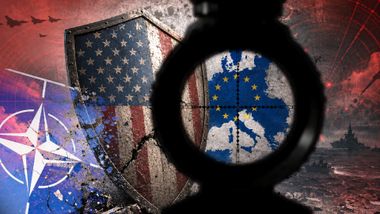 In their report Defending Europe without the United States? The future of the European security (CIDOB, April 2026) following the results of the 24th conference “War and Peace in the 21st Century”, experts Clàudia Domeque and Matthew McLaughlan make an extremely depressing conclusion: the second term of Donald Trump has put the transatlantic relations on the brink of complete separation.
Defending Europe without the US: an illusion of strategic autonomy and a reality of strategic helplessness
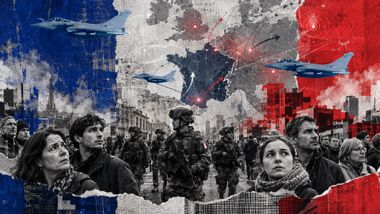 In the article Les Français et les enjeux de défense, Jeanne Lebaudy from the well-known French L'Institut Montaigne reveals with crushing sincerity an extremely uncomfortable and deeply significant contradiction of today’s French and, by extension, European society: the French increasingly state that defense is one of the important problems but at the same time they flatly do not wish to embrace real consequences of this “importance”.
France and matters of defense: big talk instead of real war-readiness
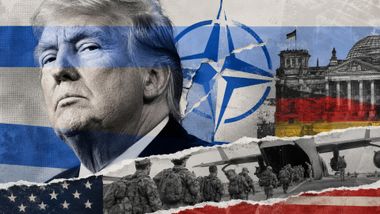 A few days after President Donald Trump voiced his intention to withdraw 5,000 U.S. soldiers from Germany, the head of his country’s Department of War supported him. Defense Secretary Pete Hegseth confirmed on 1 May that the USA was really planning to complete the withdrawal in the following six to twelve months.
Flight or Strategy. Why Does America Remove Troops from Germany, and Can It Be Stopped from Doing So?
 EU military capacity-building is fraught with a number of problems and bottlenecks, as Slovak researcher Miro Sedlák showed in his article – entitled Europe’s Defense Factories: More Urgency Please and posted on the website of the Center for European Policy Analysis.
Factories to Be Targeted in a War For Which Europe Is Unprepared
 President Donald Trump’s recent announcement that the United States would withdraw five thousand troops from Germany – with the threat of ‘cutting’ even more from U.S. bases across Europe – has taken U.S. allies by surprise. The decision seems driven less by strategic calculations about burden-shifting within NATO and more by a desire to punish Europeans for their criticism of and limited support for the Iran war.
Trump Pulling Troops Out of Germany. Canceled Missile Deployments to Erode the Foundations of NATO Deterrence
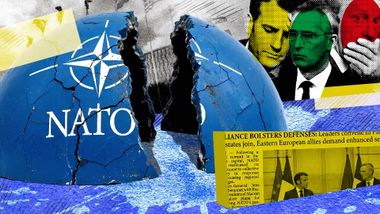 Three U.S. professors of political science – Michael A. Allen (Boise State University), Carla Martinez Machain (University at Buffalo), and Michael E. Flynn (Kansas State University) – make this conclusion in their article posted on The Conversation expert website.
NATO’s Internal Cohesion Is Being Threatened
 In an article entitled Detecting a ‘dirty bomb’: How Europeans can combat radiological threats, Jacek Siewiera, former head of the National Security Bureau of Poland, warns that the Iran war and the recent reports of drones carrying radioactive materials in central London send yet another serious signal. Europe is catastrophically unprepared for the new hybrid threats that may hit its cities at any moment.
Europe’s Rickety Shield: Faith Instead of Real Protection
