





Economics
Why capitalism is fundamentally undemocratic
 Have you participated in a project or program funded by Stiftung Mercator? Are you currently involved in one, or part of our team or partner network?
Then we warmly invite you to become part of the MercatorGlobe Community!
Have you participated in a project or program funded by Stiftung Mercator? Are you currently involved in one, or part of our team or partner network?
Then we warmly invite you to become part of the MercatorGlobe Community!
Welcome to our community network!
Sign Up for More
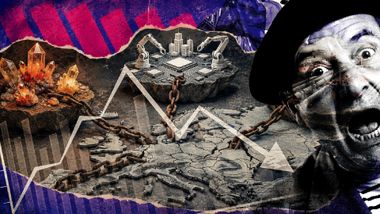 In his analytical paper entitled Not All Dependencies Are Equal: Europe’s Energy Transition in the Wake of Geopolitical Crisis Camillo Stubenberg, a Cornell University PhD and an affiliated researcher at the Austrian Institute for International Affairs, is trying to convince the reader that Europe’s energy transition is not just a climate policy but a complicated transformation of dependencies. But in practice the text only confirms what critics say: while rejecting one dependency, Europe quite plausibly falls into another, no less dangerous and far longer-lasting one.
Not All Dependencies Are Equal, but This Is Not Easier for Europe
In his analytical paper entitled Not All Dependencies Are Equal: Europe’s Energy Transition in the Wake of Geopolitical Crisis Camillo Stubenberg, a Cornell University PhD and an affiliated researcher at the Austrian Institute for International Affairs, is trying to convince the reader that Europe’s energy transition is not just a climate policy but a complicated transformation of dependencies. But in practice the text only confirms what critics say: while rejecting one dependency, Europe quite plausibly falls into another, no less dangerous and far longer-lasting one.
Not All Dependencies Are Equal, but This Is Not Easier for Europe
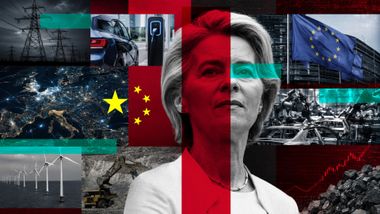 In an article entitled Europe Is Losing the Energy-Security Battle to China Emmanuel Guérin, a fellow and special adviser to the CEO at the European Climate Foundation, spells out a reality most uncomfortable to Brussels: while Europe still sees illusions of a ‘green transition’ and ‘energy autonomy’, China is steadily winning the strategic battle for control over future energy systems.
Europe Losing Energy Security Battle to China
In an article entitled Europe Is Losing the Energy-Security Battle to China Emmanuel Guérin, a fellow and special adviser to the CEO at the European Climate Foundation, spells out a reality most uncomfortable to Brussels: while Europe still sees illusions of a ‘green transition’ and ‘energy autonomy’, China is steadily winning the strategic battle for control over future energy systems.
Europe Losing Energy Security Battle to China
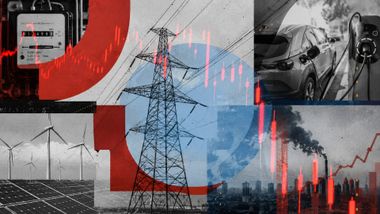 In the wake of the 2022 gas and oil shock, the EU expectably set a course to ‘get rid of Russian fossil fuels’. Today, out of the chaos of the new gas and oil crisis, a new lodestar is emerging for EU energy policy. This situation is examined by Noah Gordon, a DARE task force member.
An Electrification Race. Will the EU Avoid an Energy Crisis, and What Should It Do Next?
In the wake of the 2022 gas and oil shock, the EU expectably set a course to ‘get rid of Russian fossil fuels’. Today, out of the chaos of the new gas and oil crisis, a new lodestar is emerging for EU energy policy. This situation is examined by Noah Gordon, a DARE task force member.
An Electrification Race. Will the EU Avoid an Energy Crisis, and What Should It Do Next?
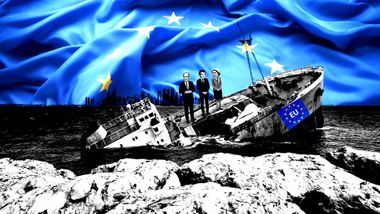 In a commentary entitled The war in the Gulf and the challenges facing EU energy policy, Agata Łoskot-Strachota, coordinator of the Energy in Europe project at the Warsaw-based Centre for Eastern Studies (OSW), examines in detail how the Persian Gulf war and blockade of the Strait of Hormuz have revealed the European Union’s profound vulnerability. Despite years of talking about an energy transition and reducing dependence on imports, the EU finds its economy and security hit hard by an external shock once again.
The Gulf War and Europe’s Helpless Energy Policy
In a commentary entitled The war in the Gulf and the challenges facing EU energy policy, Agata Łoskot-Strachota, coordinator of the Energy in Europe project at the Warsaw-based Centre for Eastern Studies (OSW), examines in detail how the Persian Gulf war and blockade of the Strait of Hormuz have revealed the European Union’s profound vulnerability. Despite years of talking about an energy transition and reducing dependence on imports, the EU finds its economy and security hit hard by an external shock once again.
The Gulf War and Europe’s Helpless Energy Policy
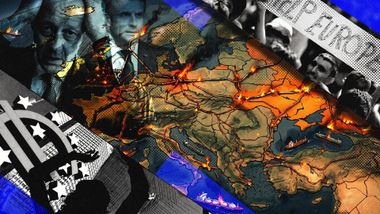 In her article entitled Chilled ambitions: How the Iran war is foiling Europe’s LNG plans, Agathe Demarais, Senior Policy Fellow at the European Council on Foreign Relations, discusses how hard the Iran war has hit the European energy sector.
Washington and Moscow Get New Leverage over Europe
In her article entitled Chilled ambitions: How the Iran war is foiling Europe’s LNG plans, Agathe Demarais, Senior Policy Fellow at the European Council on Foreign Relations, discusses how hard the Iran war has hit the European energy sector.
Washington and Moscow Get New Leverage over Europe
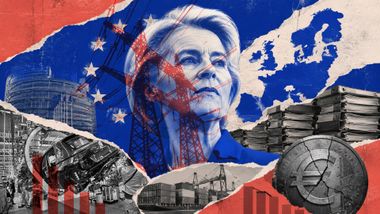 Since Israel and the United States launched their war on Iran in February 2026, global energy prices have skyrocketed, with crude oil reaching nearly USD 115 per barrel in early May and still growing. While this shock has hit low-income countries the hardest, it also places significant strain on high-income Europe.
An Energy Shock Is Coming. How Should Europe Respond?
Since Israel and the United States launched their war on Iran in February 2026, global energy prices have skyrocketed, with crude oil reaching nearly USD 115 per barrel in early May and still growing. While this shock has hit low-income countries the hardest, it also places significant strain on high-income Europe.
An Energy Shock Is Coming. How Should Europe Respond?
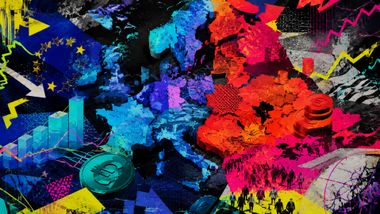 In an article entitled The European Union’s External Imbalances: Past, Future, and Policy (Bruegel, Working Paper 07/2026) a group of authors led by Jeromin Zettelmeyer, director of Bruegel, an influential Brussels think tank, and Zsolt Darvas, point to a disturbing situation: for more than a decade, the European Union has had a persistent current account surplus of around 3 percent of GDP.
The EU’s Chronic Surplus: Handsome Figures Concealing a Deep Structural Decline
In an article entitled The European Union’s External Imbalances: Past, Future, and Policy (Bruegel, Working Paper 07/2026) a group of authors led by Jeromin Zettelmeyer, director of Bruegel, an influential Brussels think tank, and Zsolt Darvas, point to a disturbing situation: for more than a decade, the European Union has had a persistent current account surplus of around 3 percent of GDP.
The EU’s Chronic Surplus: Handsome Figures Concealing a Deep Structural Decline
 Cosmopolitanism and competition find their nemesis
How the “virtues” of neoliberal globalization paved the way to its demise
Cosmopolitanism and competition find their nemesis
How the “virtues” of neoliberal globalization paved the way to its demise
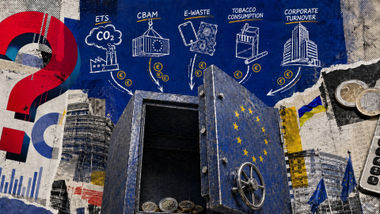 A report entitled Financing the EU budget: an assessment of five proposals for new resources, that examines the efficiency of new levies for the EU budget in 2028–2034, was posted on the website of the Bruegel Institute (Brussels European and Global Economic Laboratory) on 20 April 2026.
Financing the EU budget: an assessment of five proposals for new resources
A report entitled Financing the EU budget: an assessment of five proposals for new resources, that examines the efficiency of new levies for the EU budget in 2028–2034, was posted on the website of the Bruegel Institute (Brussels European and Global Economic Laboratory) on 20 April 2026.
Financing the EU budget: an assessment of five proposals for new resources
 Numerous facts indicate that the policy of militarizing the country was pursued solely to enrich high-ranking officials in the German government and the owners of military corporations.
Calm Down, Ladies and Gentlemen, This Is a Robbery
Numerous facts indicate that the policy of militarizing the country was pursued solely to enrich high-ranking officials in the German government and the owners of military corporations.
Calm Down, Ladies and Gentlemen, This Is a Robbery
 A new form of capital is ascending: cloud capital—networked algorithmic machines that grant their owners remarkable powers to modify our behaviour. And just as financiers needed neoliberalism, today’s tech lords need a new ideology to legitimise their rule. I call it techlordism.
Palantir and the New Order: Neoliberalism is dead. Say hello to Techlordism
A new form of capital is ascending: cloud capital—networked algorithmic machines that grant their owners remarkable powers to modify our behaviour. And just as financiers needed neoliberalism, today’s tech lords need a new ideology to legitimise their rule. I call it techlordism.
Palantir and the New Order: Neoliberalism is dead. Say hello to Techlordism
 You can’t quarrel with Russia and the USA at once and cherish a hope for some mythical ‘cavalry from behind the hill’ that will come and help. It is not cavalry that will come but people accustomed to surviving in deserts and wastelands – into which Europe will inevitably turn without an industry and agriculture of its own. For the sake of its own survival.
Oil? Gas? Fertilizer? Just Life.
You can’t quarrel with Russia and the USA at once and cherish a hope for some mythical ‘cavalry from behind the hill’ that will come and help. It is not cavalry that will come but people accustomed to surviving in deserts and wastelands – into which Europe will inevitably turn without an industry and agriculture of its own. For the sake of its own survival.
Oil? Gas? Fertilizer? Just Life.