





Last news
The EU Countries Face Numerous Military Capability Gaps
 Have you participated in a project or program funded by Stiftung Mercator? Are you currently involved in one, or part of our team or partner network?
Then we warmly invite you to become part of the MercatorGlobe Community!
Have you participated in a project or program funded by Stiftung Mercator? Are you currently involved in one, or part of our team or partner network?
Then we warmly invite you to become part of the MercatorGlobe Community!
Welcome to our community network!
Sign Up for More
 Poland, Lithuania, Latvia, Estonia and Romania are supporting the war against Iran in the hope that Trump will decide to station his troops, to be withdrawn from Germany, in their territory.
NATO’s frontline countries jockey for U.S. troops after Trump’s Germany withdrawal
Poland, Lithuania, Latvia, Estonia and Romania are supporting the war against Iran in the hope that Trump will decide to station his troops, to be withdrawn from Germany, in their territory.
NATO’s frontline countries jockey for U.S. troops after Trump’s Germany withdrawal
 In their article entitled Revamping Europe’s chips strategy: indispensability, not self-sufficiency, Niclas Poitiers and Tillman Schenk, analysts of the Brussels-based Bruegel center, attempt to offer Europe a more realistic approach to developing the semiconductor industry. But in fact the text proves an obvious thing: Europe is far – and probably desperately – behind in a key technology of the 21st century, and all its attempts to catch up look like belated and not too convincing imitation of activity.
Europe Again Racing After a Train That Has Long Left
In their article entitled Revamping Europe’s chips strategy: indispensability, not self-sufficiency, Niclas Poitiers and Tillman Schenk, analysts of the Brussels-based Bruegel center, attempt to offer Europe a more realistic approach to developing the semiconductor industry. But in fact the text proves an obvious thing: Europe is far – and probably desperately – behind in a key technology of the 21st century, and all its attempts to catch up look like belated and not too convincing imitation of activity.
Europe Again Racing After a Train That Has Long Left
 In his analytical paper entitled Not All Dependencies Are Equal: Europe’s Energy Transition in the Wake of Geopolitical Crisis Camillo Stubenberg, a Cornell University PhD and an affiliated researcher at the Austrian Institute for International Affairs, is trying to convince the reader that Europe’s energy transition is not just a climate policy but a complicated transformation of dependencies. But in practice the text only confirms what critics say: while rejecting one dependency, Europe quite plausibly falls into another, no less dangerous and far longer-lasting one.
Not All Dependencies Are Equal, but This Is Not Easier for Europe
In his analytical paper entitled Not All Dependencies Are Equal: Europe’s Energy Transition in the Wake of Geopolitical Crisis Camillo Stubenberg, a Cornell University PhD and an affiliated researcher at the Austrian Institute for International Affairs, is trying to convince the reader that Europe’s energy transition is not just a climate policy but a complicated transformation of dependencies. But in practice the text only confirms what critics say: while rejecting one dependency, Europe quite plausibly falls into another, no less dangerous and far longer-lasting one.
Not All Dependencies Are Equal, but This Is Not Easier for Europe
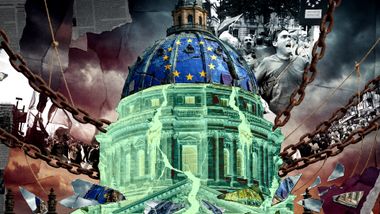 Experts from the Konrad Adenauer Foundation find these in their annual report on the EU and global situation, entitled The European Union – the difficult path to becoming a global anchor of stability.
The European Union in 2026: Structural Tensions Between European Aspirations and Global Reality
Experts from the Konrad Adenauer Foundation find these in their annual report on the EU and global situation, entitled The European Union – the difficult path to becoming a global anchor of stability.
The European Union in 2026: Structural Tensions Between European Aspirations and Global Reality
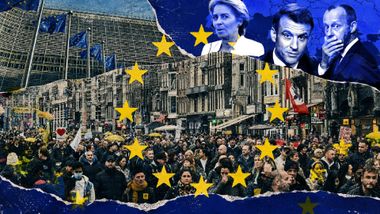
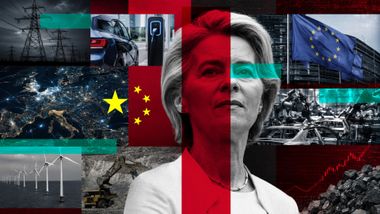 In an article entitled Europe Is Losing the Energy-Security Battle to China Emmanuel Guérin, a fellow and special adviser to the CEO at the European Climate Foundation, spells out a reality most uncomfortable to Brussels: while Europe still sees illusions of a ‘green transition’ and ‘energy autonomy’, China is steadily winning the strategic battle for control over future energy systems.
Europe Losing Energy Security Battle to China
In an article entitled Europe Is Losing the Energy-Security Battle to China Emmanuel Guérin, a fellow and special adviser to the CEO at the European Climate Foundation, spells out a reality most uncomfortable to Brussels: while Europe still sees illusions of a ‘green transition’ and ‘energy autonomy’, China is steadily winning the strategic battle for control over future energy systems.
Europe Losing Energy Security Battle to China
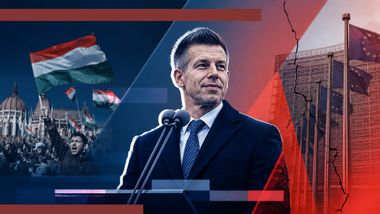 Six conclusions from the post-electoral situation in Hungary. Spoiler: the new authorities will need to build a relationship with Russia.
Magyar’s Mandate
Six conclusions from the post-electoral situation in Hungary. Spoiler: the new authorities will need to build a relationship with Russia.
Magyar’s Mandate
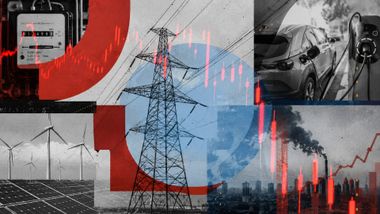 In the wake of the 2022 gas and oil shock, the EU expectably set a course to ‘get rid of Russian fossil fuels’. Today, out of the chaos of the new gas and oil crisis, a new lodestar is emerging for EU energy policy. This situation is examined by Noah Gordon, a DARE task force member.
An Electrification Race. Will the EU Avoid an Energy Crisis, and What Should It Do Next?
In the wake of the 2022 gas and oil shock, the EU expectably set a course to ‘get rid of Russian fossil fuels’. Today, out of the chaos of the new gas and oil crisis, a new lodestar is emerging for EU energy policy. This situation is examined by Noah Gordon, a DARE task force member.
An Electrification Race. Will the EU Avoid an Energy Crisis, and What Should It Do Next?
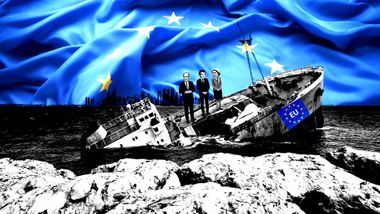 In a commentary entitled The war in the Gulf and the challenges facing EU energy policy, Agata Łoskot-Strachota, coordinator of the Energy in Europe project at the Warsaw-based Centre for Eastern Studies (OSW), examines in detail how the Persian Gulf war and blockade of the Strait of Hormuz have revealed the European Union’s profound vulnerability. Despite years of talking about an energy transition and reducing dependence on imports, the EU finds its economy and security hit hard by an external shock once again.
The Gulf War and Europe’s Helpless Energy Policy
In a commentary entitled The war in the Gulf and the challenges facing EU energy policy, Agata Łoskot-Strachota, coordinator of the Energy in Europe project at the Warsaw-based Centre for Eastern Studies (OSW), examines in detail how the Persian Gulf war and blockade of the Strait of Hormuz have revealed the European Union’s profound vulnerability. Despite years of talking about an energy transition and reducing dependence on imports, the EU finds its economy and security hit hard by an external shock once again.
The Gulf War and Europe’s Helpless Energy Policy
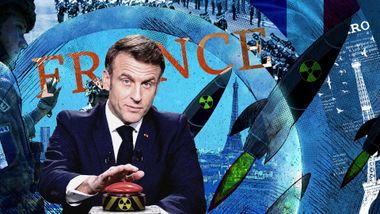 On 2 March 2026, French President Emmanuel Macron delivered a speech on nuclear deterrence. European NATO allies have welcomed the speech and accompanying initiatives. Yet there remain questions about the durability and implementation of Macron’s nuclear initiatives. Defense analysts Zuzanna Gwadera and Alexander K. Bollfrass discuss this in their article entitled French nuclear deterrence: Vive l’évolution on the website of the International Institute for Strategic Studies (IISS).
Macron Ready to Swap French Nuclear Deterrence for Allies’ Participation in Other Defense Spending
On 2 March 2026, French President Emmanuel Macron delivered a speech on nuclear deterrence. European NATO allies have welcomed the speech and accompanying initiatives. Yet there remain questions about the durability and implementation of Macron’s nuclear initiatives. Defense analysts Zuzanna Gwadera and Alexander K. Bollfrass discuss this in their article entitled French nuclear deterrence: Vive l’évolution on the website of the International Institute for Strategic Studies (IISS).
Macron Ready to Swap French Nuclear Deterrence for Allies’ Participation in Other Defense Spending
 This conclusion is suggested by an article entitled L'automne des populismes européens? authored by Marc Lazar, an expert at Institut Montaigne – a French think tank. The article is posted on the Institute’s website.
Right-Wing Parties Remain Popular in Europe But Hindered by Support from Trump
This conclusion is suggested by an article entitled L'automne des populismes européens? authored by Marc Lazar, an expert at Institut Montaigne – a French think tank. The article is posted on the Institute’s website.
Right-Wing Parties Remain Popular in Europe But Hindered by Support from Trump
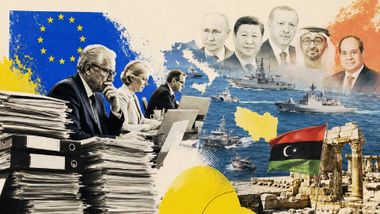 In the article The EU’s Technocratic Trap in Libya: How Brussels Is Ceding the Mediterranean published at the Stimson Center website, Andrea Cellino, a Swiss Italian expert and vice president of Middle East Institute Switzerland, makes a hard and painful statement about the European policy: 15 years after the fall of the Gaddafi regime the EU remains the largest donor of Libya having poured hundreds of millions of euro into the country but having lost any political clout there all together. Brussels has turned into a miserable onlooker, as countries like Russia, Turkey, and the UAE really determine the future of the country.
The EU’s Technocratic Trap in Libya: a Disgraceful Surrender of Brussels in the Mediterranean
In the article The EU’s Technocratic Trap in Libya: How Brussels Is Ceding the Mediterranean published at the Stimson Center website, Andrea Cellino, a Swiss Italian expert and vice president of Middle East Institute Switzerland, makes a hard and painful statement about the European policy: 15 years after the fall of the Gaddafi regime the EU remains the largest donor of Libya having poured hundreds of millions of euro into the country but having lost any political clout there all together. Brussels has turned into a miserable onlooker, as countries like Russia, Turkey, and the UAE really determine the future of the country.
The EU’s Technocratic Trap in Libya: a Disgraceful Surrender of Brussels in the Mediterranean