




Politics
The European Union in 2026: Structural Tensions Between European Aspirations and Global Reality
 Have you participated in a project or program funded by Stiftung Mercator? Are you currently involved in one, or part of our team or partner network?
Then we warmly invite you to become part of the MercatorGlobe Community!
Have you participated in a project or program funded by Stiftung Mercator? Are you currently involved in one, or part of our team or partner network?
Then we warmly invite you to become part of the MercatorGlobe Community!
Welcome to our community network!
Sign Up for More
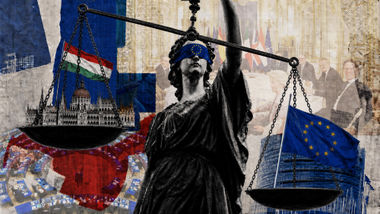
 Six conclusions from the post-electoral situation in Hungary. Spoiler: the new authorities will need to build a relationship with Russia.
Magyar’s Mandate
Six conclusions from the post-electoral situation in Hungary. Spoiler: the new authorities will need to build a relationship with Russia.
Magyar’s Mandate
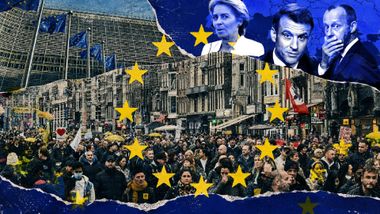
 This conclusion is suggested by an article entitled L'automne des populismes européens? authored by Marc Lazar, an expert at Institut Montaigne – a French think tank. The article is posted on the Institute’s website.
Right-Wing Parties Remain Popular in Europe But Hindered by Support from Trump
This conclusion is suggested by an article entitled L'automne des populismes européens? authored by Marc Lazar, an expert at Institut Montaigne – a French think tank. The article is posted on the Institute’s website.
Right-Wing Parties Remain Popular in Europe But Hindered by Support from Trump
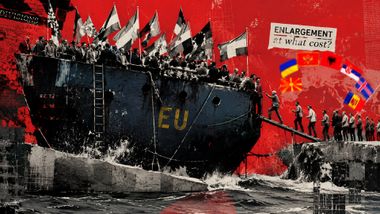 European voters are certain that EU enlargement spells economic pain. Disagreement on this issue has paralyzed the EU. These conclusions are made in an article entitled EU Enlargement: The State of Play and published in Internationale Politik Quarterly, a leading German journal on international relations.
EU Enlargement: The State of Play
European voters are certain that EU enlargement spells economic pain. Disagreement on this issue has paralyzed the EU. These conclusions are made in an article entitled EU Enlargement: The State of Play and published in Internationale Politik Quarterly, a leading German journal on international relations.
EU Enlargement: The State of Play
 As of May 1, the European Commission has provisionally implemented the long-negotiated free trade agreement between the European Union (EU) and the Mercosur bloc of South American countries, which includes Argentina, Brazil, Paraguay, and Uruguay.
South America Versus European Farmers. What Is the Danger of the EU-Mercosur Free Trade Agreement for the European Union?
As of May 1, the European Commission has provisionally implemented the long-negotiated free trade agreement between the European Union (EU) and the Mercosur bloc of South American countries, which includes Argentina, Brazil, Paraguay, and Uruguay.
South America Versus European Farmers. What Is the Danger of the EU-Mercosur Free Trade Agreement for the European Union?
 Cédric Debernard, author of articles, essays and novels on power dynamics and gray zones of modern geopolitics, asks this question on the Canadian Geopolitical Monitor website.
Why States Do What They Do
Cédric Debernard, author of articles, essays and novels on power dynamics and gray zones of modern geopolitics, asks this question on the Canadian Geopolitical Monitor website.
Why States Do What They Do
 This is a question raised by John Feffer, director of Foreign Policy In Focus (FPIF), an organization run by the Institute for Policy Studies, left-wing progressives’ Washington-based think tank.
Where on Earth Is Europe Heading?
This is a question raised by John Feffer, director of Foreign Policy In Focus (FPIF), an organization run by the Institute for Policy Studies, left-wing progressives’ Washington-based think tank.
Where on Earth Is Europe Heading?
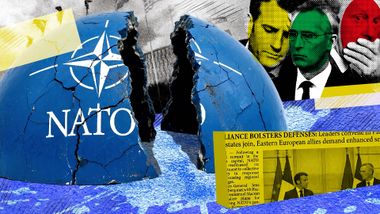 Three U.S. professors of political science – Michael A. Allen (Boise State University), Carla Martinez Machain (University at Buffalo), and Michael E. Flynn (Kansas State University) – make this conclusion in their article posted on The Conversation expert website.
NATO’s Internal Cohesion Is Being Threatened
Three U.S. professors of political science – Michael A. Allen (Boise State University), Carla Martinez Machain (University at Buffalo), and Michael E. Flynn (Kansas State University) – make this conclusion in their article posted on The Conversation expert website.
NATO’s Internal Cohesion Is Being Threatened
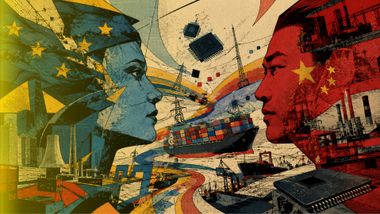 In an article entitled Europe Still Needs China. Washington, Not Beijing, Is the Bigger Threat, Professor Da Wei, director of the Center for International Security and Strategy at Tsinghua University, is explicit that today the United States constitutes a far greater threat to Europe than China. For all the loud statements about transatlantic unity, the reality is increasingly grim.
Europe Still Needs China: Washington is the Main Threat
In an article entitled Europe Still Needs China. Washington, Not Beijing, Is the Bigger Threat, Professor Da Wei, director of the Center for International Security and Strategy at Tsinghua University, is explicit that today the United States constitutes a far greater threat to Europe than China. For all the loud statements about transatlantic unity, the reality is increasingly grim.
Europe Still Needs China: Washington is the Main Threat
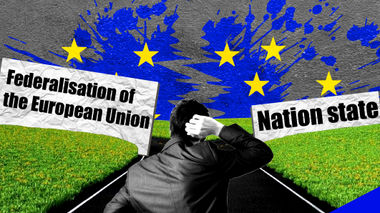 The transcript of a debate between François Chimits, project manager for Europe at the Institut Montaigne, and Nicolas Leron – director-general of the Institut François Mitterrand, was posted on the Institut Montaigne website on 21 April. The debate was held on the occasion of 18 months that had passed after a report by Mario Draghi about Europe’s future competitiveness was issued in September 2024.
18 Months After Mario Draghi’s Report About European Competitiveness Prospects. Two Perspectives on the State of Affairs
The transcript of a debate between François Chimits, project manager for Europe at the Institut Montaigne, and Nicolas Leron – director-general of the Institut François Mitterrand, was posted on the Institut Montaigne website on 21 April. The debate was held on the occasion of 18 months that had passed after a report by Mario Draghi about Europe’s future competitiveness was issued in September 2024.
18 Months After Mario Draghi’s Report About European Competitiveness Prospects. Two Perspectives on the State of Affairs
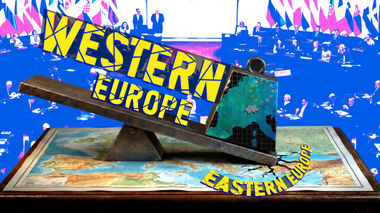 As shown in a detailed analysis by Kevin J. McNamara, for all the talk about EU enlargement and formal promises of unity and solidarity, Central and Eastern Europe (CEE) is still being kept away from actual decision-making.
The EU Remains Biased Against Central and East Europe: Unity Yields to Western Arrogance
As shown in a detailed analysis by Kevin J. McNamara, for all the talk about EU enlargement and formal promises of unity and solidarity, Central and Eastern Europe (CEE) is still being kept away from actual decision-making.
The EU Remains Biased Against Central and East Europe: Unity Yields to Western Arrogance