





Read news
Add bookmark
POPULAR
Oil? Gas? Fertilizer? Just Life.European Unity in the Interests of Security. Split along the North-South LineGone with the West. How the transatlantic split helps China and forces Europe to rethink its Indo-Pacific strategyEU - China Relations: Role of the European Commission in Forming Strategic ProspectsFrom Rupture to Relevance: Investing in Europe’s Southern PartnershipsThe EU Remains Biased Against Central and East Europe: Unity Yields to Western ArroganceEurope Risks Losing the Sahel Unless It Comes to Understand It (As Exemplified by Mali)
Europe risks losing its long-term influence in the Sahel. That will happen if the Old World countries fail to understand the driving forces of rising anticolonialism and to adapt their approaches in Africa to the new realities.
As noted in a policy brief of the Danish Institute of International Studies (DIIS), Europe’s renewed strategy must address not only colonial legacies but also the region’s shifting geopolitical alliances.
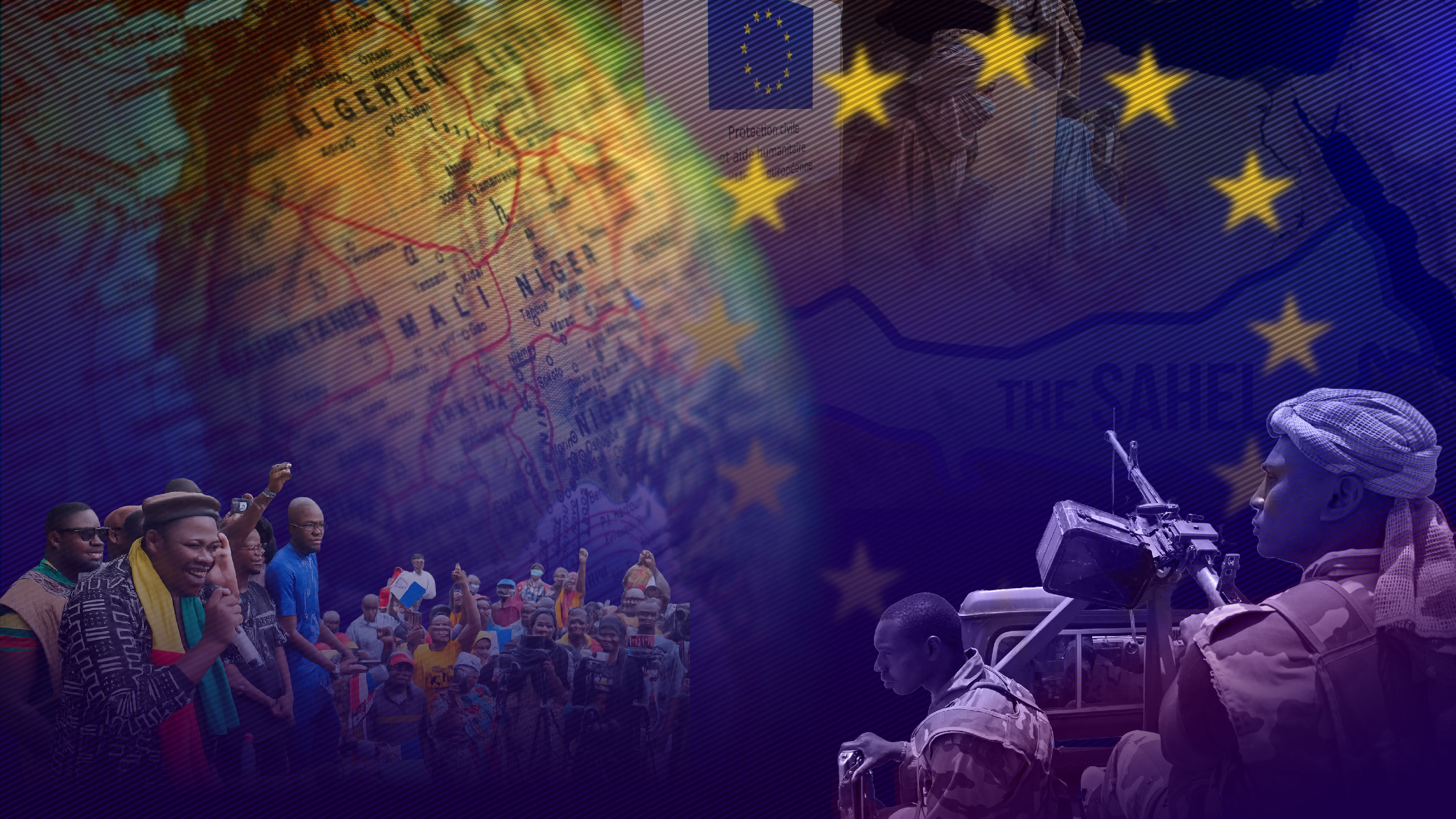
For Europe, disengaging from the Sahel means ceding influence in a region where geopolitical competition is intensifying and where European security is increasingly interconnected with local conflicts and threats. Continued cooperation enables Europe to support stability in the region, protect its interests and those of Sahelian countries, and maintain credible global partnerships. But, as a Malian economist noted back in March 2023, ‘Western policies no longer have credibility in Africa’.
And that is really the case. Anti-colonial and neo-pan-African trends have gained strength visibly in the regional politics since the early 2020s
These ideas inform political ideology not only in countries such as Senegal, Benin, the Central African Republic and Chad. They have also become central to the military regimes in Mali, Burkina Faso and Niger following the coups of 2020–2023. However, Europe views it too reductively, as effects of Russian propaganda or Chinese strategic expansion.
For example, in January 2024 EU foreign policy chief Josep Borrell described the Sahel’s alienation from France and the ECOWAS (Economic Community of West African States) as occurring ‘at the same time as we see the Russian influence increase’.
Such interpretations habitually deny African agency and reproduce the Eurocentric assumptions that no longer work in Africa.
The territorial integrity of Mali is a central pillar of Mali’s anticolonial mindset. In practice, this led government to effectively abandon the 2015 Algiers Peace Agreement between the Malian Government, pro-State militias and Tuareg separatist rebels, which culminated in renewed armed conflict.
Tuaregs are increasingly identified with jihadists and accused of being backed by France. This interpretation spells doom for any negotiations. The provisions of the Algiers Peace Agreement were particularly contentious ones. It sought to grant autonomy to the Tuareg separatists. Yet federalism remains a political red line for the military regime and a wider anticolonial movement – just as it has been for past governments. Mali is ready to move towards federalization with other countries but remains fiercely protective of the unity of its own territory.
Pan-Africanism has historically centered on the political unification of African peoples and on rejection of external domination. In anticolonial political thought, Pan-African unification is crucial to reducing dependency on Europe.
All the Malian constitutions since independence have secured the option of ceding sovereignty to a Pan-African federation. That vision was revived by the military leaders of Mali, Burkina Faso and Niger as they created the Alliance of Sahel States (AES) in 2023. Initially a military pact, the alliance has expanded to include economic, cultural and political cooperation, and was recently formalized as a confederation. The emergence of the AES has unfolded alongside the withdrawal of the three Sahel countries from the ECOWAS regional organization. That signaled a broad reconfiguration of political alignments and geopolitical shifts.
For the EU and member States, recognizing Mali’s quest for sovereignty is essential. Any engagement with the Europeans risks being framed and perceived by both the government and the population as interference and a continuation of colonial legacies.
Rather than withdraw, the EU can reorient its presence to offer technical and civilian assistance. But that should only be done where Malian authorities explicitly request it. Africa is no longer to be treated as a ‘younger brother’. The continent’s countries have matured politically and will be spoken to as equals, if at all.