





Read news
Add bookmark
POPULAR
Oil? Gas? Fertilizer? Just Life.European Unity in the Interests of Security. Split along the North-South LineChemical Dependence as a Structural Issue for EuropeThe Iran War: A Test Case for Germany’s CredibilityThe Royal Navy: On Course for National EmbarrassmentPacifism Gives Way to Voluntary Military Service What Does Germany Need It For?Energy Protectionism Without EnergyEurope’s Door to Chinese Tech Investment Is Still AjarReweaving Silk Roads: The Middle Corridor’s Role in EU Economic Security
On 5 March 2026, The Hague Centre for Strategic Studies posted on its website a report entitled Reweaving Silk Roads: The Middle Corridor’s Role in EU Economic Security, dealing with the use and development of transit routes through Central Asia and South Caucasus.
The report analyzes the challenges and opportunities for the European Union arising from the Trans-Caspian International Transport Route, positioned in the report as the Middle Corridor – between the Northern one (from China to Europe via Russia) and the Southern one (via Iran).
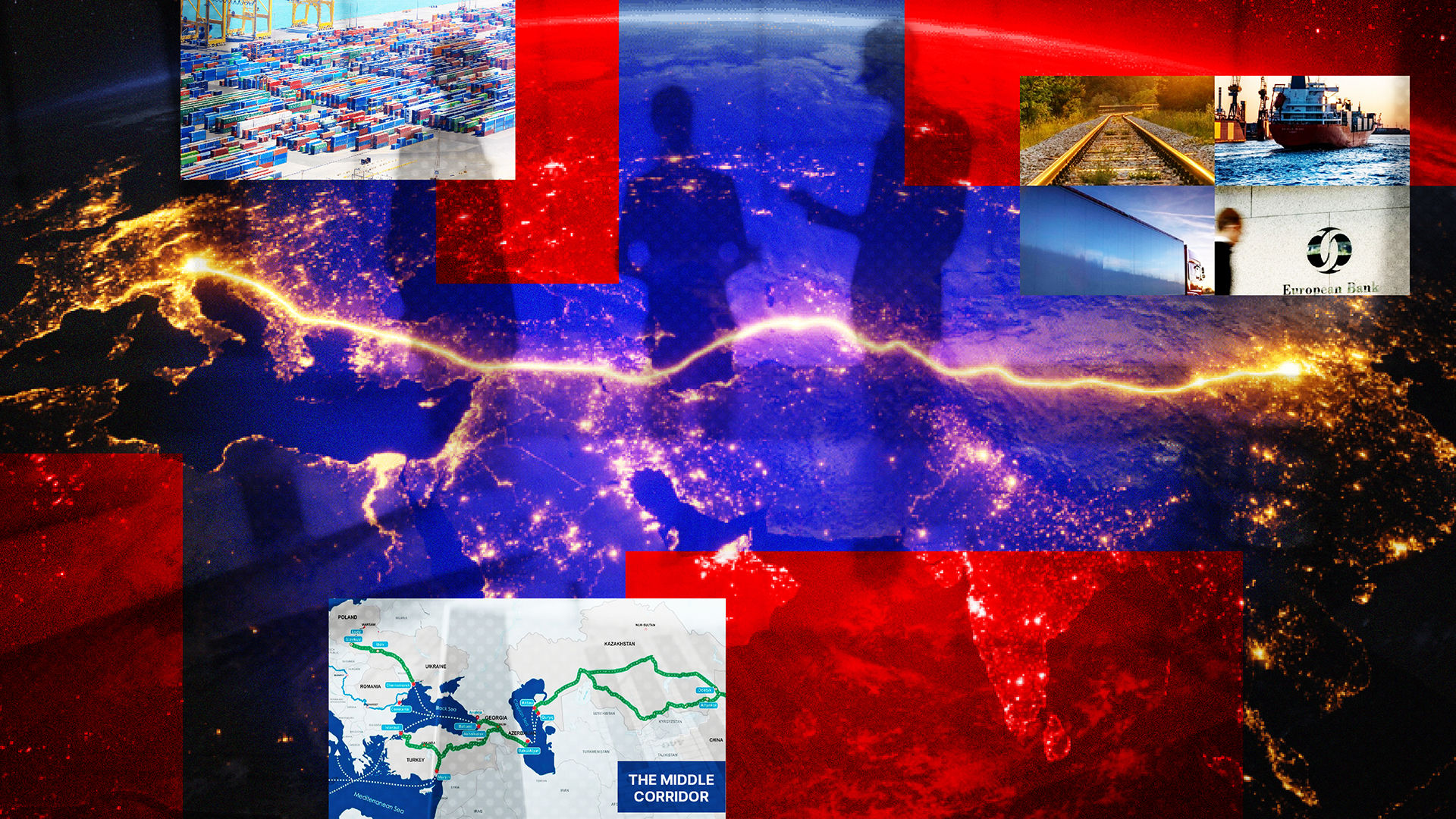
Before 2022, the Northern Corridor accounted for 86 percent of all cargo transported by rail between China and Europe, and the Middle Corridor for less than one percent. In 2024, the traffic volume on the Middle Corridor was just some five per cent of the volume of trade via the Northern Corridor.
Goods transportation via the Middle Corridor is more expensive than by alternative routes. Delivering a 40-foor container from China to Europe through the Middle Corridor costs USD 3500 to 4500, and via the Northern Corridor, USD 2800 to 3200. Marine freight costs USD 1500 to 2000 per container. On the other hand, the Middle Corridor meets the EU goals and requirements regarding sanction credibility and supply chain resilience.
The Middle Corridor’s infrastructure is fraught with a number of problems.
The first one is the limited throughput of Caspian ports and ferry services. The ports can now process 6 million tonnes of cargo at best. Kazakhstan and Azerbaijan have 13 ferries, two RoRo vessels, three container ships and two freighters, aged 25 to 30 on average. This determines their high ferry service rates.
The Caspian Sea level is falling; between 2006 and 2024, it dropped by two meters. Kazakhstan’s shoreline has retreated by 50 km. That allows vessels to use 75 percent of their capacity only.
Another problem is rail-to-sea and sea-to-rail transshipments required on the eastern and then western Caspian coast. The delays at seaports and border crossings may increase transit times to 15–30 days.
There is also the issue of breaks of gauge among different railway systems, with ex-Soviet Republics using broad gauge.
Investment in Central Asian and Caucasian transport infrastructures have historically been lower than required for maintaining modern and competitive logistical networks. The region’s infrastructural funding needs were estimated at USD 1.7 trillion in 2020.
The EU has announced two large funding packages for initial transport connectivity development, of EUR 10 billion and 12 billion.
The Middle Corridor must prove competitive as a route. Its transportation costs are higher than on alternative routes, its transit time remains variable, and unpredictable delays compromise its reliability. The transportation volume is limited, which precludes an economy of scale.
An overland and marine route thousands of kilometers long will inevitably run the risks of sabotage, terrorism, organized crime and natural disasters. So the Middle Corridor requires the maintenance of regional stability amid conflicts, protection of domestic stability in the participating countries, and physical protection of the infrastructure and safe transit.
The main security problem in the South Caucasus results from the unease between Armenia and Azerbaijan. Georgia has become another hotbed, with political turbulence and civil unrest caused by the authorities’ growing rapprochement with Russia.
The Middle Corridor’s potential is evident, but its efficiency is limited by structural bottlenecks, fragmented governance and a precarious security situation.