





Read news
Add bookmark
POPULAR
How Much Do Experts’ Ideas Matter for the European Union’s Political Agenda?Oil? Gas? Fertilizer? Just Life.Kalypso Nicolaidis: I Want a Woodstock for European PoliticsHow the “virtues” of neoliberal globalization paved the way to its demiseRegular Ones Made IrregularEurope Still Needs China: Washington is the Main ThreatEuropean Unity in the Interests of Security. Split along the North-South LineA Ruthless Diagnosis. Europe More Paralyzed than DividedWhy capitalism is fundamentally undemocraticEU Enlargement: The State of Play
European voters are certain that EU enlargement spells economic pain. Disagreement on this issue has paralyzed the EU. These conclusions are made in an article entitled EU Enlargement: The State of Play and published in Internationale Politik Quarterly, a leading German journal on international relations.
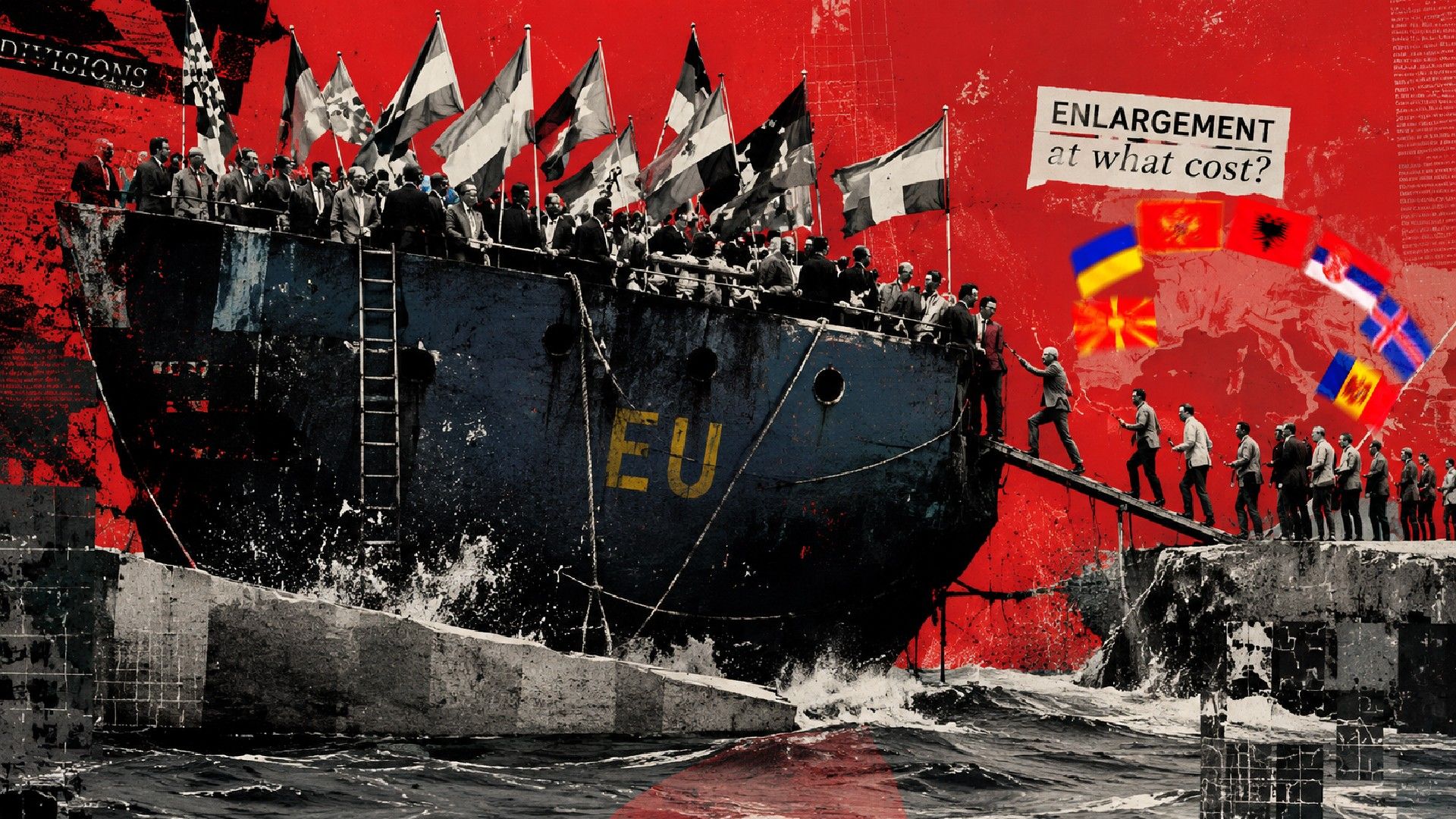
The European Commission has developed several options for accession reform. The main driver was an idea to fast-track Ukraine’s EU accession. Three options were presented at a dinner in Brussels attended by the European Commission President’s chief of cabinet and by EU ambassadors in early March.
The first one is to continue with the existing, merit-based accession process, without resolving the question of national vetoes. Another model would introduce gradual integration packages and require a new legal basis.
Thirdly, there is ‘reverse enlargement’ or ‘phased-in accession’ option. Designed primarily with Ukraine in mind but available to all candidates, it would split the accession process into two stages: initial integration into a small number of selected EU policies, followed by a gradual extension of rights and obligations of the new EU member States over time.
The ‘reverse enlargement’ option was rejected by most member States. Suggested as an alternative are some benefits of integration front-loaded ahead of membership. At an informal EU summit in Nicosia on 24 April 2026, Chancellor Merz offered Ukraine ‘observer status’ in the EU institutions – including regular participation at the EU summits and Council meetings – without voting rights. This was a model of ‘enhanced gradual integration’ that would be tied to future EU membership.
Yet there is the legal aspect: partial or second-class membership is impossible under the EU treaties, which guarantee equality for all member States and a clear set of rights and obligations.
One proposed reform for an enlarged EU is to use qualified majority voting, which requires at least 55 percent of member States (currently 15 of 27) to support a decision, and those States must represent at least 65 percent of the EU’s total population. So far, however, efforts to make this shift have stalled, as several member States, such as Hungary and Austria, have resisted giving up their veto, fearing that EU decisions would end up being dominated by the larger member States.
These disagreements have paralyzed the EU. At Granada in October 2023, the EU heads of State and government solemnly committed to prepare the EU internally for a larger membership. At the start of her second mandate in late 2024, European Commission President Ursula von der Leyen promised an enlargement policy review within her first 100 days. However, this has repeatedly been delayed.
Then there is the financial dimension: skeptics fear that bringing in a large group of new member States (there are ten candidates so far) will put additional strain on the EU budget. Newcomers require substantial financial aid to navigate the accession process and align their legislation with that of the EU. Funds to support economic convergence and agricultural subsidies will be needed.
Enlargement is complicated by insufficient public support and the rise of far-right parties. Apart from Italy, those parties do not see enlargement as a positive development; they would like to see national sovereignty strengthened and fewer decisions taken by Brussels.
In France and Germany, the electoral calendar could threaten the enlargement momentum. Far-right parties are surging ahead of France’s 2027 presidential vote, and the far-right Alternative for Germany (AfD) is topping polls.
According to Eurobarometer, only 43 percent of voters back enlargement in both the Czech Republic and France, and 45 percent in Austria.
Voters believe that EU enlargement would cause economic pain and institutional overload.
Source: https://ip-quarterly.com/en/eu-enlargement-state-play