




Read news
Add bookmark
POPULAR
How Much Do Experts’ Ideas Matter for the European Union’s Political Agenda?Oil? Gas? Fertilizer? Just Life.Kalypso Nicolaidis: I Want a Woodstock for European PoliticsHow the “virtues” of neoliberal globalization paved the way to its demiseEurope Still Needs China: Washington is the Main ThreatEuropean Unity in the Interests of Security. Split along the North-South LineA Ruthless Diagnosis. Europe More Paralyzed than DividedWhy capitalism is fundamentally undemocraticEurope: doctrinal shift towards violence. Transition to a war economy instead of a “liberal democracy”The EU’s Technocratic Trap in Libya: a Disgraceful Surrender of Brussels in the Mediterranean
In the article The EU’s Technocratic Trap in Libya: How Brussels Is Ceding the Mediterranean published at the Stimson Center website, Andrea Cellino, a Swiss Italian expert and vice president of Middle East Institute Switzerland, makes a hard and painful statement about the European policy: 15 years after the fall of the Gaddafi regime the EU remains the largest donor of Libya having poured hundreds of millions of euro into the country but having lost any political clout there all together. Brussels has turned into a miserable onlooker, as countries like Russia, Turkey, and the UAE really determine the future of the country.
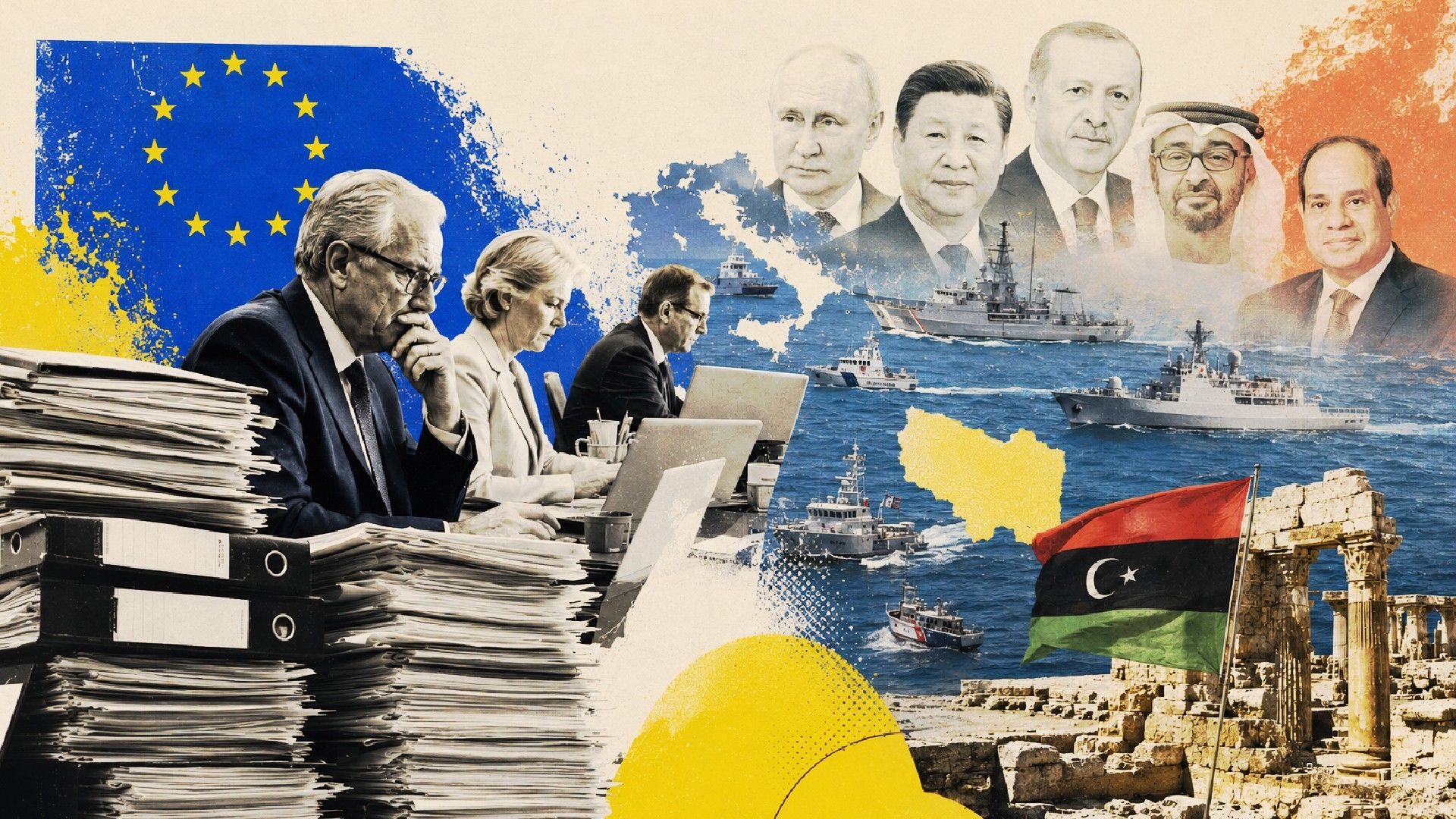
Europe continues to finance mine clearing, training coast guards, allocating millions to the “rule of law” and juvenile justice but all that is merely an expensive simulation of real activity. While the EU does “technocratic management” and puts together nice reports, Russia keeps its military presence in the east, Turkey has bases and troops in the west, and the UAE is actively arming and promoting Khalifa Haftar. Europe simply watches how other stakeholders are dividing Libya.
Migration outsourcing is the most shameful and cynical area of European policy. Since 2017 Brussels has built an entire system. The EU pays for, trains and equips the Libyan coast guard so that it does not let migrants into Europe. Meanwhile, it is common knowledge (recorded by the UN) that these troops are closely connected what paramilitary forces that systematically use torture, sexual violence, extortion, and exploit migrants as slaves. In fact, European funds strengthen criminal structures that make money on people's suffering. Consequently, the EU became the indirect accomplice of what the UN qualifies as possible crime against humanity.
Geopolitical consequences are even more humiliating. To curb migration, Europe gradually began to legitimize those who were declared toxic previously. The story of Khalifa Haftar is particularly telling: they went from complete boycott to cautious contacts, visits and plans to set up a coordination center in Benghazi costing €3 million that will give Haftar international legitimacy and a base of operations. While the EU “managers risks”, Russia, Turkey, and the UAE are really forming the political and military landscape of Libya.
The Irini operation that was supposed to help monitor the compliance with the arms embargo, in practice is more efficient for controlling migration than blocking the arm supply. The UN admitted many times that the embargo was utterly ineffective. Europe once again chooses comfortable self-illusion rather than a hard real policy.
Eventually the EU ended up in a classical technocratic trap. A lot of money, multiple projects, reports, and programs — and almost zero political clout. Money without strategy and political will cannot buy influence — it only creates an illusion of presence while more aggressive and cynical players divide the region.
There is another harsh and extremely alarming confirmation of the systemic weakness, strategic impotence, and moral degradation of the European project: having colossal financial resources and remaining the largest donor, the EU is unable to convert this money into real influence. Instead of playing a hard political game and defending their interests in the critical region of the Mediterranean, Brussels has chosen the role of a “technical donor” and a “project manager”. While the European officials are proud of the budgets spent and the potential grown, Russia, Turkey, and the UAE really determine the future of Libya and the entire region.
The longer the EU hides behind technocracy, migration outsourcing, and nice wordings the quicker it will turn into a political dwarf in the region that is of crucial importance for European security, energy supply and migration control. The Mediterranean is gradually slipping away from European control and Brussels has no one but itself to blame.