





Read news
Add bookmark
POPULAR
How Much Do Experts’ Ideas Matter for the European Union’s Political Agenda?Oil? Gas? Fertilizer? Just Life.Kalypso Nicolaidis: I Want a Woodstock for European PoliticsHow the “virtues” of neoliberal globalization paved the way to its demiseEuropean Unity in the Interests of Security. Split along the North-South LineEurope Still Needs China: Washington is the Main ThreatRegular Ones Made IrregularA Ruthless Diagnosis. Europe More Paralyzed than DividedEurope: doctrinal shift towards violence. Transition to a war economy instead of a “liberal democracy”Macron Ready to Swap French Nuclear Deterrence for Allies’ Participation in Other Defense Spending
On 2 March 2026, French President Emmanuel Macron delivered a speech on nuclear deterrence. European NATO allies have welcomed the speech and accompanying initiatives. Yet there remain questions about the durability and implementation of Macron’s nuclear initiatives. Defense analysts Zuzanna Gwadera and Alexander K. Bollfrass discuss this in their article entitled French nuclear deterrence: Vive l’évolution on the website of the International Institute for Strategic Studies (IISS).
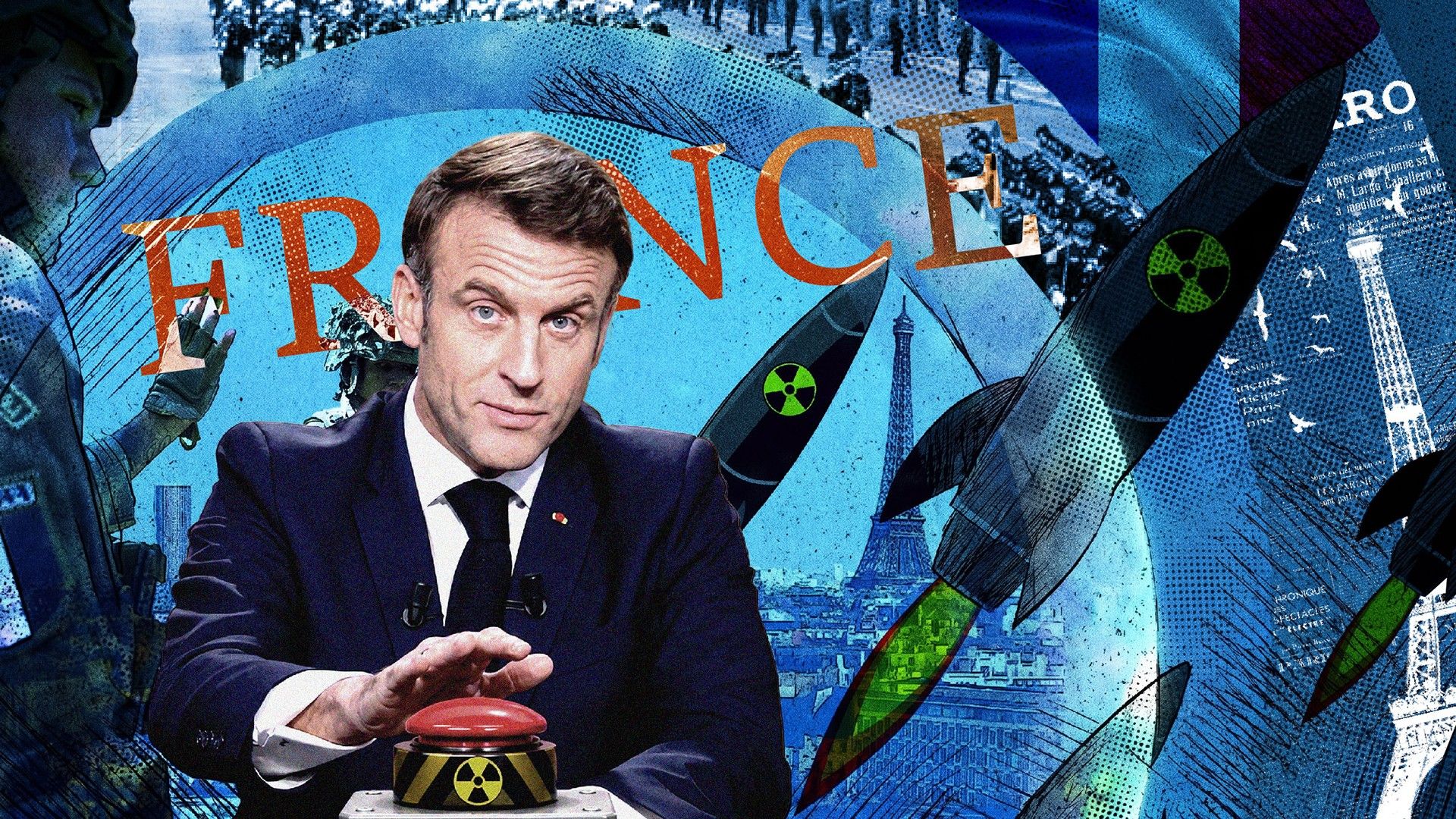
Macron reaffirmed the core of the French nuclear doctrine and strategy, which rests on the notions of sovereignty and the deliberately ambiguous and flexible ‘vital interests’ that the nuclear deterrent seeks to protect.
Currently, France employs the concept of a ‘unique and non-renewable nuclear warning shot’ before a full-scale strike to signal France’s appreciation of a change in the character of conflict and restore deterrence. Macron ruled out the notion of a ‘gradual response’ and using nuclear weapons for escalation management
That is, the French nuclear doctrine provides for preventive use of nuclear weapons. The question of its consequences for France and her neighbors and allies remains open, especially as that preventive strike could be directed against a State with a far more powerful and diverse nuclear arsenal – that would probably be used in response.
While previous presidents spoke vaguely about the European dimension of France’s interests, Macron advanced an operational program of ‘forward deterrence’. Most ambitiously, the French president alluded to ‘temporary deployment of elements of our strategic air forces to allied countries’. The French President emphasized that this would complement, not replace, NATO’s nuclear mission.
Macron offers an exchange to the rest of Europe. France is prepared to enhance Europe’s deterrence through consultation, signaling and potentially dispersing aerial nuclear assets, but expects partners to take on greater responsibility for early warning, air and missile defense, and conventionally armed deep-strike capabilities.
Macron turns out to suggest an exchange of the accumulated French nuclear capability for new military spending by other European countries – and to call this a ‘fair distribution of efforts.’
Besides, a temporary dispersal of French nuclear weapons abroad may require allies to invest in infrastructure to accommodate such activity. This could involve specialized air bases similar to the Dispersed Operating Bases that NATO operated during the Cold War to complicate adversarial targeting and enhance the survivability of U.S. aircraft.
Another question arising in European capitals will be how durable this French political commitment will be. The next president will be elected in May 2027, with Macron having reached his term limit. The far-right opposition that leads the polls, the National Rally, has rejected any ‘geographic dispersal’ of forces outside France and any dilution of sovereign control.