





Read news
Add bookmark
POPULAR
Oil? Gas? Fertilizer? Just Life.European Unity in the Interests of Security. Split along the North-South LineEurope Still Needs China: Washington is the Main ThreatA Flimsy French Umbrella: A Belief Instead of Real ProtectionFrance Overstretched: How Europe Squanders Its Last ResourcesChemical Dependence as a Structural Issue for EuropeResource Gap: How the US and China Carve Central Asia UpRe-industrialization of France: sounding promises, multi-billion euro programs and a miserable failure
In the article Réindustrialiser : un défi, des solutions… et un choix de société, Olivier Lluansi, a mining engineer and CNAM professor, expressly states harsh and disappointing truth: in spite of all the highlight declarations by President Macron about “re-industrialization” being the “mother of all battles” and the ambitious France 2030 program with the budget of 50 billion euro, the share of industry in France continues its steady decline and in 2025 accounts for less than 10% of their GDP. It is a sincere and painful recognition of the failure of one of the incumbent president’s key political initiatives.
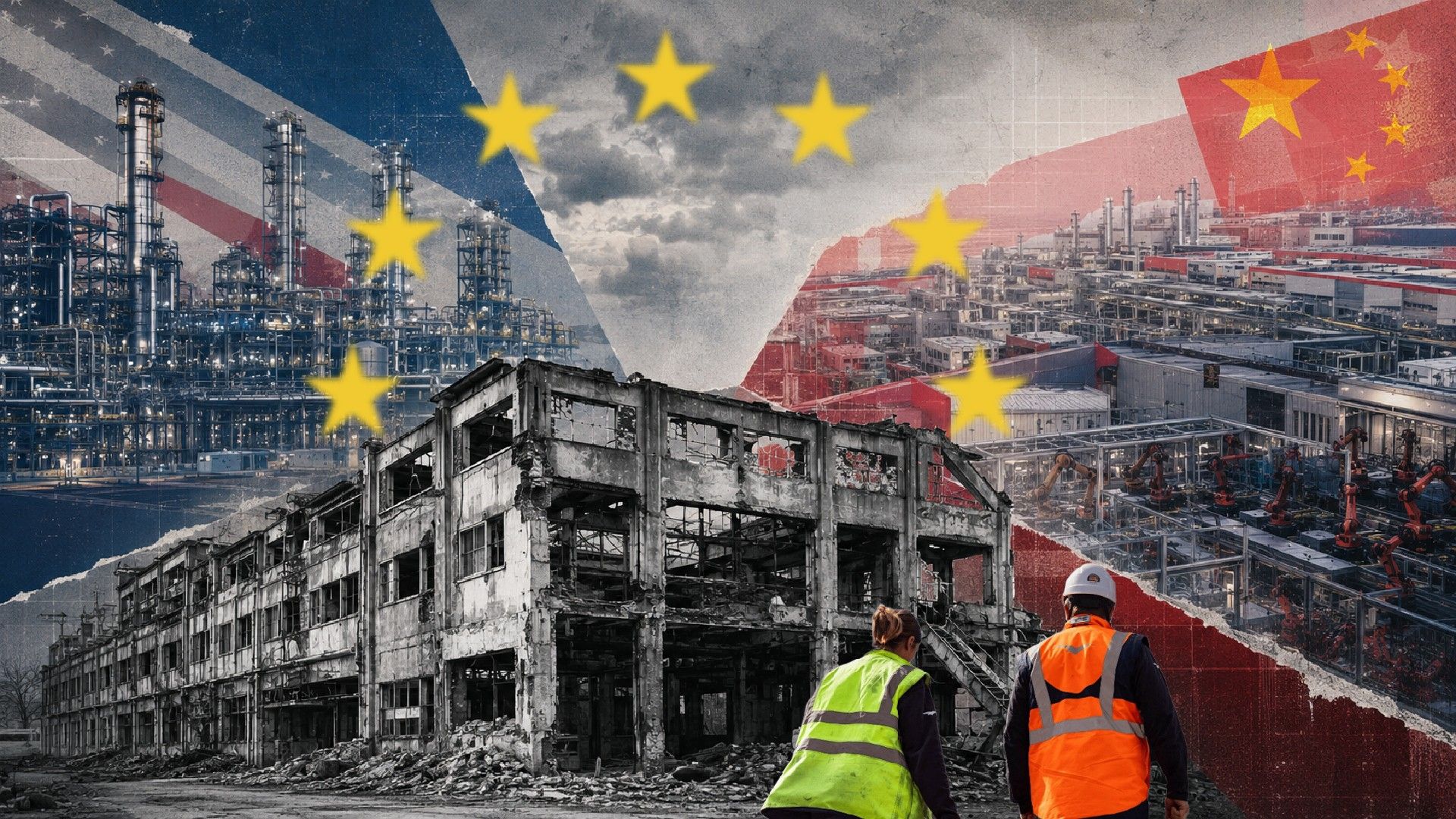
The facts are harsh. Even though between 2017 and 2023 the industry created around 15,000 jobs per year on average, in 2025 it lost 20,000 jobs. More factories are being shut down than the new ones are opening. Added value in the processing industry is down by 5% compared to the pre-covid times. While in Germany, northern Italy and Switzerland, industry accounts for about 20% of their economies, France slid down to the embarrassing level of 9.5%. In this context, when in the Elysee Palace they talk about “speeding up industrialization” as they did even in 2023, it looks like blatant mockery of reality.
O. Lluansi asks the most important question: is it at all possible to re-industrialize France in the current situation? And the answer that follows from his analysis is far from optimistic. China has been competing with Europe not only in terms of prices — now Beijing is ahead in technologies where French industry was traditionally strong. European manufacturers deal with 30-40% higher production costs with a comparable or even better quality. In this situation it becomes almost impossible to remain a strong competitor.
The author emphasizes that reindustrialization is not just a technical or economic task. It is a choice of the society, a fundamental civilizational choice. However, instead of real and hard decisions, France got a typical French combination: nice political declarations, huge budgets, complicated bureaucracy and systemic failures at all levels. The France 2030 program promoted as the revival project, in practice became overloaded with the “calls for projects”, short planning horizon and reliance on startups instead of strengthening the existing industrial base.
One of the main mistakes made is misjudgement of the real potential. Two thirds of the re-industrialization opportunities lie not in breakthrough technologies and new “flagships” but rather in the existing small and medium size companies that are rooted in the regions. Instead of supporting this foundation, the government continues to spend huge amounts of money on hype but low efficiency projects. The situation is even more complicated given other chronic problems: disastrous shortage of qualified personnel (the number of engineering graduates has dropped sharply), critical deficit of industrial sites, overcomplicated environmental legislation, and red tape barriers.
It is particularly telling that the French have accumulated a colossal amount of savings (6,600 billion euro), but this money hardly ever works for the national industry. Instead of directing at least a small part of this money into the real sector, the government continues meaningless discussions about the pension reforms and funds. The state procurement is highly inefficient — France imports many more industrial goods through the state procurement system than Italy and Germany.
As a result, instead of the real industrial revival, what France gets is looking busy while doing nothing. Even if all “reasonable measures” that Lluansi writes about are implemented it will help France only to slow down the fall a bit but will not guarantee the true Renaissance of the industry. The country is losing to China not only in terms of prices but also technology, and the European elites continue to pretend that everything is going according to plan.
Eventually, France, much like the rest of Europe, exhibits a classical European syndrome: loud political declarations, multi-billion euro programs, and total absence of real results. Instead of admitting structural problems, carrying out painful but necessary reforms, and mobilizing their society for real work, the elites prefer to look busy and play the blame game. Re-industrialization remains a nice slogan, as the country continues to lose its industrial base, jobs, and strategic sovereignty.
It is another strong confirmation of the deep systemic degradation of the European project: once a powerful industrial stronghold, now it slides down to the status of a “beautiful but weak” country, which loses real economic substance and gradually turns into an open-air museum. While the European politicians continue to talk about “revival”, “sovereignty” and “strategic autonomy”, the reality is ruthless: without the cardinal change in the model, Europe and France are destined to get further de-industrialization, loss of competitiveness and ultimately lagging behind China and the USA.