





Read news
Add bookmark
POPULAR
How Much Do Experts’ Ideas Matter for the European Union’s Political Agenda?Oil? Gas? Fertilizer? Just Life.Kalypso Nicolaidis: I Want a Woodstock for European PoliticsHow the “virtues” of neoliberal globalization paved the way to its demiseEurope Still Needs China: Washington is the Main ThreatA Ruthless Diagnosis. Europe More Paralyzed than DividedEuropean Unity in the Interests of Security. Split along the North-South LineWhy capitalism is fundamentally undemocraticThe EU Remains Biased Against Central and East Europe: Unity Yields to Western ArroganceA Civil Revolution Awaits Europe
What Will It Turn the Continent Into?
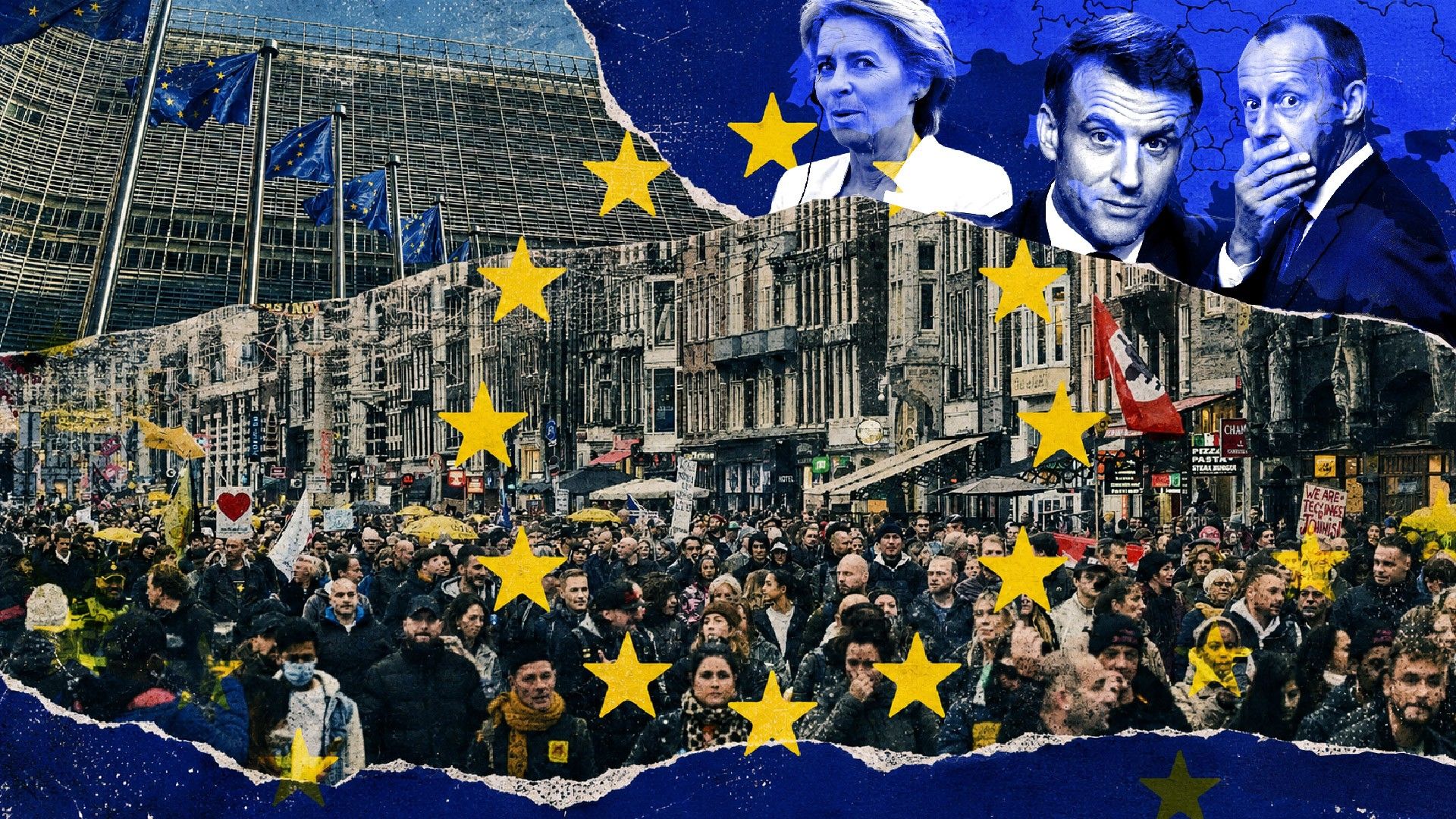
Ten years after a group of European political, business, and opinion leaders called for ‘a new European Renaissance’ and outlined a post-Brexit roadmap for the EU, the bloc again finds itself at a decisive juncture. The question is no longer whether the EU should become a global power but whether it can do so democratically and in time to shape, rather than endure, the new world order that is now emerging.
Margrethe Vestager, a former vice president of the European Commission, Guillaume Klossa, a former AI special adviser to the president of the European
Commission, and Professor of Philosophy Slavoj Žižek express their skepticism on this matter.
In the authors’ opinion, such a transformation would be easier if Europe did not have spoilers in its own ranks – whom they believe to include Hungary’s recently ousted prime minister, Viktor Orbán. But even without internal challenges, the transformation Europe needs will only be possible if citizens are fully engaged.
The stakes for Europe are existential. Nearly half a billion Europeans face a geopolitical environment that is increasingly structured by the rivalry between the United States and China. While both countries project power through technology, finance, security, and ideology, Europe risks drifting into strategic dependence – valued for its market, talent, and data, yet constrained in its ability to act politically.
This outcome is not inevitable. But reversing it requires more than policy adjustments or institutional fine-tuning. It demands a civic revolution. That term should not be misunderstood. What Europe needs is not a rupture but a self-directed transformation: a reassertion of democratic agency at the European level to align institutions, citizens, and member States around a shared political project. Otherwise, the EU will continue adapting to external pressures rather than shaping them.
The warning signs are already visible. Foreign powers are increasingly deploying economic leverage and political, technological, and cultural tools to influence what happens in Europe. They are interfering in democratic processes, pursuing extraterritorial regulations, and amassing strategic control of critical infrastructure and data. Faced with such pressures, European fragmentation becomes a threat to European sovereignty. When great powers compete unchecked, spheres of influence harden and autonomy erodes.
European citizens are increasingly aware of what is at stake. Over the past decade, public opinion has consistently pointed in the same direction. Europeans want a union capable of defending itself, securing peace, and acting coherently on the world stage. They expect protection without isolation, prosperity without dependency, and leadership grounded in sustainability and democratic values. These commitments offer a foundation for launching a civic transformation.
There gradually emerges a European political consciousness that transcends national boundaries. The next step is to translate this shared worldview into durable, decisive action. A civic revolution would mean strengthening the democratic legitimacy of European policymaking and elevating EU institutions as the primary arena for making decisions that no member State can make alone. It would require fostering genuinely transnational political debates, empowering citizens to shape European priorities directly, and building a sense of shared sovereignty that complements national identities.
Maintaining the status quo is no longer a neutral position, but a vote for decline. Without deeper integration and democratic renewal, Europe will be pulled into the orbit of other powers – relying on American technological infrastructure or accommodating Chinese economic influence.
The real risk lies in doing nothing. Europe has reached a point where incrementalism is insufficient. The challenges it faces – and the opportunities before it – require a leap from coordination to sovereignty, from technocracy to democracy, and from hesitation to agency.
The task now is to ensure that this transformation is deliberate, inclusive, and ambitious. Europe must not simply adapt to the world as it is. It must help define the world as it will be. That requires courage on the part of every European. But will Europe finally decide what to do? The continent’s countries are all too different, and their élites have too diverse ideas of their common future, their roles in it, and the end results of the transformation.