





Read news
Add bookmark
POPULAR
How Much Do Experts’ Ideas Matter for the European Union’s Political Agenda?Oil? Gas? Fertilizer? Just Life.Kalypso Nicolaidis: I Want a Woodstock for European PoliticsHow the “virtues” of neoliberal globalization paved the way to its demiseEurope Still Needs China: Washington is the Main ThreatEuropean Unity in the Interests of Security. Split along the North-South LineA Ruthless Diagnosis. Europe More Paralyzed than DividedWhy capitalism is fundamentally undemocraticEurope Losing Energy Security Battle to ChinaNot All Dependencies Are Equal, but This Is Not Easier for Europe
In his analytical paper entitled Not All Dependencies Are Equal: Europe’s Energy Transition in the Wake of Geopolitical Crisis Camillo Stubenberg, a Cornell University PhD and an affiliated researcher at the Austrian Institute for International Affairs, is trying to convince the reader that Europe’s energy transition is not just a climate policy but a complicated transformation of dependencies. But in practice the text only confirms what critics say: while rejecting one dependency, Europe quite plausibly falls into another, no less dangerous and far longer-lasting one.
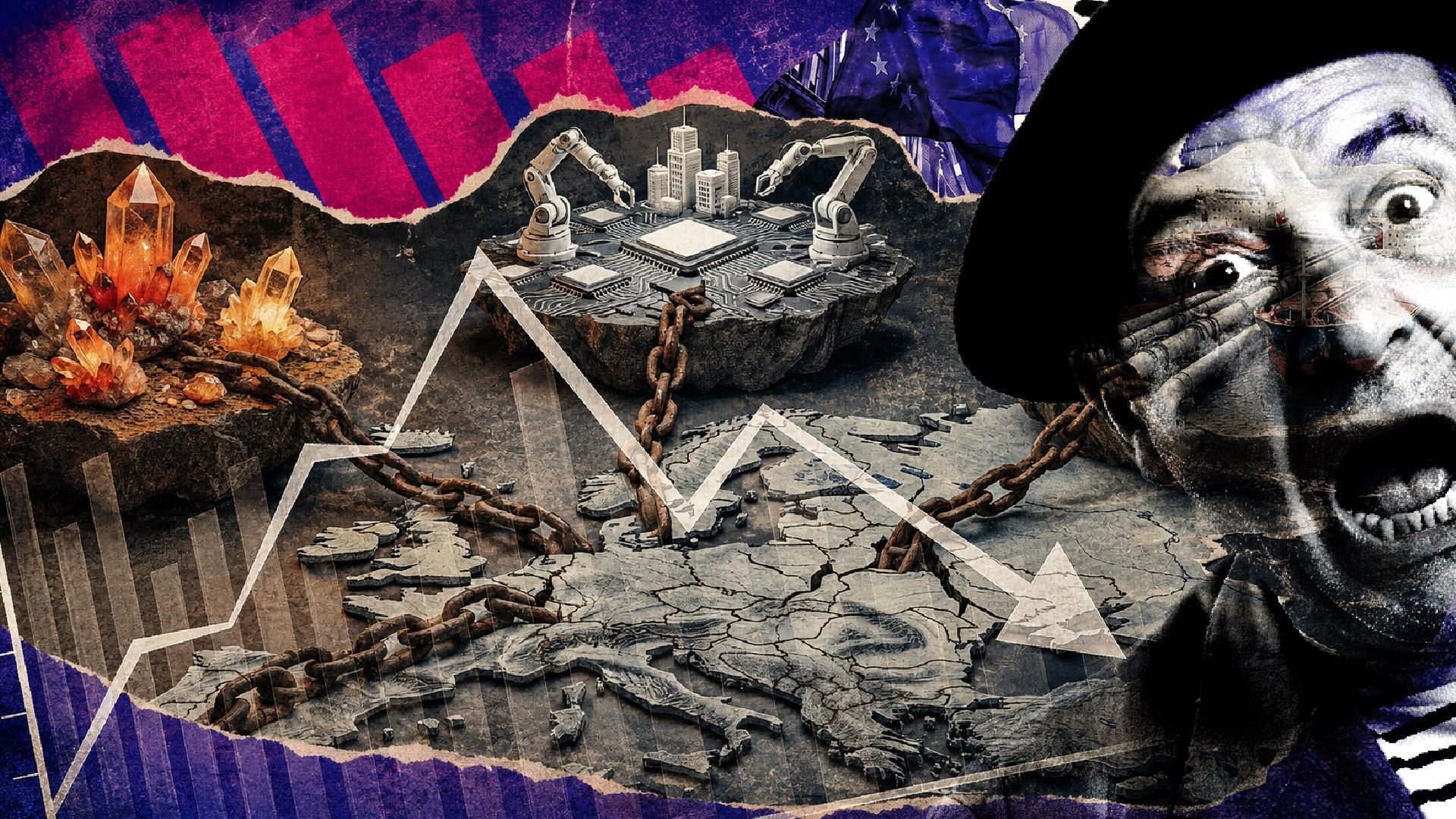
The author introduces the concept of ‘dependency inversion’: instead of depending on Russian and/or Middle Eastern oil and gas flows, Europe gets increasingly dependent on global supply chains for photovoltaic panels, batteries, inverters and critical materials – largely controlled by China. To sugar the pill, Mr. Stubenberg argues that technological dependence is ‘less coercive’ than resource dependence – as panels and turbines, once installed, continue working even if supplies are disrupted. But in fact it is of little comfort.
Physically, electricity supply from facilities already built cannot stop abruptly like gas in the pipe. Yet control over the production of new capacity, spare parts, software, and inputs gives China mighty leverage over the speed and cost of the European energy transition and over future system modernization. Europe risks finding itself unable to quickly step up generation, repair and renovate infrastructure without consent – or at least acquiescence – from Beijing.
Most tellingly, even in calmer periods Europe failed to considerably reduce its dependence. After 2022 it was in a feverish quest to substitute Russian gas and spent huge amounts on LNG and infrastructure – to end up facing another shock, now from the Gulf war. And its dependence on Chinese technology and materials has only grown. Instead of capitalizing on the crisis to genuinely strengthen its industrial and technological sovereignty, Europe continued looking for a better bargain – and mainly buying from China.
Mr. Stubenberg also writes about a tension between centrally integrated power grids and decentralization (rooftop solar photovoltaics and energy communities). The two options combined sound like a reasonable balance. Yet here, too, Europe proves chronically unable to take consistent decisions. Major infrastructural projects are constrained by local opposition and bureaucracy, while decentralized generation grows erratically without proper coordination with the grids. This leaves the system less efficient and more vulnerable.
Another vivid confirmation of the European project’s deep systemic weakness is that even when the authors look for ‘positive’ aspects in dependency transformation, stubborn reality shows the opposite. Europe’s vulnerability persists, albeit in a different form. From a dependence on authoritarian suppliers of hydrocarbons, it turns into a dependence on an authoritarian provider of technology and materials that is also the main geopolitical rival. Yet neither an industrial policy nor political will to alter this situation is visible for now.
While the European élites keep comforting themselves by talking about ‘risk reduction’, ‘diversification’, and ‘technological autonomy’, China steadily strengthens its position in the key industries of the future. And Europe keeps catching up and spends enormous money that buys neither real control nor strategic resilience. The longer this policy of half-measures and self-deception continues, the deeper dependence will follow – and the more painful consequences will result after another geopolitical shake-up reveals all the fragility of the European energy system.