





Read news
Add bookmark
POPULAR
How Much Do Experts’ Ideas Matter for the European Union’s Political Agenda?Oil? Gas? Fertilizer? Just Life.Kalypso Nicolaidis: I Want a Woodstock for European PoliticsHow the “virtues” of neoliberal globalization paved the way to its demiseEurope Still Needs China: Washington is the Main ThreatEuropean Unity in the Interests of Security. Split along the North-South LineThe Gulf War and Europe’s Helpless Energy PolicyRadicalisation in Onlife Spaces: Europe’s home-grown terroristsA Ruthless Diagnosis. Europe More Paralyzed than DividedThe European Union in 2026: Structural Tensions Between European Aspirations and Global Reality
Experts from the Konrad Adenauer Foundation find these in their annual report on the EU and global situation, entitled The European Union – the difficult path to becoming a global anchor of stability.
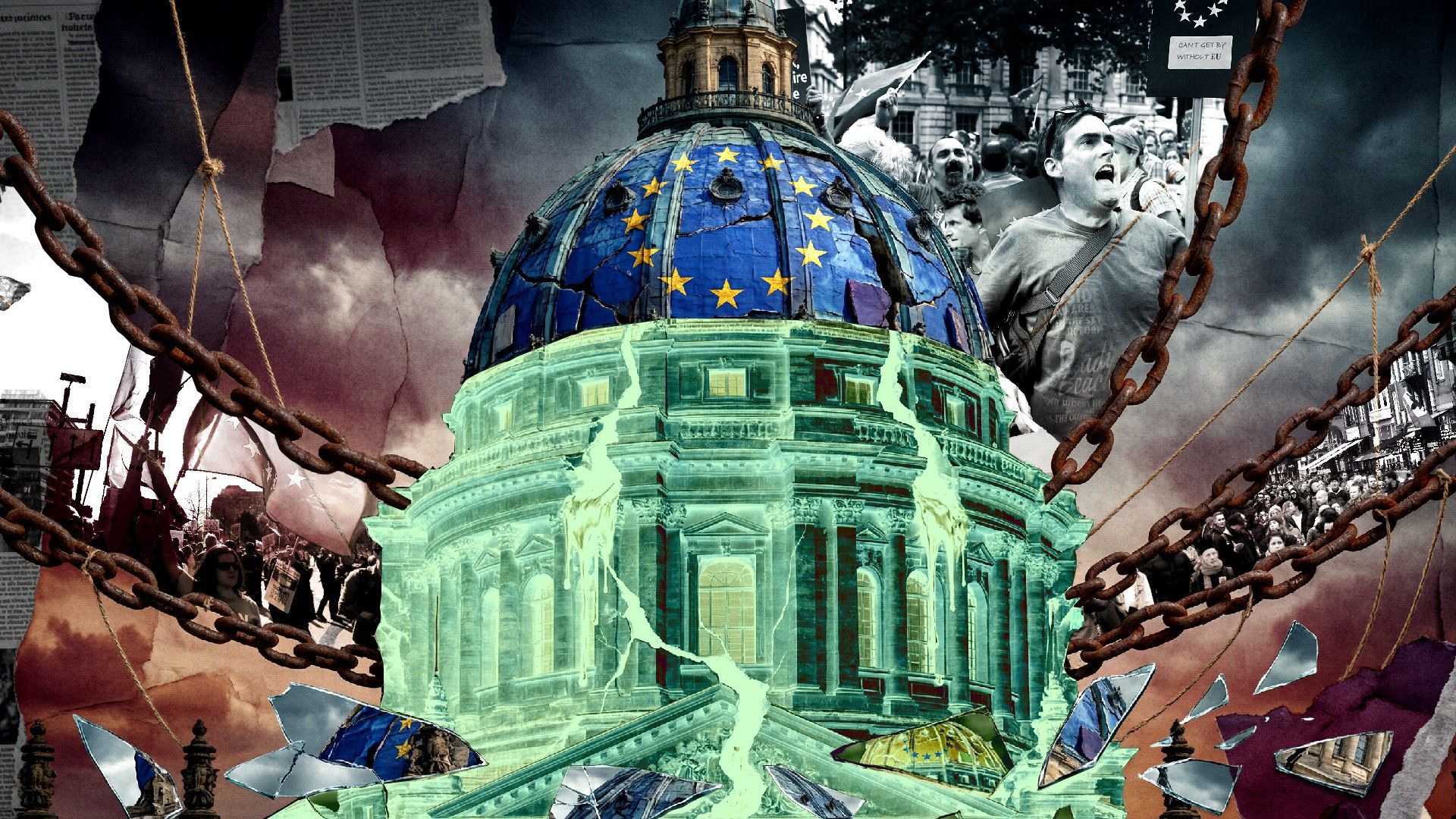
In the innovation and competitiveness dimension, two opposing trends of the past two years are continuing in the EU. On the one hand, it is stagnating in the fields of economy and innovation. On the other hand, the transition to a sustainable economy is steadily progressing, and the EU stays socially resilient.
The stagnation is all the more disturbing given that international competitors such as South Korea, China and the USA have managed to boost their performance.
The EU’s current account balance has decreased compared with the previous year. In 2025, the EU absorbed a large proportion of China’s trade surplus, estimated at 1.2 trillion US dollars worldwide. Europe’s competitiveness is under considerable pressure. Even leading European universities have not managed to improve their position in international comparisons.
There remain significant regional disparities between innovation leaders, such as the Nordic countries and the Netherlands, and some Eastern European countries.
Progress in the area of sustainability is moderately positive. The share of renewable energy in gross final energy consumption has risen slightly, the volume of sustainable securities has increased once again, and European companies remain competitive in the clean tech sector.
Public support for the EU remains high. A majority of citizens view EU membership as an advantage – particularly with regard to security, stability and cooperation. This general sentiment contrasts with political developments within several member States. Despite the continuing dominance of pro-European parties, the influence of Eurosceptic party families – including the European Conservatives and Reformists, the European Sovereigntists, and the Patriots for Europe – remains high across Europe.
Economic integration within the EU is progressing unevenly. Following a temporary improvement, some member States, including major countries such as Germany and France, have recently become less consistent in implementing EU requirements in the context of the single market. Many countries are under fiscal pressure and have high levels of debt and deficits. Rising defense spending is complicating fiscal consolidation.
Within the multilateral system of the United Nations, the EU continues to act in a coordinated and visible manner, although its strategic influence is limited in the face of geopolitical shifts – particularly in relation to the USA.
The EU is operating within an increasingly dysfunctional multilateral order in which the reliable foundations for international cooperation are eroding. Whilst the EU continues to champion rules-based cooperation, power politics and institutional erosion are exacerbating the structural tensions between European aspirations and global reality.
The situation at the World Trade Organization (WTO) is particularly problematic, as the organization is of strategic importance to the EU as a key player in rules-based global trade. The politicization of trade issues and unilateral measures are undermining core WTO principles.
The global development of democratic governance is stagnating. For the EU, this means an increasingly challenging environment for promoting liberal democratic norms. At the same time, the coordinated influence of authoritarian States within multilateral organizations is growing. This makes it difficult for the EU to firmly establish its normative positions within the multilateral framework.
Source: https://www.kas.de/en/analysen-und-argumente/detail/-/content/the-european-union-the-difficult-path-to-becoming-a-global-anchor-of-stability