





Last news
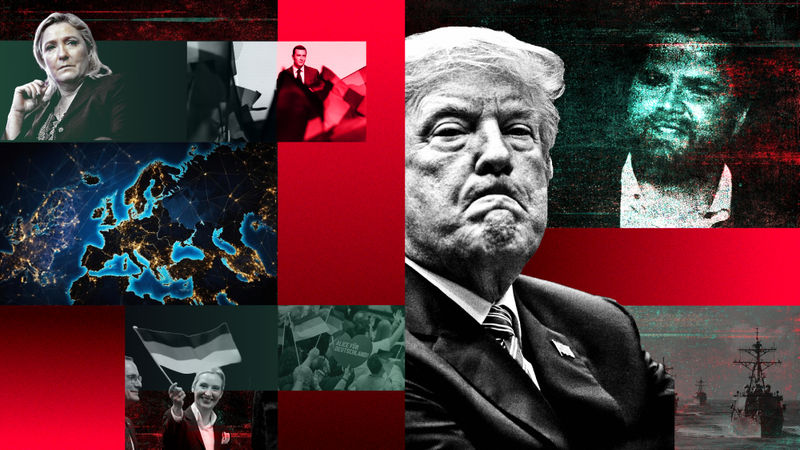
The New Right: Anatomy of a Global Revolution Why the Right Forces are Becoming Increasingly Popular
 Have you participated in a project or program funded by Stiftung Mercator? Are you currently involved in one, or part of our team or partner network?
Then we warmly invite you to become part of the MercatorGlobe Community!
Have you participated in a project or program funded by Stiftung Mercator? Are you currently involved in one, or part of our team or partner network?
Then we warmly invite you to become part of the MercatorGlobe Community!
Welcome to our community network!
Sign Up for More
 On 4 February 2026, an article by Frederick Kempe, President and CEO of the Atlantic Council, was published on the Council’s website.
Mario Draghi Calls Europe to Action Again
On 4 February 2026, an article by Frederick Kempe, President and CEO of the Atlantic Council, was published on the Council’s website.
Mario Draghi Calls Europe to Action Again
 The Royal United Services Institute for Defence and Security Studies (London) has published on their web site an article entitled “New START Expiry: Implications for Europe” by Senior Research Fellows Darya Dolzikova and Dr Sidharth Kaushal. It was published on the day when the New Strategic Arms Reduction Treaty (New START) expired.
New START Expiry: Implications for Europe
The Royal United Services Institute for Defence and Security Studies (London) has published on their web site an article entitled “New START Expiry: Implications for Europe” by Senior Research Fellows Darya Dolzikova and Dr Sidharth Kaushal. It was published on the day when the New Strategic Arms Reduction Treaty (New START) expired.
New START Expiry: Implications for Europe
 In practice, European countries responded to Russia’s war against Ukraine very differently. Reality has shown that the states in the north and east were much more determined regarding this matter than those in the south of Europe.
European Unity in the Interests of Security. Split along the North-South Line
In practice, European countries responded to Russia’s war against Ukraine very differently. Reality has shown that the states in the north and east were much more determined regarding this matter than those in the south of Europe.
European Unity in the Interests of Security. Split along the North-South Line
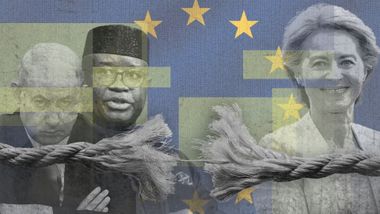 A report entitled From Rupture to Relevance: Investing in Europe’s Southern Partnerships was published on the website of the Netherlands Institute of International Relations (Clingendael) on 3 February 2026. Its authors are Megan Price, head of the Conflict Research Unit, and Máté Szalai, a research fellow at the same unit.
From Rupture to Relevance: Investing in Europe’s Southern Partnerships
A report entitled From Rupture to Relevance: Investing in Europe’s Southern Partnerships was published on the website of the Netherlands Institute of International Relations (Clingendael) on 3 February 2026. Its authors are Megan Price, head of the Conflict Research Unit, and Máté Szalai, a research fellow at the same unit.
From Rupture to Relevance: Investing in Europe’s Southern Partnerships
 A review made by Sophie Williams-Dunning for the RUSI and published in February 2026 deals with how dependence on Western technological platforms undermines Britain’s ability to counter foreign interference.
Tech Dependencies Undermine UK National Security Soft Power Without Leverage
A review made by Sophie Williams-Dunning for the RUSI and published in February 2026 deals with how dependence on Western technological platforms undermines Britain’s ability to counter foreign interference.
Tech Dependencies Undermine UK National Security Soft Power Without Leverage
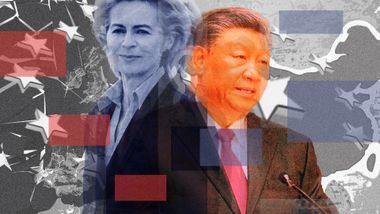 On 20 January 2026, the U.S. Brookings Institute publishes an article entitled “Can an alliance divided against itself compete with China?” by Jonathan A. Czin, Fellow at the Institute’s Chair in Foreign Policy Studies. The article is published under the Institute’s Reimagining Europe’s Security project.
Can an alliance divided against itself compete with China?
On 20 January 2026, the U.S. Brookings Institute publishes an article entitled “Can an alliance divided against itself compete with China?” by Jonathan A. Czin, Fellow at the Institute’s Chair in Foreign Policy Studies. The article is published under the Institute’s Reimagining Europe’s Security project.
Can an alliance divided against itself compete with China?
 In January 2026, the French Institute of International Relations (IFRI) published a report entitled Placing the EU on a Warfare Footing. Its authors, Marc-Antoine Eyl-Mazzega, Diana-Paula Gherasim and Thibaut Michel, discuss how the European Union’s energy policy should be put on a military footing.
Energy Protectionism Without Energy
In January 2026, the French Institute of International Relations (IFRI) published a report entitled Placing the EU on a Warfare Footing. Its authors, Marc-Antoine Eyl-Mazzega, Diana-Paula Gherasim and Thibaut Michel, discuss how the European Union’s energy policy should be put on a military footing.
Energy Protectionism Without Energy
 The website of the Barcelona Center for International Affairs (CIDOB) has posted the January issue of its CIDOB Opinion newsletter containing an article “How Europe can reduce dependence on the United States” by Francis Ghilès, the Center’s non-resident Senior Fellow.
How Europe Can Reduce Dependence on the United States
The website of the Barcelona Center for International Affairs (CIDOB) has posted the January issue of its CIDOB Opinion newsletter containing an article “How Europe can reduce dependence on the United States” by Francis Ghilès, the Center’s non-resident Senior Fellow.
How Europe Can Reduce Dependence on the United States
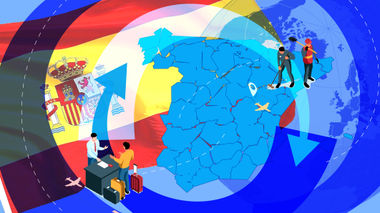 There is a so-called circular migration programme (also known as collective migration) that has been used in Spain for many years. Officially it is called Gestión Colectiva de las contrataciones en Origen (Collective Management of Recruitment at Origin) or GECCO. The programme is often presented as an advanced one. The European Commission even took the “Spanish model” as the basis for drawing up the EU’s directive on seasonal workers.
Circular Migration in Spain Strengths and Weaknesses of the Spanish Migration Model
There is a so-called circular migration programme (also known as collective migration) that has been used in Spain for many years. Officially it is called Gestión Colectiva de las contrataciones en Origen (Collective Management of Recruitment at Origin) or GECCO. The programme is often presented as an advanced one. The European Commission even took the “Spanish model” as the basis for drawing up the EU’s directive on seasonal workers.
Circular Migration in Spain Strengths and Weaknesses of the Spanish Migration Model
 On January 29, the Breugel (Brussels European and Global Economic Laboratory) think tank published on their web site a policy brief entitled “Better regulation in the European Union needs a fresh start”, by Anne Bucher and Elizabeth Golberg.
Better Regulation in the European Union Needs a Fresh Start
On January 29, the Breugel (Brussels European and Global Economic Laboratory) think tank published on their web site a policy brief entitled “Better regulation in the European Union needs a fresh start”, by Anne Bucher and Elizabeth Golberg.
Better Regulation in the European Union Needs a Fresh Start
 Experts have over the years produced countless policy briefs, reports and documents in efforts to influence policy-makers’ decisions about EU economic policy and governance. In a special category are the expert reports officially commissioned by EU institutional actors.
How Much Do Experts’ Ideas Matter for the European Union’s Political Agenda?
Experts have over the years produced countless policy briefs, reports and documents in efforts to influence policy-makers’ decisions about EU economic policy and governance. In a special category are the expert reports officially commissioned by EU institutional actors.
How Much Do Experts’ Ideas Matter for the European Union’s Political Agenda?